 Palestine
Canada, France and UK move to ban settlement imports in a bid to stop Israel's two-state solution
Ottawa: Canada, France and the United Kingdom announced a coordinated crackdown on Israeli settlement activity on Tuesday, moving to ban the importation of goods produced in West Bank settlements and impose targeted measures against those who facilitate or profit from them.
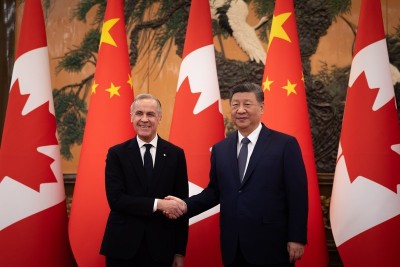
In a joint statement, Canadian Prime Minister Mark Carney, French President Emmanuel Macron and British Prime Minister Andy Burnham said settlement expansion, including the Israeli government's decision to advance the E1 settlement project, combined with a sharp rise in settler violence, now poses "a direct and urgent threat" to the prospects for a two-state solution.
"The time has come"
The three leaders framed the move as a natural next step after recognising the State of Palestine a year earlier. Reiterating that settlements are illegal under international law, they said further action was necessary to protect the two-state vision, their national interests, and their values, adding that the moment had arrived to act "before it is too late."
The E1 area, a roughly 4.5-square-mile tract of land east of Jerusalem, has long been one of the most contentious flashpoints in the conflict; Israeli development there is widely seen as capable of severing the West Bank in two and cutting off Palestinian access to East Jerusalem.
A wider coalition
The announcement was not limited to the three leaders' countries. A separate joint statement from foreign ministers indicated that Canada, Denmark, Finland, France, Iceland, Ireland, Norway, Poland, Portugal, Spain, Sweden and the UK, twelve nations in total, are either introducing national restrictions on trade with illegal settlements, supporting equivalent European Union measures, or actively considering further steps.
That statement also reaffirmed recognition of Israel's security concerns and condemned the October 7 Hamas attack, while calling on the Israeli government to immediately halt settlement expansion, ensure accountability for settler violence, and investigate allegations against Israeli security forces.
Balancing pressure with support for Israel
Despite the new measures, the three leaders were careful to stress that their relationship with Israel remains intact.
The statement reaffirmed a desire for a "close and productive partnership" with Israel, enduring support for the Israeli people, and an unwavering commitment to Israel's security, describing the goal as a safe and secure Israel existing alongside a safe and secure Palestine.
The move drew a cautious reaction from the United States. The issue reportedly came up in a call between Burnham and President Donald Trump earlier in the week.
U.S. Secretary of State Marco Rubio declined to endorse the approach when asked about it, saying only that Washington shares "the goal of stability" in the region and does not want to see anything destabilising unfold in the West Bank given the broader tensions already gripping the region.
Rubio stopped short of criticising the announcement directly but made clear the U.S. would not be following suit.
The Palestinian Authority welcomed the coordinated move but argued it does not go far enough.
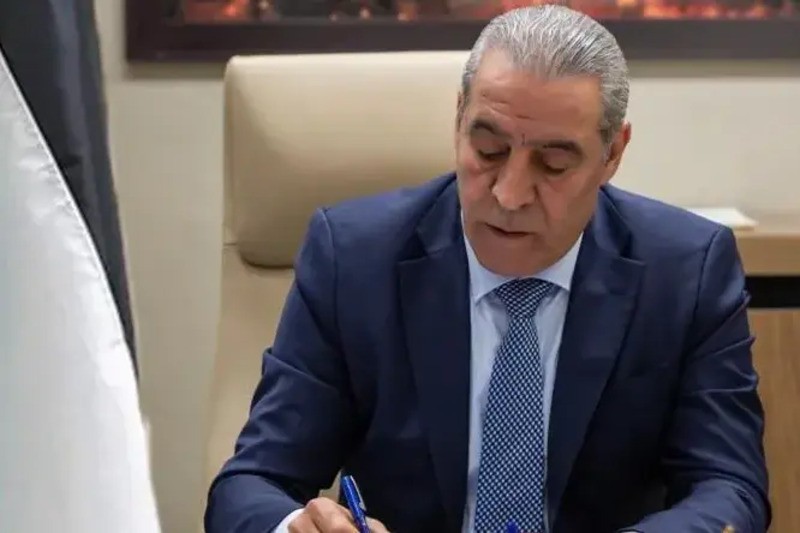
Palestinian Vice President Hussein Al-Sheikh said Tuesday that what's needed now is a shift from condemnation toward binding, decisive measures capable of actually halting settlement expansion and the de facto annexation of West Bank land, along with real enforcement of international law and UN Security Council resolutions, and accountability for settler violence.
Al-Sheikh singled out the E1 project as an existential threat to Palestinian territorial contiguity, warning that it risks fragmenting Palestinian land and severing the northern West Bank from the south, undermining any realistic prospect of a viable, connected Palestinian state.
He argued that genuinely protecting the two-state solution requires shielding Palestinian territory from annexation, settlement expansion and settler violence, ending the occupation outright, and translating international law into concrete action that secures both regional and international stability.
Next steps at the UN
The three leaders said they would co-chair a meeting at the United Nations General Assembly later this month to build on the announcement and continue pushing for a negotiated peace.
Support Our Journalism
We cannot do without you.. your contribution supports unbiased journalism
IBNS is not driven by any ism- not wokeism, not racism, not skewed secularism, not hyper right-wing or left liberal ideals, nor by any hardline religious beliefs or hyper nationalism. We want to serve you good old objective news, as they are. We do not judge or preach. We let people decide for themselves. We only try to present factual and well-sourced news.
Support objective journalism for a small contribution.