Canada condemns Iran's "destabilising" actions and backs the push to reopen Strait of Hormuz
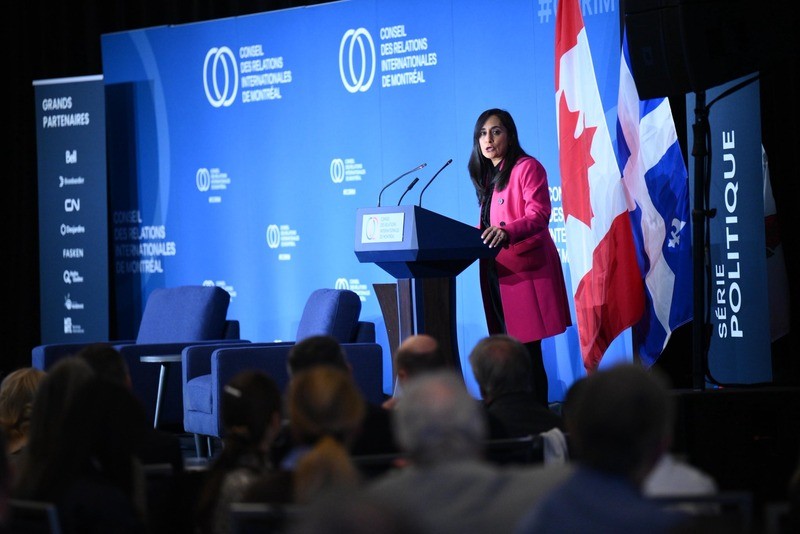
Ottawa: Canada issued a sharp rebuke of Iran on Sunday, with Foreign Affairs Minister Anita Anand and Finance Minister François-Philippe Champagne calling on Tehran to immediately halt activities they say are threatening regional and global stability.
In a joint statement, the two ministers pointed to three areas of concern: Iran's continued threats against vessels attempting to transit the Strait of Hormuz, its pursuit of what Canada characterises as illicit nuclear activities, and its ongoing support for proxy groups across the region.
Anand reinforced the message on social media, warning that these actions "must end".
Crisis rooted in February's strikes
The dispute traces back to February 28, 2026, when Iran launched retaliatory measures following military strikes by the United States and Israel.
Those retaliatory actions have since evolved into a prolonged standoff centred on one of the world's most critical maritime corridors, a waterway that carries roughly a fifth of the global oil supply and a significant share of liquefied natural gas shipments on any given day.
The fallout has been substantial. More than 1,500 vessels are reportedly stranded as a result of the ongoing disruption, and the resulting uncertainty has rattled global energy markets, pushed up transport costs, and prompted G7 nations to accelerate discussions on diversifying energy shipping routes.
Canada aligns with G7 partners
In its statement, Ottawa confirmed it is working closely with G7 allies to keep up pressure on Iran, including backing efforts led by the United States, France, and the United Kingdom to reopen the strait.
Canada also reaffirmed its support for sanctions imposed under the U.S.-led Operation Economic Outcast and said it continues working to cut off Iran's ability to finance terrorist activity.
Canada's own sanctions record against Iran is extensive. Since 2010, the government has sanctioned 492 Iranian individuals and entities under the Special Economic Measures Act (SEMA) and the Justice for Victims of Corrupt Foreign Officials Act (JVCFOA). That figure grew in mid-August, when Canada added five more Iranian officials to its sanctions list over their alleged role in obstructing navigation rights in and around the strait.
Longstanding tension
Canada's posture toward Iran is not new. Ottawa severed diplomatic relations with Tehran in 2012 and has maintained autonomous sanctions against the country since 2010, citing its nuclear programme, human rights record, and support for regional destabilisation.
In Sunday's statement, the ministers said Canada "will continue to pursue additional measures in coordination with its partners" to advance peace and security in the region and to keep pressure on Iran to change course.
Despite the coordinated diplomatic pressure, there is little indication of an imminent breakthrough.
As of early September, prediction markets tracking the likelihood of a U.S.-Iran agreement by mid-September placed the odds at under 3%, reflecting how entrenched the standoff has become.
Support Our Journalism
We cannot do without you.. your contribution supports unbiased journalism
IBNS is not driven by any ism- not wokeism, not racism, not skewed secularism, not hyper right-wing or left liberal ideals, nor by any hardline religious beliefs or hyper nationalism. We want to serve you good old objective news, as they are. We do not judge or preach. We let people decide for themselves. We only try to present factual and well-sourced news.
Support objective journalism for a small contribution.