


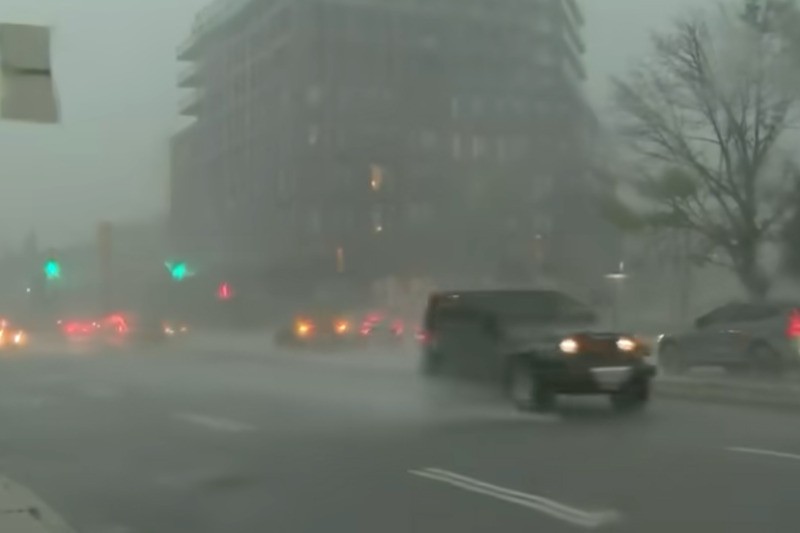
Violent storms and flash floods batter Ontario, compounding a year of extreme weather
Toronto: Violent thunderstorms and flash floods battered Southern Ontario this week, compounding a year of extreme weather that includes devastating wildfires and unprecedented insured damages across Canada.
The powerful storm system swept through the Greater Toronto Area (GTA), bringing torrential rain, golf ball-sized hail, and destructive winds.
Floodwaters submerged major roads and transit routes, bringing parts of the city to a standstill. At the height of the deluge, Toronto Hydro reported power outages affecting approximately 65,000 customers, according to CBC News.
TORONTO TURNS INTO VENICE AS HEAVY DOWNPOUR FLOODS STREETS & ROADS — 65K RESIDENTS LEFT WITHOUT POWER pic.twitter.com/M4b35LG9o8
— RT (@RT_com) September 3, 2026
Environment Canada issued widespread severe thunderstorm and tornado warnings as the system developed, warning residents of the extremely dangerous conditions.
The sudden inundation serves as a stark pivot from the province's earlier environmental crises, highlighting a volatile weather whiplash.
Just weeks prior, an analysis by the World Weather Attribution group at Imperial College London found that Ontario’s summer wildfires accounted for the highest area burnt in the province's recent history.
More than 3.8 million hectares of land burnt across Canada this year, with over 730,000 hectares incinerated in Ontario alone, CBC News reported. Researchers noted that human-induced climate change has made such extreme, uncontrollable wildfire conditions roughly twice as likely to occur.
The financial and infrastructural toll of these compounding natural calamities has been staggering.
Extreme weather events, ranging from urban floods to violent hailstorms, caused more than $7.7 billion in insured damages over just a few weeks this summer, according to Catastrophe Indices and Quantification Inc., as cited by Environment and Climate Change Canada.
Federal agencies acknowledge the severe strain these back-to-back calamities place on emergency response networks.
"From floods and damaging hail to extreme temperatures and devastating wildfires, these severe weather events left an unprecedented mark on both communities and insurance ledgers," Environment and Climate Change Canada stated in a recent review of the country's severe weather.
As municipal crews continue clearing downed trees, pumping water from submerged infrastructure, and restoring the power grid across the GTA, local authorities are bracing for the long-term economic challenges of adapting to Canada's increasingly severe, year-round climate realities.
Support Our Journalism
We cannot do without you.. your contribution supports unbiased journalism
IBNS is not driven by any ism- not wokeism, not racism, not skewed secularism, not hyper right-wing or left liberal ideals, nor by any hardline religious beliefs or hyper nationalism. We want to serve you good old objective news, as they are. We do not judge or preach. We let people decide for themselves. We only try to present factual and well-sourced news.
Support objective journalism for a small contribution.


