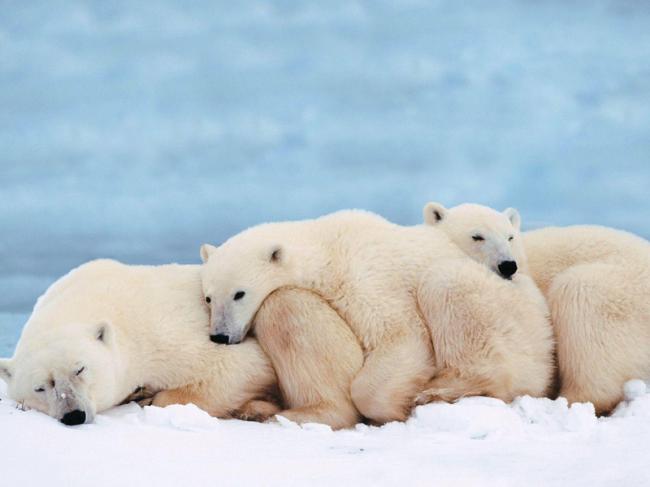
Vanishing ice boost to polar bear tourism in Alaska
Anchorage, Sep 13 (IBNS/NITN): A remote village in Alaska is seeing a boom in tourism because of the spurt in the number of polar bears in the area.
With the Arctic sea ice vanishing from over the Beaufort sea, an increasing number of polar bears are starting to spend more time on the shore at the village of Kaktovik, Alaska's Energy Desk reported.
Jennifer Reed of the Arctic National Wildlife Refuge said before 2011, the number of annual visitors who came to Kaktovik for polar bear viewing was less than 50. In 2017, more than 2,000 people visited the village.
Most visitors come around August or September when the ice recedes and some bears are stranded on the island till the sea freezes again around October.
Polar bears, according to WWF, are the poster child for the impacts of climate change on species, and justifiably so.
To date, global warming has been most pronounced in the Arctic, and this directly affects the polar bears. Their dependence on sea ice makes them highly vulnerable to a changing climate.
Polar bears rely heavily on the sea ice environment for traveling, hunting, mating, resting, and in some areas, maternal dens. In particular, they depend heavily on sea ice-dependent prey, such as ringed and bearded seals.
Support Our Journalism
We cannot do without you.. your contribution supports unbiased journalism
IBNS is not driven by any ism- not wokeism, not racism, not skewed secularism, not hyper right-wing or left liberal ideals, nor by any hardline religious beliefs or hyper nationalism. We want to serve you good old objective news, as they are. We do not judge or preach. We let people decide for themselves. We only try to present factual and well-sourced news.