FIFA Council approves key organisational elements of FIFA World Cup
FIFA’s strategic body approved an increase in the prize money for the 2018 FIFA World Cup Russia to a total amount of USD 400 million — 12% up from the USD 358 million of the 2014 edition.
The FIFA Council also ratified the decision of the Bureau of the Council of 6 September 2017 to approve the enhanced Bidding Regulations for the 2026 FIFA World Cup, and appointed the members of the Bid Evaluation Task Force.
According to the Bidding Regulations, the Task Force must be composed of the chairpersons of the Audit & Compliance Committee and the Governance Committee – in this case, Tomaž Vesel and Mukul Mudgal respectively – as well as a member of the Organising Committee for Competitions (IlÄo Gjorgioski was appointed), together with experts from the administration: Deputy Secretaries General Zvonimir Boban (football) and Marco Villiger (administration).
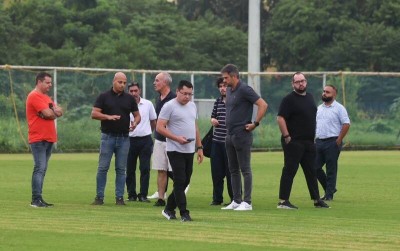
The meeting in Kolkata covered a wide array of topics and saw the FIFA Council passing a number of important decisions, including the following:
Establishment of the FIFA Foundation, with the purpose of providing a solid legal and institutional basis for FIFA’s social development initiatives. One of the core intentions of the FIFA Foundation will be to institutionalise a commitment of the FIFA Legends to engage in such activities and act as promoters of FIFA’s aims and objectives related to social development.
The FIFA Foundation should be operational by the first quarter of 2018 and will initially comprise the FIFA President and two members of the FIFA Council, Sonia Bien-Aime and Kwesi Nyantakyi. Later in the year, the FIFA Council will appoint a selection of respected personalities –from football and other areas of society –as additional members of the Foundation Board.
Decision to engage in a consultation phase to discuss a review of FIFA’s women’s, youth and club tournaments. A number of different draft formats will be submitted for discussion with the member associations at the FIFA Executive Football Summits as well as with the confederations and other relevant stakeholders. Final concepts are planned to be submitted to the FIFA Council for approval during the body’s next meeting, on 15 and 16 March 2018 in Bogota, Colombia.
Approval of the following FIFA tournament dates:
FIFA U-20 Women’s World Cup France 2018: 5 to 24 August 2018
FIFA U-17 Women’s World Cup Uruguay 2018: 13 November to 1 December 2018
FIFA Club World Cup UAE 2018: 12 to 22 December 2018
FIFA Women’s World Cup France 2019™: 7 June to 7 July 2019
Adoption of the International Match Transfer System for professional women’s football as of 1 January 2018. The regulatory mechanism will enable FIFA to monitor the international movements and transfer market, bringing more transparency to the women’s game and enhancing its level of professionalism.
Recognition of all European and South American teams that won the Intercontinental Cup – played between 1960 and 2004 – as club world champions.
Support Our Journalism
We cannot do without you.. your contribution supports unbiased journalism
IBNS is not driven by any ism- not wokeism, not racism, not skewed secularism, not hyper right-wing or left liberal ideals, nor by any hardline religious beliefs or hyper nationalism. We want to serve you good old objective news, as they are. We do not judge or preach. We let people decide for themselves. We only try to present factual and well-sourced news.
Support objective journalism for a small contribution.