 Uttam Kumar
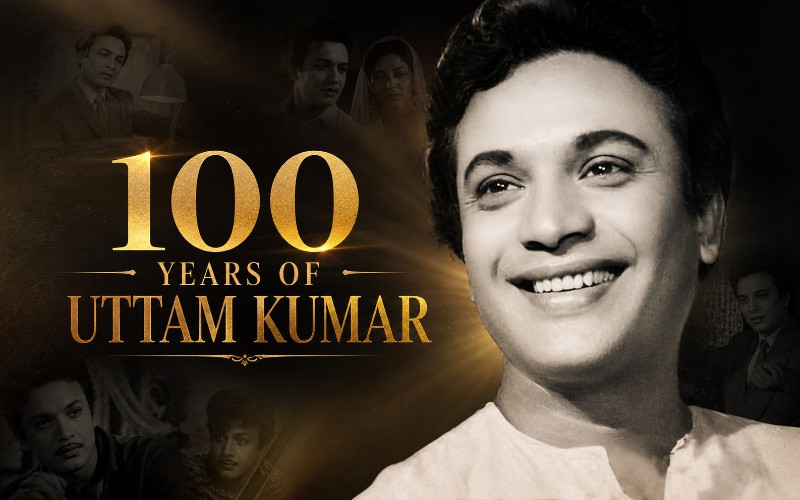
Uttam Kumar at 100: The making of Bengal’s 'Mahanayak'
A century after his birth, Uttam Kumar remains difficult to place in a single frame.
He was the romantic hero whose smile could turn an ordinary scene into a cinematic moment.
He was also the troubled star of Satyajit Ray’s Nayak, the murderer of Sesh Anka, the frighteningly dark Bhabesh Banerjee of Bagh Bondi Khela, the eccentric performers of comedies and the deeply human figures who populated some of Bengali cinema’s finest dramas.
That ability to change without losing his hold over the audience was perhaps the defining quality of Uttam Kumar.
Born Arun Kumar Chattopadhyay on September 3, 1926, in Calcutta, he came from an ordinary middle-class family.
On Thursday, September 3, 2026, Bengal marked his birth centenary, 46 years after his death at the age of 53.
Prime Minister Narendra Modi paid tribute to him, describing him as a legend whose “timeless performances connect with people across generations”.
In Kolkata, the centenary celebrations have brought together generations of the Bengali film industry, while the state government has planned a four-day programme from September 3 to 6, including screenings, discussions, tributes and initiatives linked to his cinematic legacy.
Yet the most revealing way to understand Uttam Kumar at 100 may not be to begin with the Mahanayak.
It is to begin with Arun Kumar.
Journey from clerk to actor
Before the adulation, there was uncertainty.
Uttam’s father worked as a projectionist at Metro Cinema, giving the young Arun an early exposure to films. But cinema was not a family profession, and there was no obvious path waiting for him in the industry.
He participated in amateur theatre, studied, worked as a clerk at the Calcutta Port Trust and gave music lessons to supplement his income.
Acting developed alongside a conventional middle-class working life rather than replacing it immediately.
His entry into films offered little indication of what lay ahead.
He made his screen debut in Nitin Bose’s Drishtidan in 1948. His early films failed repeatedly.
The industry mocked him with the nickname “Flop Master General”, while comparisons with established actors did little to help his confidence.
Nine films passed without giving him the breakthrough he needed.
He could have walked away. Instead, he kept learning.
That persistence is central to the Uttam Kumar story because his screen presence, often treated as something mysterious and innate, was built through years of observation and preparation.
The polished voice, distinctive smile, relaxed physicality and effortless charm did not simply appear before the camera.
Theatre trained him. Music developed his voice and diction. Football, swimming and wrestling contributed to his physical confidence. His fascination with cinema made him a close student of performers and performance.
He studied how actors entered a scene, listened, paused, moved and reacted when they were not speaking.
He also watched international stars, including Gregory Peck, Gary Cooper, Clark Gable, Laurence Olivier and Marlon Brando. He absorbed aspects of their craft without turning himself into an imitation of any of them.
That became one of his greatest strengths.
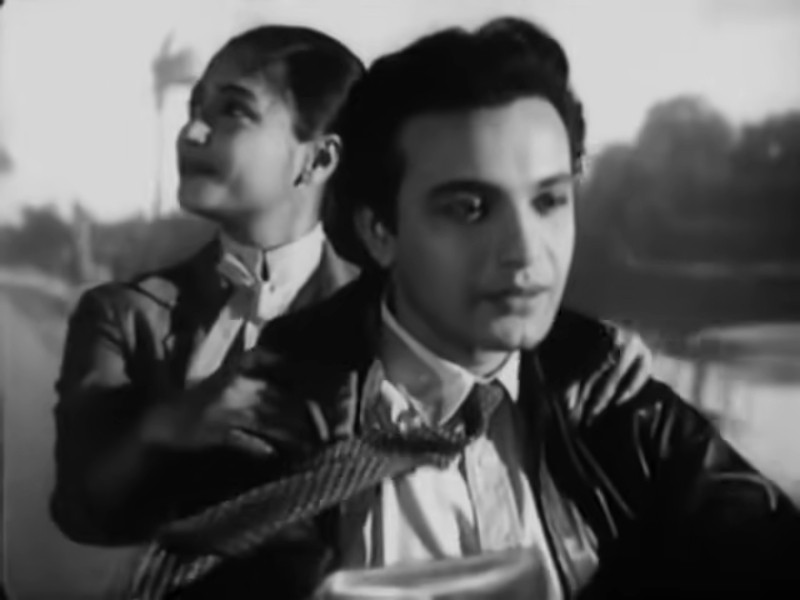 Uttam Kumar's iconic scene from the Bengali movie 'Saptapadi'. Photo: Screen grab from YouTube
The star learns to change
Most major screen stars eventually develop a recognisable set of mannerisms. The audience sees the star even before it sees the character.
Uttam Kumar was different.
The romantic hero of Harano Sur was not the same person audiences encountered in Saptapadi.
The comic energy of Bhrantibilash or Dhanyi Meye belonged to another register. Agnishwar, Chowringhee, Bagh Bondi Khela and Nayak revealed still other versions of him.
His greatest achievement was to retain his charisma without allowing it to overwhelm the character.
That quality makes the word “chameleon” particularly apt. He changed colour without losing his identity.
His romantic persona became the most visible expression of that talent.
On screen, his masculinity was generally gentle rather than aggressive, assured without being overbearing and sophisticated without appearing inaccessible.
With Suchitra Sen, this quality became almost inseparable from the mythology of Bengali cinema.
Their pairing began with Sharey Chuattar in 1953, Uttam Kumar’s tenth film, and gathered enormous momentum with Agnipariksha in 1954.
The two eventually appeared together in 30 films over more than two decades, creating a phenomenon that audiences came to identify simply as “Uttam-Suchitra”.
The partnership produced enduring films, including Shap Mochan, Sagarika, Harano Sur, Pathey Holo Deri, Indrani, Saptapadi and Bipasha.
Uttam himself once acknowledged the importance of his leading lady, saying: “Had Suchitra not been by my side, I would not have become Uttam.”
When stardom took root
The transformation was gradual.
After Drishtidan, Uttam’s first significant breakthrough came with Nirmal Dey’s Basu Paribar in 1952.
The film helped establish the 25-year-old actor, who had by then adopted the screen name Uttam Kumar.
Then came Sharey Chuattar.
The film changed the trajectory of his career and helped create one of Indian cinema’s most celebrated romantic pairings. Agnipariksha consolidated that success, turning Uttam and Suchitra into major stars.
For an actor who had recently been dismissed as a failure, the turnaround was extraordinary.
By the 1950s and 1960s, Uttam Kumar had become the dominant male star of Bengali cinema. His name itself could carry a film. Even productions that failed critically could find an audience simply because he was present.
Ray later placed that phenomenon at the centre of Nayak, where Uttam played Arindam Mukherjee, a hugely successful film star travelling by train to Delhi to receive an award.
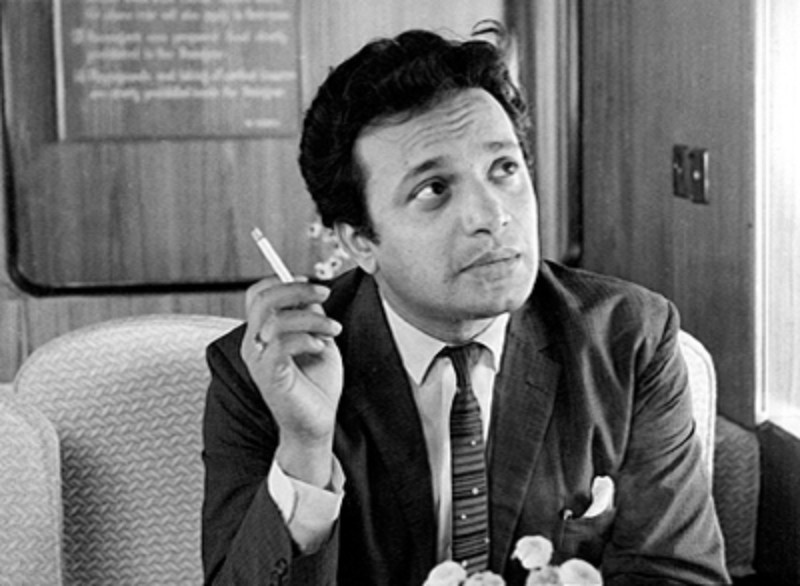 Uttam Kumar in Satyajit Ray's film 'Nayak'. Photo: Screen grab from YouTube
The character's public confidence conceals private anxieties, compromises and insecurities.
The role offered Uttam something few mainstream stars willingly risked at the height of their popularity: the opportunity to dismantle his own image.
Ray reveals the actor
By the time Satyajit Ray cast Uttam Kumar in Nayak in 1966, the actor had become synonymous with commercial Bengali cinema.
Ray had worked extensively with Soumitra Chatterjee, whose cerebral screen persona had become a striking alternative to Uttam’s mass popularity. Yet when Nayak arrived, Soumitra himself recognised that the role belonged to Uttam.
“Nayak’s role was made for Uttam Kumar alone,” Soumitra later said in an interview with Frontline.
Ray himself explained that the character had a strong resemblance to Uttam’s own journey.
He described Arindam as an ordinary middle-class youth who receives a break in films and quickly rises to the top, calling it a rags-to-riches story with echoes of Uttam’s life.
The casting worked because Uttam did not merely play a star. He played the vulnerability beneath stardom.
He even agreed to appear without make-up, despite visible marks left by a recent bout of chickenpox.
Nayak exposed a dimension of his acting that his romantic image had concealed.
The famous smile and polished appearance remained, but Ray placed them alongside fear, guilt, loneliness and self-doubt.
The following year, Uttam worked with Ray again in Chiriakhana, playing the Bengali detective Byomkesh Bakshi. In the same year, he won the National Film Award for Best Actor for his performances in Chiriakhana and Antony Firingee.
The contrast was striking. The industry’s great romantic idol had demonstrated that he could stand comfortably within the demands of serious cinema.
Beyond the romantic hero
Uttam never stopped testing the boundaries of his star image.
At the height of his popularity, he played darker and morally complicated characters.
Sesh Anka in 1963 saw him take on the role of a murderer, while Bagh Bondi Khela in 1975 offered one of the most unsettling performances of his career.
In that film, he played Bhabesh Banerjee, a seemingly respectable businessman whose past reveals a brutal and deeply disturbing personality.
The decision was risky. A star whose appeal rested heavily on romantic identification could have damaged his relationship with audiences by embracing an uncompromising villain.
Uttam did it anyway.
He also accepted supporting roles when artistic considerations mattered more than conventional star billing, including Maya Mrigaya and Khoka Babur Pratyabartan.
His work with Sabitri Chatterjee proved equally important to his development as an actor.
He appeared with her in more than 30 films, and their performances allowed him to explore relationships and character dynamics far removed from the familiar Uttam-Suchitra template.
Writer Swapan Mullick, in Mahanayak Revisited: The World of Uttam Kumar, argued that Sabitri gave Uttam opportunities to explore “alternative patterns and relationships” and demonstrate abilities that could otherwise disappear beneath the superficial attractions of stardom.
Uttam took such challenges seriously.
One often-recounted story describes him leaving an evening adda earlier than expected because he had a scene with Sabitri the following morning.
He reportedly explained that he needed to prepare because otherwise she would “walk away with the scene”.
It was a revealing glimpse of the discipline behind the apparent ease.
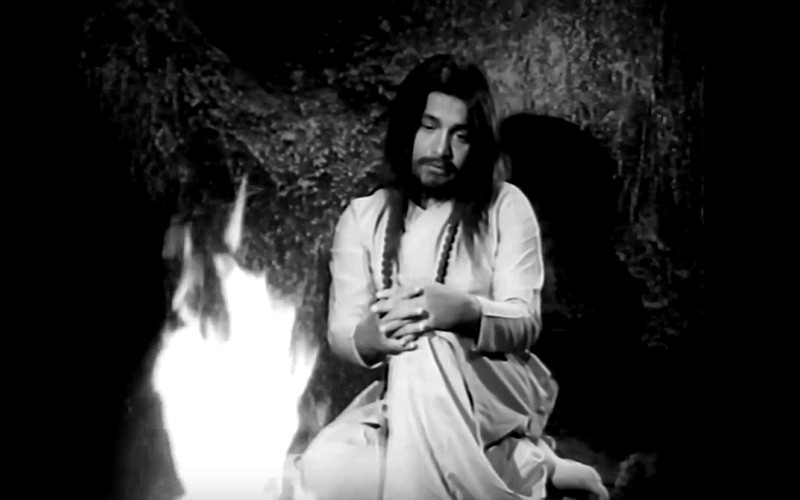 A scene from Uttam Kumar-starrer 'Sanyasi Raja'. Photo: Screen grab from YouTube
The quintessential Bengali
Uttam Kumar’s significance extended beyond the box office.
He came to embody a particular version of Bengali middle-class aspiration: educated, cultured, romantic, confident and rooted in everyday life.
He could appear sophisticated without becoming remote, allowing audiences to see both an idealised figure and something recognisably familiar.
His interests reflected that breadth.
He read widely, loved Rabindrasangeet, followed sport and remained fascinated by food, clothes, conversation, Calcutta and its social world.
He experimented with production, direction and music direction, reflecting an interest in filmmaking that went beyond acting.
He was not content simply to occupy the front of the camera.
That curiosity also helps explain why his legacy has resisted the passage of time.
Uttam Kumar died on July 24, 1980, at just 53. He never experienced old age in the public imagination.
The image remained fixed: the smile, the voice, the carefully styled hair, the cigarette, the graceful turn of the head and the romantic gaze.
But beneath that familiar image was an actor who spent decades trying to escape the limitations of his own stardom.
A rivalry that never existed
The story of Uttam Kumar is often told alongside that of Soumitra Chatterjee.
Their careers represented different possibilities within the same era.
Soumitra brought an intellectual, restless dimension to Bengali screen stardom, while Uttam represented a more expansive popular appeal.
Yet the supposed rivalry was never as simple as it appeared.
Soumitra acknowledged the scale of Uttam’s popularity in an interview with Frontline.
“In terms of popularity, no one can surpass Uttam Kumar. I may have come close, but he was ahead,” he said.
He also recalled that Uttam was an actor he admired long before entering films himself.
The comparison eventually became part of Bengali cultural vocabulary, much like the rivalry between Kolkata football clubs Mohun Bagan and East Bengal. But even Soumitra recognised that Uttam occupied a unique place.
“There is not one star, however much he may publicise himself, who can compare with Uttam Kumar—his grace, his acting ability—not one,” he said.
Their friendship away from the screen added another dimension to a relationship that audiences often understood as a contest.
Bengal’s enduring screen icon
The scale of Uttam Kumar’s career is difficult to capture simply through numbers.
He acted in roughly 250 films between 1948 and 1981. Even devoted followers would find it difficult to list a fraction of them without checking a filmography.
Yet quantity alone does not explain his survival in popular memory.
His films continue to circulate because his performances do not belong entirely to one period.
The clothes, settings and social conventions may date them, but the emotional rhythms remain accessible.
His ability to listen, pause, react and inhabit different personalities keeps the performances alive.
That may also explain why even some of his weaker films continue to attract attention.
Uttam could often provide them with a centre of gravity that made them watchable.
At Tollygunge, the heart of Kolkata’s film industry, his statue stands as a physical marker of that cultural status.
The industry has produced towering figures, including Satyajit Ray, Mrinal Sen, Ritwik Ghatak, Tapan Sinha, Suchitra Sen, Sabitri Chatterjee and Soumitra Chatterjee. Yet Uttam’s name remains almost synonymous with Bengali popular cinema.
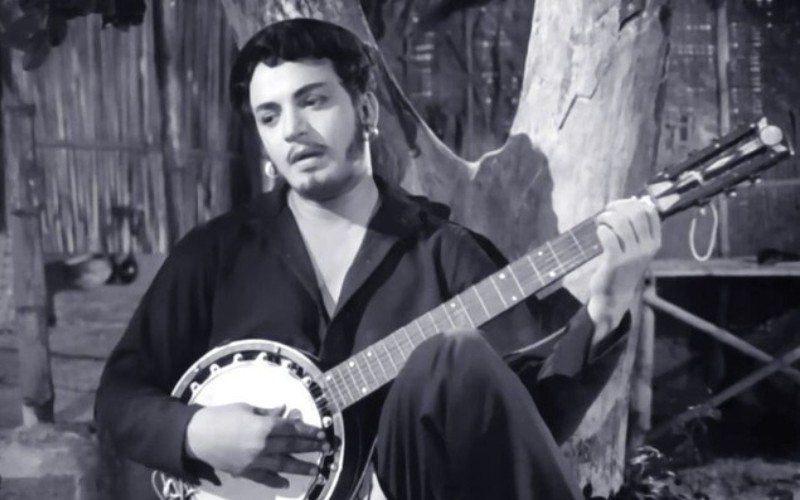 Uttam Kumar in 'Antony Firingee'. Photo: Screen grab from YouTube
The icon returns again
The persistence of the Uttam Kumar phenomenon became particularly visible in 2024, when director Srijit Mukherji brought him back to the screen in Oti Uttam.
Using visual effects and footage from his existing films, the production presented Uttam as a black-and-white ghost who guides a young man through a difficult romantic situation.
The film divided critics but became an unexpected box-office success, demonstrating that audiences who had never seen Uttam in a cinema hall were still willing to watch a new film built around his screen image.
That experiment was more than a technical novelty.
It showed how thoroughly Uttam Kumar remains embedded in Bengali popular culture, decades after his death.
The centenary has reinforced that connection.
Rare photographs, memorabilia and behind-the-scenes material are being brought into public view, while film screenings and exhibitions are introducing his work to audiences separated from his era by several generations.
'Mahanayak' at 100
Prime Minister Narendra Modi, paying tribute to Uttam on his birth centenary, recalled his versatility, dedication and the journey from early failures to stardom.
“Uttam Kumar: a legend whose timeless performances connect with people across generations,” Modi said in a September 3 post.
The Prime Minister had also referred to Uttam during his recent Mann Ki Baat broadcast, noting the popular belief that Ray wrote Nayak with Uttam Kumar in mind and highlighting the actor’s emotional depth and dignity.
Mahanayak Uttam Kumar...a legend whose timeless performances connect with people across generations.
— Narendra Modi (@narendramodi) September 3, 2026
Tributes on his birth centenary.
Also sharing what I spoke about him during #MannKiBaat last Sunday.
মহানায়ক উত্তম কুমার... এক কিংবদন্তি যাঁর কালজয়ী পরিবেশনা প্রজন্মান্তরের… pic.twitter.com/GQLr48AO7o
The centenary celebrations in Bengal have similarly brought together veteran and contemporary figures from the industry, underlining how Uttam’s legacy crosses generations.
The state has announced a series of commemorative initiatives, including a dedicated Uttam Kumar Film Centre and programmes designed to preserve and present his contribution to future audiences.
In a year that also marks the centenary of Hollywood icon Marilyn Monroe, the parallel is revealing.
Both were transformed into images larger than the individuals beneath them.
Monroe became the eternal blonde bombshell; Uttam became the eternal romantic hero.
Both images were powerful. Neither told the whole story.
Uttam’s real achievement lay in what happened behind the image.
He began as Arun Kumar Chattopadhyay, a middle-class young man with theatrical ambitions, a day job and a succession of professional disappointments.
He watched, listened, studied and absorbed. He turned failures into lessons and popularity into an opportunity to experiment.
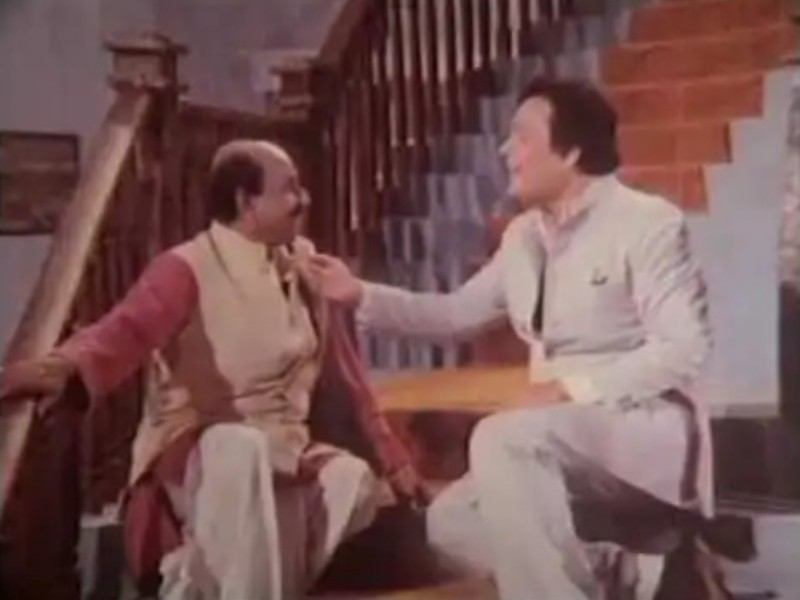 Uttam Kumar with Santosh Dutta in his last movie 'Ogo Bodhu Shundori'. Photo: Screen grab from YouTube
The Mahanayak was not simply born.
He was built.
And the actor who built him remained restless enough to keep changing.
That is why Uttam Kumar at 100 is not merely a story about nostalgia. It is a story about craft, reinvention and the unusual ability to remain recognisable while constantly becoming someone else.
Four and a half decades after his death, Bengal is still watching him, still discussing him and, for new generations, still discovering him.
As Satyajit Ray once put it: “There is none like Uttam, and there will be no one to ever replace him.”
Support Our Journalism
We cannot do without you.. your contribution supports unbiased journalism
IBNS is not driven by any ism- not wokeism, not racism, not skewed secularism, not hyper right-wing or left liberal ideals, nor by any hardline religious beliefs or hyper nationalism. We want to serve you good old objective news, as they are. We do not judge or preach. We let people decide for themselves. We only try to present factual and well-sourced news.
Support objective journalism for a small contribution.