


 Russia Crisis
UN human rights investigators claim Russian Army is committing 'murder' in Ukraine
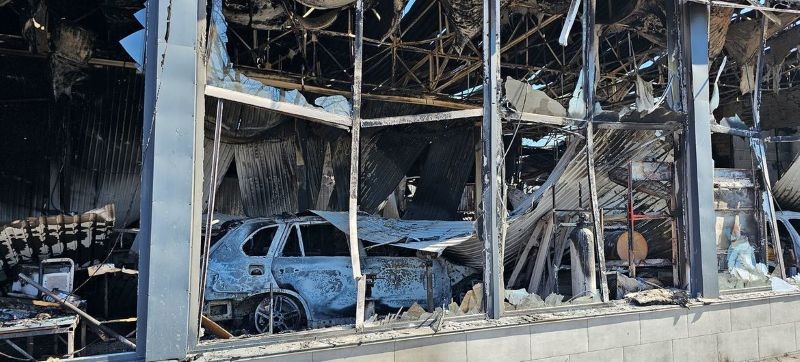
Drones operated by Russian forces have repeatedly attacked Ukrainian civilians, causing deaths, injuries and large-scale destruction, independent UN human rights investigators said on Monday.
The Russian military’s actions amount to two crimes against humanity, the Commission of Inquiry on Ukraine’s report states – firstly of “murder and of forcible transfer of population” and secondly, “deportations and transfers of civilians” from areas occupied by Russian forces, some of whom were tortured.
Systematic and coordinated
The attacks – which have struck a wide range of civilian targets in an area spanning over 300 kilometres along the right bank of the Dnipro River, across Dnipropetrovsk, Kherson, and Mykolaiv oblasts – are systematically coordinated actions designed to drive Ukrainians out of their homes, say the report’s authors.
They have targeted individuals, houses and buildings, humanitarian distribution points and critical energy infrastructure servicing civilians.
They also targeted first responders – including ambulances and fire brigades, which are afforded special protection under international humanitarian law.
Many of the attacks struck the same vehicles and infrastructure repeatedly, deliberately setting them on fire, spreading terror among the civilian population and violating their fundamental human rights.
The report from the UN Human Rights Council-appointed investigation team – established in March 2022 – contains testimony from residents who have come under fire, describing their living conditions as unbearable.
'Severe mental pain and suffering'
“We are hit every day, drones fly at any time - morning, evening, day or night, constantly,” said a man interviewed for the report.
The investigators’ report documents that Russian authorities coordinated actions to deport or transfer groups of people from areas under occupation. Some were transferred to areas under Ukrainian Government control; others were sent to neighbouring Georgia.
Detention, torture and confiscation of documents and belongings are also laid out – acts which have “inflicted severe mental pain and suffering and amount to inhuman treatment as a war crime and a violation of human rights,” the report states.
On Monday, the Commission of Inquiry presented the report to the UN General Assembly’s Third Committee, which deals with social, humanitarian and cultural issues.
The findings are based on some 500 publicly available videos of crimes examined – 247 of which have had their locations technically verified – and 226 interviews with Ukrainian citizens.
The Commission also examined Russian allegations of drone attacks by Ukrainian armed forces against civilian targets in Russian occupied areas. It was unable to draw any conclusions due to lack of access to the territory, concerns relating to the safety of witnesses, and the lack of responses from Russian authorities.
Support Our Journalism
We cannot do without you.. your contribution supports unbiased journalism
IBNS is not driven by any ism- not wokeism, not racism, not skewed secularism, not hyper right-wing or left liberal ideals, nor by any hardline religious beliefs or hyper nationalism. We want to serve you good old objective news, as they are. We do not judge or preach. We let people decide for themselves. We only try to present factual and well-sourced news.
Support objective journalism for a small contribution.


