


UN agency helps farmers in Latin America broaden their market horizons
New York, Dec 14(Just Earth News): Improving market access, particularly beyond national borders, for family farmers and small and medium agriculture enterprises in the Latin America and Caribbean region can help boost rural development as well as spur inclusive trade, the United Nations Food and Agriculture Organization (FAO) has said.
“Bolstering participation in international markets by family farmers and small-scale operations is a fundamental step in making sure the region's food systems are inclusive and contribute to adequate nutrition,” said Tania Santivañez, an agricultural and plant protection official at FAO.
As part of helping small famers in this process, the UN agency has been conducting capacity building and technical assistance programmes to develop their commercial skills and devise appropriate strategies.
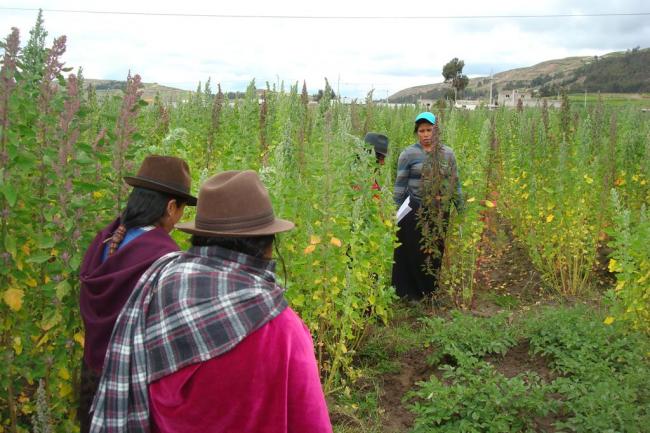
The impact of this work is seen among coffee, quinoa and honey farmers.
Nancy Caichug, the in-charge of marketing at Sumak Life Cooperative (which represents about 600 small farmers cultivating quinoa and other cereals) in Ecuador highlighted the benefits.
“The training increased our opportunity to showcase our products outside of Ecuador, especially in markets that prize their added value,” she said.
Greater income has in turn allowed the farmers to purchase high-quality seeds and fertilizer and pursue sustainable and environmentally-friendly ways of growing higher-priced organic quinoa.
Similarly in Costa Rica, coffee growers are finding new ways to leverage their environmentally-friendly cultivation methods in export markets; while in Argentina, the rising demand has meant individual beekeepers are now working together with other honey farmers, benefitting the entire community.
“None of us can do it alone so this project requires us to work together,” said Alexis Rodriguez from a federation of beekeeping groups, which comprises some 20 cooperatives and about 400 households.
The results of efforts by FAO and partners are also evident at a recent international business conference and trade fair in Santa Cruz, Bolivia, where 14 of those who benefited from the capacity building programmes clinched pre-sales contracts worth around $2 million.
A guide to exporting
To foster and spread the process, FAO together with ALADI, ALADI, an association promoting regional economic integration, has produced a practical guide for small-scale enterprises and family famers interested in exporting their products.
The guide aims to provide basic operational blueprints on the goods trade, tips on how to take it across borders and ways to generate sustainable international sales, and tools for selecting appropriate export market targets.
FAO Photo
Source: www.justearthnews.com
Support Our Journalism
We cannot do without you.. your contribution supports unbiased journalism
IBNS is not driven by any ism- not wokeism, not racism, not skewed secularism, not hyper right-wing or left liberal ideals, nor by any hardline religious beliefs or hyper nationalism. We want to serve you good old objective news, as they are. We do not judge or preach. We let people decide for themselves. We only try to present factual and well-sourced news.
Support objective journalism for a small contribution.


