


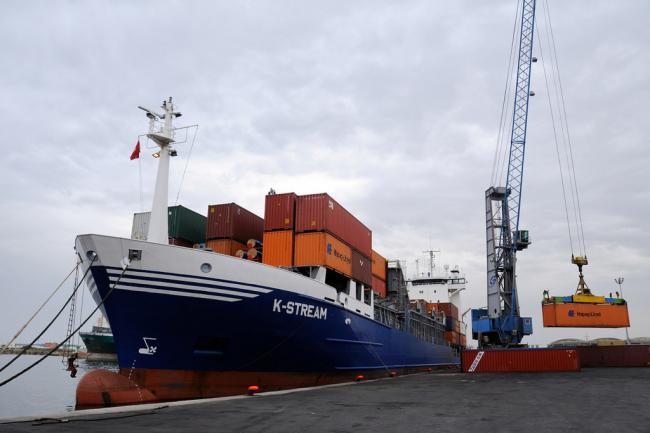
Poor maritime connectivity hurting weaker, smaller nations – UN report
“Planning and forecasts can be significantly improved if data on maritime transport networks are included in the relevant policy processes, such as negotiating trade deals and transport infrastructure development plans,” said Mukhisa Kituyi, the Secretary-General of the UN Conference on Trade and Development (UNCTAD), in a news release announcing the findings.
According to the UNCTAD Review of Maritime Transport, lack of access is particularly challenging for landlocked developing countries, small island developing States and least developed countries leading to fewer, unreliable and expensive transport connections.
These obstacles also further widen the rift between the best- and worst-connected countries, added the news release, calling for increased interconnectedness between national, regional and intercontinental liner shipping services.
“In many countries, domestic shipping services for [transport of goods] are protected from foreign competition. Such market restrictions can lead to unnecessary inefficiencies and a loss of maritime connectivity,” it noted.
Furthermore, well-designed policies allowing – under clearly defined conditions – international shipping lines to also carry domestic or international cargo from feeder vessels can enhance both the competitiveness of a nation’s seaports and the access of importers and exporters to international shipping services, highlighted UNCTAD.
Explaining the benefits, Shamika N. Sirimanne, the Director of the Technology and Logistics Division at UNCTAD said: “Fostering competition among ports is important to ensure that port operators maximize efficiency and pass on efficiency gains to their clients.”
Equally important is improving multimodal transport links: efficient regional trucking markets, inland waterways, rail and road infrastructure, and transit regimes all have an important role to play.
Importance of direct connections
UNCTAD research also revealed that four in five trading country-pairs do not have a direct connection between them which in turn leads to lesser trade between them.
“A key question for trade and transport analysts is whether there are no direct connections between the two countries because there is not enough demand, or […] because the two trading partners are not well connected,” highlighted Jan Hoffmann, the Chief of the Trade Logistics Branch at UNCTAD.
Improving links can, therefore, help boost trade between countries, lower costs associated and also help improve connectivity.
Photo: World Bank/Dana Smillie
Source: www.justearthnews.com
Support Our Journalism
We cannot do without you.. your contribution supports unbiased journalism
IBNS is not driven by any ism- not wokeism, not racism, not skewed secularism, not hyper right-wing or left liberal ideals, nor by any hardline religious beliefs or hyper nationalism. We want to serve you good old objective news, as they are. We do not judge or preach. We let people decide for themselves. We only try to present factual and well-sourced news.
Support objective journalism for a small contribution.


