


 Netherlands
Netherlands returns 1,000-year-old Chola-era copper plates to India during Modi visit
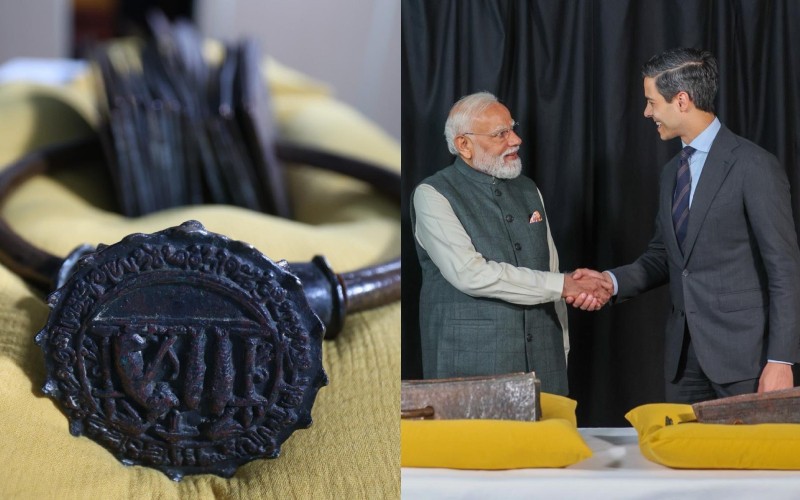
In a significant act of cultural restitution, the Netherlands formally returned a set of 11th-century Chola-era copper plates to India on Saturday during Prime Minister Narendra Modi’s official visit to the EU nation.
The return of the artefacts, known internationally as the Leiden Plates, marks the culmination of more than a decade of diplomatic efforts by India and adds a historic cultural dimension to the growing partnership between the two countries.
'Joyous moment'
Modi announced the development in a post on X, describing the return of the Chola copper plates as “a joyous moment for every Indian”.
The ceremony took place in the presence of Dutch Prime Minister Rob Jetten.
A joyous moment for every Indian!
— Narendra Modi (@narendramodi) May 16, 2026
Chola Copper Plates dating back to the 11th Century will be repatriated to India from the Netherlands. Took part in the ceremony for the same in the presence of Prime Minister Rob Jetten.
The Chola Copper Plates are a set of 21 large plates… pic.twitter.com/Zwu0QFc2ZJ
India had formally sought the return of the artefacts in 2012.
The copper plates date back to the reign of Rajaraja Chola I, who ruled from 985 to 1014 CE.
Historians regard them as among the most important surviving inscriptions from the Chola Empire and one of the most significant pieces of Tamil heritage preserved outside India.
The collection consists of 21 copper plates weighing nearly 30 kilograms and bound by a bronze ring bearing the royal Chola seal.
The inscriptions are written in both Sanskrit and Tamil.
The plates record royal grants made to a Buddhist monastery in Nagapattinam.
Scholars say the inscriptions offer valuable insights into the Chola Empire’s maritime trade links with Southeast Asia and its support for religious and cultural exchange.
Historical accounts suggest Rajaraja Chola I first issued the grant orally, and his son, Rajendra Chola I, later ordered the details to be engraved on copper plates for permanent preservation.
How the Leiden plates reached Netherlands
The artefacts were taken to the Netherlands in the 18th century by Florentius Camper during the period when Nagapattinam was under Dutch control.
For decades, the plates were preserved in Dutch collections and remained accessible primarily to historians and researchers.
They later gained broader recognition among the public, including through references in Ponniyin Selvan.
Diplomatic efforts led to return
India’s request for restitution received support at the 24th session of the Intergovernmental Committee on Return and Restitution, which recognised India as the rightful country of origin.
Following consultations between the two governments, the Dutch authorities decided to hand over the artefacts during Modi’s visit, underscoring the expanding cultural and diplomatic ties between India and the Netherlands.
Support Our Journalism
We cannot do without you.. your contribution supports unbiased journalism
IBNS is not driven by any ism- not wokeism, not racism, not skewed secularism, not hyper right-wing or left liberal ideals, nor by any hardline religious beliefs or hyper nationalism. We want to serve you good old objective news, as they are. We do not judge or preach. We let people decide for themselves. We only try to present factual and well-sourced news.
Support objective journalism for a small contribution.


