


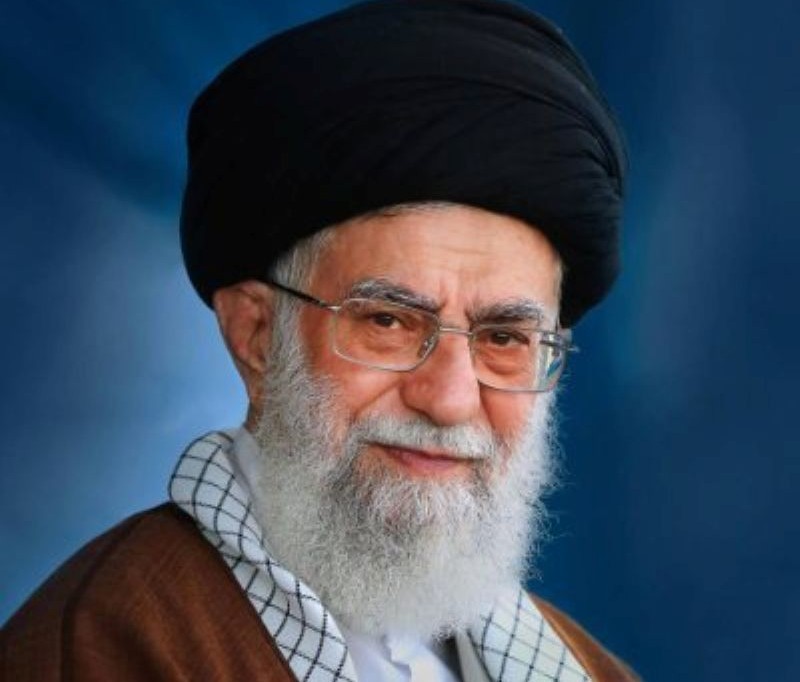
Iran’s Supreme Leader Ali Khamenei killed; region braces for all-out war
Iran’s Supreme Leader Ayatollah Ali Khamenei was killed in coordinated US-Israeli strikes aimed at toppling the Islamic Republic, US President Donald Trump said, declaring the operation a turning point for Iran and the region.
Confirming the execution, The White House in a statement said, "This is not only Justice for the people of Iran, but for all Great Americans, and those people from many Countries throughout the World, that have been killed or mutilated by Khamenei."
"Khamenei, one of the most evil people in History, is dead. This is not only Justice for the people of Iran, but for all Great Americans, and those people from many Countries throughout the World, that have been killed or mutilated by Khamenei..." - President Donald J. Trump pic.twitter.com/oXZTFGg5pS
— The White House (@WhiteHouse) February 28, 2026
Israeli Prime Minister Benjamin Netanyahu said Iran’s Supreme Leader Ayatollah Ali Khamenei’s compound had been destroyed in the strikes, as details emerged of heavy losses among Iran’s top leadership.
Three sources familiar with the matter told Reuters that Iran’s Defence Minister Amir Nasirzadeh and Islamic Revolutionary Guards Corps commander Mohammad Pakpour were among those killed in the attacks.
Iran’s state TV announced that Ayatollah Khamenei has been killed in a US-Israel attack pic.twitter.com/eHcJX5MdRH
— Iran's Today (@Iran) March 1, 2026
Israel’s military said it had also confirmed the deaths of at least five other senior Iranian military commanders, including Ali Shamkhani, a close adviser to the supreme leader.
Iranian media reported that members of Khamenei’s family — including his daughter, grandchild, son-in-law and daughter-in-law — were also killed.
Iran condemned the strikes as “unprovoked and illegal” and responded with missile launches targeting Israel and at least seven other countries, including Gulf states that host US military bases.
About Ayatollah Ali Khamenei
Ayatollah Ali Khamenei, 86, had ruled Iran since 1989. As supreme leader, he wielded ultimate authority over the government, military and judiciary in the Shia Islamic republic.
Initially dismissed by some as weak and indecisive, Khamenei was seen as an unlikely successor after the death of Ayatollah Ruhollah Khomeini, the charismatic founder of the Islamic Republic.
Over time, however, Khamenei consolidated power and established a firm grip over Iran’s political system.
He was once described as “an accident of history” who rose from “a weak president to an initially weak supreme leader to one of the five most powerful Iranians of the last 100 years,” according to Karim Sadjadpour of the Carnegie Endowment for International Peace, speaking to Reuters.
A staunch critic of the West, Khamenei repeatedly attacked Washington throughout his rule, intensifying his rhetoric after Donald Trump began his second term as US president in 2025.
As nationwide protests erupted in Iran with chants of “Death to the dictator,” and as Trump threatened possible intervention, Khamenei vowed earlier this year that Iran would not “yield to the enemy.”
By maintaining the hardline ideological legacy of Khomeini, Khamenei sidelined a succession of reform-minded presidents and resisted political liberalisation, a strategy critics say deepened Iran’s international isolation.
Support Our Journalism
We cannot do without you.. your contribution supports unbiased journalism
IBNS is not driven by any ism- not wokeism, not racism, not skewed secularism, not hyper right-wing or left liberal ideals, nor by any hardline religious beliefs or hyper nationalism. We want to serve you good old objective news, as they are. We do not judge or preach. We let people decide for themselves. We only try to present factual and well-sourced news.
Support objective journalism for a small contribution.


