


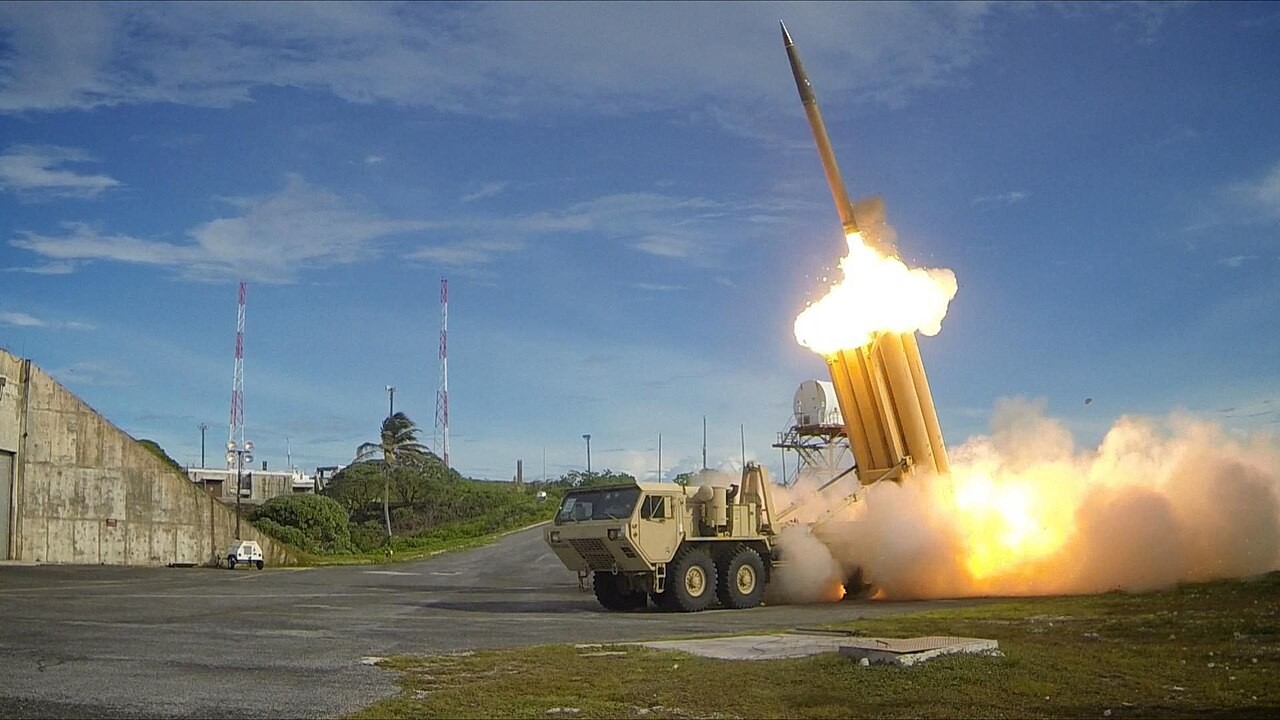
 THAAD
THAAD
Iran targets US missile shield? Key THAAD Radar hit in Middle East amid escalating war
Iran is reportedly attempting to degrade American air defence capabilities by targeting US-made radar systems located across the Arabian Peninsula that detect incoming missiles and drones, media reports said, amid escalating tensions in the region following recent strikes on Tehran.
According to a report by CNN, the radar system supporting a US THAAD missile battery in Jordan was struck and apparently destroyed in the early days of the US-Israeli strikes on Iran. Satellite imagery taken on Monday indicated significant damage to the installation.
Buildings housing similar radar systems were also hit at two locations in the United Arab Emirates, CNN’s analysis showed, although it remains unclear whether the equipment itself was damaged.
The radar forms a crucial part of the high-end missile interceptor system used to detect and destroy ballistic missiles during flight toward their targets.
The United States operates eight THAAD batteries worldwide, while the UAE operates two and Saudi Arabia operates one.
The damaged system was located at Muwaffaq Salti Air Base in Jordan, more than 500 miles from Iran. CNN reported that the radar and THAAD battery had been stationed at the base since at least mid-February and were likely struck on March 1 or 2.
The base has been a major hub for US military operations. Satellite images taken before the conflict showed more than 50 fighter jets on the tarmac, along with drones and transport aircraft. Dozens of aircraft shelters at the base likely housed additional planes that were hidden from satellite view, the report said.
According to media reports, this may not be the only THAAD system affected during the early days of the conflict. In satellite imagery captured on March 1, smoke was seen rising from a radar site near Prince Sultan Air Base in Saudi Arabia, where dozens of US aircraft are stationed.
N.R. Jenzen-Jones, a munitions specialist and director of the research firm Armament Research Services, told CNN that the radar cannot be easily replaced and described the loss as significant.
“The AN/TPY-2 radar is essentially the heart of the THAAD battery, enabling the launch of interceptor missiles and contributing to a networked air defence picture,” he said. “It is also an incredibly expensive piece of equipment. The loss of even a single radar of this type would be operationally significant. A replacement unit would likely have to be redeployed from elsewhere, which would take time and effort.”
What is THAAD?
According to the United States Department of Defense, the Terminal High Altitude Area Defense (THAAD) system is a key element of US ballistic missile defence.
THAAD uses interceptor missiles equipped with “hit-to-kill” technology to destroy incoming ballistic missiles. The system is capable of engaging targets at ranges of approximately 150–200 kilometres.
THAAD forms the middle tier of the US ballistic missile defence network and can protect a larger area than the Patriot Air and Missile Defense System. It works alongside other systems such as the Aegis Ballistic Missile Defense System and the Ground-Based Midcourse Defense system.
A typical THAAD battery includes about 90 soldiers, six truck-mounted launchers, 48 interceptor missiles (eight per launcher), one AN/TPY-2 radar, and a tactical fire-control and communications unit.
The system provides commanders with a rapidly deployable defence capability against short-range, medium-range and limited intermediate-range ballistic missile threats, intercepting them during their final phase of flight either inside or outside the atmosphere.
THAAD was developed by Lockheed Martin and is manufactured in the United States under the supervision of the Missile Defense Agency.
The United States launched a military operation against Iran on February 28, which reportedly resulted in the death of Iran’s Supreme Leader Ali Khamenei.
In retaliation, Iran carried out missile and drone strikes across several countries in the Middle East, raising fears of a wider regional conflict.
Support Our Journalism
We cannot do without you.. your contribution supports unbiased journalism
IBNS is not driven by any ism- not wokeism, not racism, not skewed secularism, not hyper right-wing or left liberal ideals, nor by any hardline religious beliefs or hyper nationalism. We want to serve you good old objective news, as they are. We do not judge or preach. We let people decide for themselves. We only try to present factual and well-sourced news.
Support objective journalism for a small contribution.


