September 28, 2026 12:49 pm (IST)

Follow us:


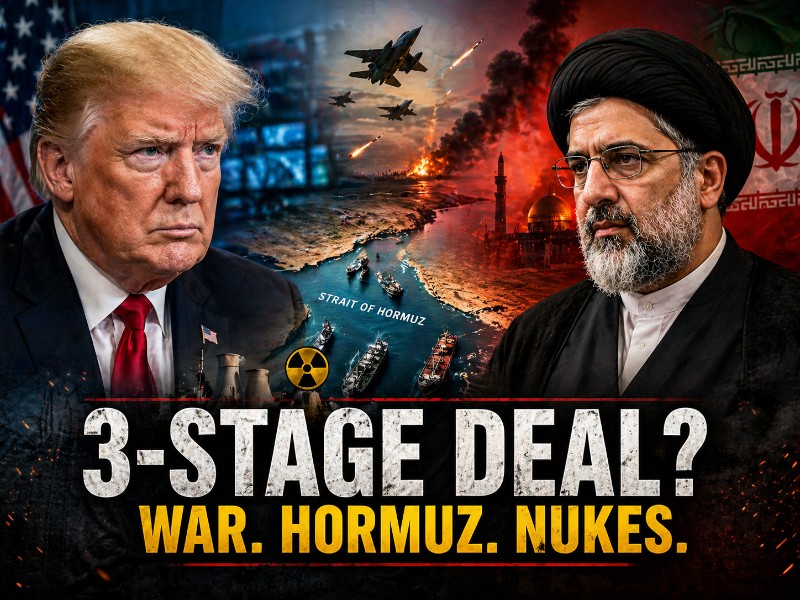
Iran sets conditions for US talks—Peace first, Strait of Hormuz next, nuclear issue last
Iran has outlined a three-stage framework for potential negotiations with the United States, placing the end of the ongoing conflict and control of the Strait of Hormuz ahead of any discussion on its nuclear programme.
The proposal emerged after the second round of talks between the two sides in Pakistan failed to produce a breakthrough, further extending the diplomatic deadlock.
Three-stage proposal outlined
According to regional media reports, Tehran has conveyed its proposal through intermediaries, setting out a phased roadmap for any future engagement with Washington.
The first stage calls for a complete end to the ongoing war, along with guarantees to prevent further hostilities involving Iran and its regional allies, including Lebanon.
The second stage focuses on discussions around the administration and management of the Strait of Hormuz, a critical global energy route.
Only after these two stages are addressed would Iran agree to enter the third phase, which involves negotiations on its nuclear programme.
Nuclear issue deferred in talks
The sequencing outlined by Iran places the nuclear issue at the final stage of negotiations, diverging from the United States’ long-standing position that prioritises restrictions on uranium enrichment and stockpiles.
Washington has consistently sought commitments from Tehran to curb its nuclear capabilities as part of any broader agreement.
America's response
Responding to the proposal, the White House reiterated that discussions remain sensitive and would not be conducted through public channels.
US President Donald Trump has maintained that any agreement must align with American interests and prevent Iran from acquiring nuclear weapons.
Talks stall after Pakistan round
The second round of talks in Islamabad ended without progress, with Iran’s Foreign Minister Abbas Araghchi declining direct negotiations with US representatives.
Trump later indicated that future discussions could take place remotely, suggesting a shift in the format of engagement.
Diplomatic engagements continue
Following the talks, Araghchi continued diplomatic outreach, including visits to Oman and Pakistan, before departing for Russia.
He is expected to meet Vladimir Putin to discuss ongoing developments related to the conflict and the ceasefire.
Meanwhile, the US administration is preparing for internal consultations, with reports indicating a scheduled meeting involving senior national security officials.
Ongoing deadlock
The initial round of negotiations held earlier in April concluded without agreement, with both sides citing differences over core issues.
US Vice President JD Vance stated that Washington had presented its final offer, while Iranian officials indicated that trust had not been established during the discussions.
Ceasefire holds amid uncertainty
A fragile ceasefire continues to hold in the region, even as the broader conflict, which began in late February, approaches the two-month mark.
Despite ongoing diplomatic activity, key disagreements remain unresolved, with the proposed three-stage framework now shaping the next phase of engagement between Iran and the United States.
#Iran US talks proposal
# Strait of Hormuz negotiations
# Iran nuclear talks delay
# Abbas Araghchi diplomacy
# Donald Trump Iran policy
# Middle East ceasefire news
# US Iran relations 2026
# Hormuz crisis updates
Support Our Journalism
We cannot do without you.. your contribution supports unbiased journalism
IBNS is not driven by any ism- not wokeism, not racism, not skewed secularism, not hyper right-wing or left liberal ideals, nor by any hardline religious beliefs or hyper nationalism. We want to serve you good old objective news, as they are. We do not judge or preach. We let people decide for themselves. We only try to present factual and well-sourced news.
Support objective journalism for a small contribution.



Latest Headlines