


 Iran War
Iran conflict: After Saudi, UAE considers ground deployment as push to reopen Hormuz intensifies
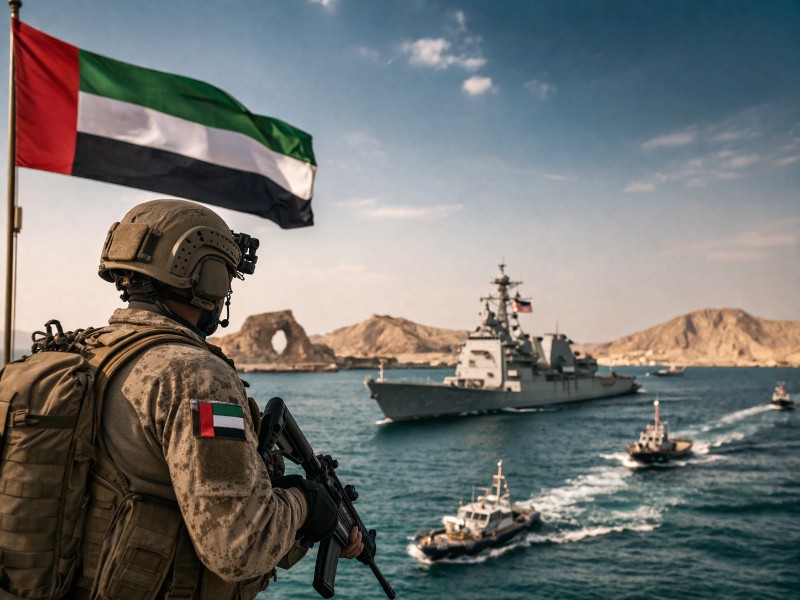
Amid intensifying conflict in West Asia, the United Arab Emirates is reportedly preparing to take a more direct role in efforts to reopen the strategically vital Strait of Hormuz.
The move signals a potential shift in the region’s security dynamics, as Gulf nations reassess their positions in response to prolonged disruptions in energy flows.
If the UAE proceeds with military involvement alongside the United States and its allies, it would mark the first instance of a Gulf country entering direct combat against Iran in the current conflict.
Diplomatic push for international mandate
According to a report by The Wall Street Journal, Emirati officials are actively lobbying for a resolution at the United Nations Security Council that could authorise the use of force to secure the Strait.
Bahrain, which hosts the US Navy’s Fifth Fleet, is backing the proposed resolution, with a vote anticipated in the coming days.
Emirati diplomats have also urged the United States and allied powers across Europe and Asia to form a coalition capable of reopening the waterway.
Strategic importance of Hormuz corridor
The Strait of Hormuz remains a critical artery for global trade, handling roughly 20 percent of the world’s oil supply.
Gulf economies depend heavily on this route not only for energy exports but also for essential imports, including food and industrial goods.
Iran’s blockade of the passage, imposed in response to US and Israeli military actions, has significantly disrupted shipping activity, affecting global energy markets and increasing geopolitical tensions.
UAE evaluates operational involvement
Emirati officials have indicated that the country is assessing how it could contribute militarily to efforts aimed at restoring navigation through the Strait.
Potential roles under consideration include clearing naval mines and providing logistical and operational support.
Reports also suggest that the UAE has advocated for US control over key islands within the Strait, including Abu Musa, a territory currently administered by Iran but claimed by the UAE.
The UAE’s Foreign Ministry has emphasised the need to preserve freedom of navigation, describing it as a widely supported international priority.
Policy shift in regional alignment
The UAE’s evolving stance represents a notable change in its strategic posture.
Dubai, a major commercial hub within the federation, has historically maintained economic ties with Iran.
However, ongoing hostilities and repeated attacks have prompted a reassessment of these relationships.
Other Gulf states, including Saudi Arabia, have also signalled growing concern over Iran’s actions.
While they have not formally committed to military participation, officials have indicated support for continued pressure on Tehran.
Restrictions on Iranian movement
In parallel with its strategic recalibration, the UAE has introduced new restrictions on Iranian nationals.
Major airlines, including Emirates, Etihad Airways and FlyDubai, have announced limitations on entry and transit for Iranian passport holders.
The measures come amid broader steps taken within Dubai, including the closure of long-standing Iranian-linked institutions, reflecting heightened security concerns during the conflict.
Israel signals emerging regional coordination
The reported developments coincide with statements from Israeli Prime Minister Benjamin Netanyahu, who has indicated that new regional partnerships are taking shape in response to the conflict.
Israeli officials have suggested that several Arab nations are exploring coordinated approaches to counter Iran’s actions, pointing to a shift in regional alignments driven by shared security concerns.
Saudi Arabia signals potential escalation
Saudi Arabia has also issued strong warnings regarding the trajectory of the conflict.
Foreign Minister Faisal bin Farhan Al Saud has stated that the kingdom and its partners possess significant capabilities that could be deployed if tensions continue to rise.
Although Riyadh has so far refrained from direct military engagement, officials have indicated that ongoing attacks and disruptions, including those affecting oil infrastructure and maritime routes, are eroding diplomatic progress achieved in recent years.
As Iran continues missile and drone operations targeting Gulf states and maintains its control over the Strait of Hormuz, the possibility of broader regional involvement is increasing.
Support Our Journalism
We cannot do without you.. your contribution supports unbiased journalism
IBNS is not driven by any ism- not wokeism, not racism, not skewed secularism, not hyper right-wing or left liberal ideals, nor by any hardline religious beliefs or hyper nationalism. We want to serve you good old objective news, as they are. We do not judge or preach. We let people decide for themselves. We only try to present factual and well-sourced news.
Support objective journalism for a small contribution.


