


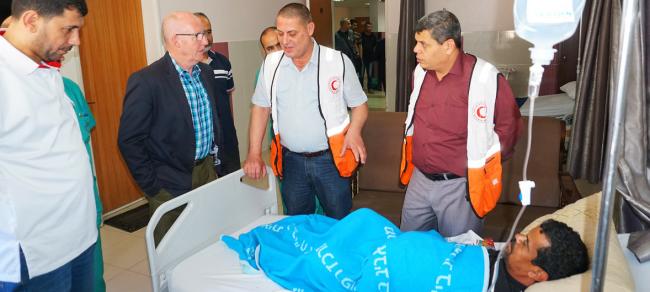
Essential services on verge of shutdown in Gaza as emergency fuel set to run out
New York, July 23 (IBNS): Supplies of emergency fuel provided by the United Nations for critical facilities in Gaza are being fast depleted, a senior UN relief official there warned on Sunday.
“At least one hospital has been forced to shut down for a few hours, and services are being dramatically reduced at others,” said Jamie McGoldrick, the Humanitarian Coordinator for the Occupied Palestinian Territory.
“Given ongoing blackouts of about 20 hours a day, if fuel does not come in immediately, people’s lives will be at stake, with the most vulnerable patients, like cardiac patients, those on dialysis, and newborns in intensive care, at highest risk”, he added.
The humanitarian situation in Gaza – controlled by Hamas, a militant Palestinian faction – has been negatively impacted by a blockade of the enclave imposed by Israel.
Since last Monday, the Israeli authorities have prohibited the entry of fuel into Gaza as part of tightened import and export restrictions, reportedly in response to the launch of incendiary kites from Gaza into Israel, which has caused extensive property damage.
McGoldrick called on Israel to end restrictions preventing the import of fuel and for donors to provide immediate funding for emergency fuel, currently set to run out in early in August.
According to the World Health Organization (WHO), Al Quds Hospital, which provides life-saving medical interventions for 150,000 people per year, including major surgeries, deliveries and intensive care will be forced to shut down in coming days due to lack of fuel.
Four other hospitals are likely to run out of fuel within the next three days, thus significantly reducing the provision of essential medical services to the population in Gaza.
The Palestinian Ministry of Health already has implemented strict contingency measures: hospitals have reduced diagnostic, sterilization and cleaning services, increasing the risk of infections amongst patients.
Elective surgeries are being further reduced. Over 7,000 elective surgeries have been postponed in recent months due to the mass trauma casualties and low resources available to cope with the demand.
At highest risk, currently, are over 2,000 patients in Gaza’s hospitals, who rely on electrical devices, including neonates in incubators.
Over 1.27 million people would be directly affected by hospital closures and a reduction in the provision of vital health interventions.
Additionally, the reduced functioning of water and sanitation facilities risks an increase in waterborne disease and outbreaks.
“Until more sustainable solutions for the electricity crisis in Gaza are found, two steps can avert further devastation in Gaza in the short term,” said McGoldrick. “Israel must let fuel and other essential supplies in and donors must mobilize resources to ensure that critical facilities receive the fuel they need.”
An average of 950,000 litres is distributed by the UN each month to around 220 critical hospitals and health clinics; water and sewage treatment sites; and solid waste collection services.
OCHA/Mustafa El Halabi
Support Our Journalism
We cannot do without you.. your contribution supports unbiased journalism
IBNS is not driven by any ism- not wokeism, not racism, not skewed secularism, not hyper right-wing or left liberal ideals, nor by any hardline religious beliefs or hyper nationalism. We want to serve you good old objective news, as they are. We do not judge or preach. We let people decide for themselves. We only try to present factual and well-sourced news.
Support objective journalism for a small contribution.


