

Donald Trump adds Abraham Accords demand to Iran nuclear deal talks
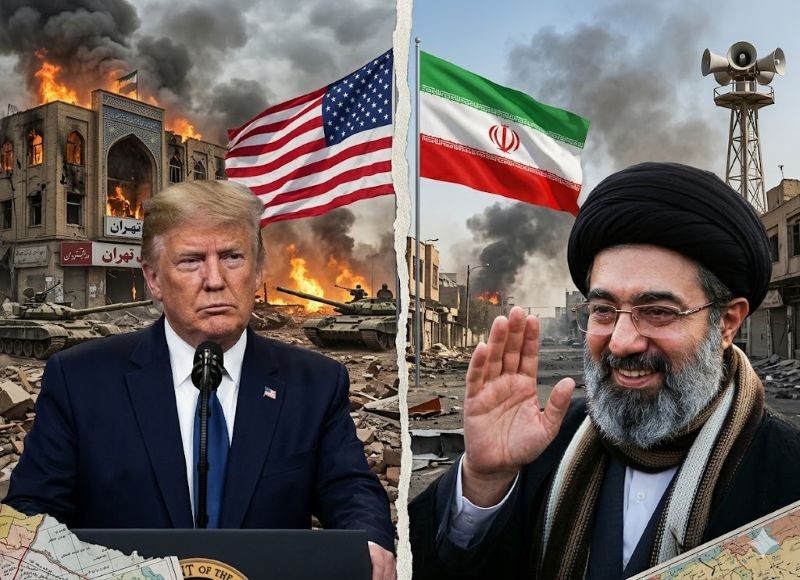
Days after US Secretary of State Marco Rubio suggested progress was being made on a possible Iran nuclear agreement, US President Donald Trump has introduced a fresh condition that could significantly raise the stakes in negotiations.
Trump now wants Middle Eastern countries — including Iran — to join the Abraham Accords as part of any final agreement with Washington.
The demand adds to an already extensive list of US conditions, including keeping the Strait of Hormuz open, a complete halt to Iranian uranium enrichment, and no compensation for losses suffered by Tehran during the recent conflict.
What are The Abraham Accords?
The Abraham Accords were brokered by the United States in 2020 during Trump’s first term. The agreements led several Muslim-majority nations to normalise diplomatic relations with Israel.
The United Arab Emirates and Bahrain were the first signatories, followed later by Morocco, Sudan and Kazakhstan.
In a lengthy post on Truth Social, Trump said he had spoken with leaders from Saudi Arabia, Qatar, Pakistan, Turkey, Egypt, Jordan and Bahrain, urging them to sign the accords simultaneously.
“The Abraham Accords have proven to be a financial, economic and social boom,” Trump wrote, claiming participating countries had benefited even during periods of conflict.
Saudi Arabia, Qatar asked to move first
Trump singled out Saudi Arabia and Qatar as the countries that should take the lead.
“It should start with the immediate signing by Saudi Arabia and Qatar, and everybody else should follow suit,” he said.
Earlier this year, Saudi Crown Prince Mohammed bin Salman indicated that Riyadh could consider joining the accords if there was a “clear path” towards a two-state solution involving Israel and the Palestinians.
Trump also extended the proposal to Iran itself, saying Tehran would be welcome to join the regional framework if it reached an agreement with Washington.
“It will only be a Great Deal for all or no Deal at all,” Trump warned, adding that failure could mean a return “to the battlefront and shooting.”
Rubio Signals progress, Iran urges caution
The latest demand comes shortly after Rubio hinted that negotiations were moving forward.
Speaking during his India visit, Rubio said US officials believed they were close to a breakthrough, particularly on discussions involving the Strait of Hormuz.
“We thought we might have some news last night, maybe today,” Rubio said.
However, Esmaeil Baqaei, spokesperson for Iran’s foreign ministry, pushed back against suggestions that a deal was imminent.
“It is correct to say that we have reached a conclusion on a large portion of the issues under discussion,” he said, while cautioning that no one could yet claim an agreement was near.
The United States and Iran have observed a ceasefire since April 8 as negotiations continue. Despite the pause in hostilities, tensions remain high over control of Gulf shipping routes and the strategic Strait of Hormuz.
Support Our Journalism
We cannot do without you.. your contribution supports unbiased journalism
IBNS is not driven by any ism- not wokeism, not racism, not skewed secularism, not hyper right-wing or left liberal ideals, nor by any hardline religious beliefs or hyper nationalism. We want to serve you good old objective news, as they are. We do not judge or preach. We let people decide for themselves. We only try to present factual and well-sourced news.
Support objective journalism for a small contribution.