


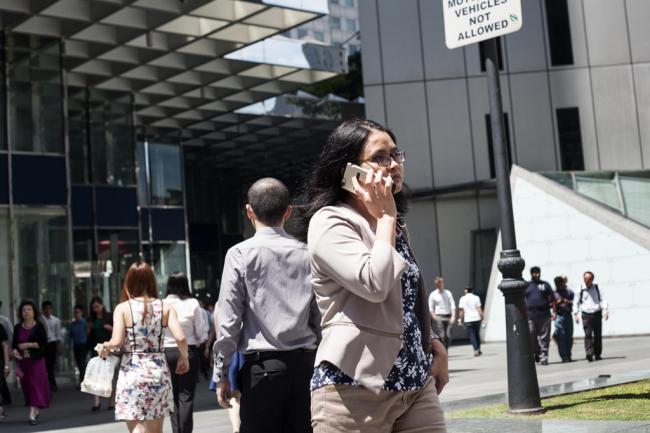
Closing gender gap at work can open doors to incredible benefits, UN report shows
According to the UN agency, even though women are significantly less likely to participate in the labour market than men, once they manage to enter the labour market, finding work remains even more difficult for them their male counterparts.
“Helping women access the labour market is nevertheless an important first step,” said ILO in a news release, noting that in 2017, the global labour force participation rate for women – at just over 49 per cent – is nearly 27 percentage points lower than for men.
This figure is forecast to remain unchanged in 2018.
Further recalling the commitment expressed by G20 leaders, in 2014, to reduce the gap in participation rates between men and women by 25 per cent by the year 2025, the ILO report World Employment and Social Outlook Trends for Women 2017, estimates that some $5.8 trillion could be added to the world economy.
This could also unlock large potential tax revenues, in particular in countries in the North Africa, Arab and Southern Asia regions.
In addition to the significant economic benefits, engaging more women in the world of work would have a positive impact on their well-being since most women would like to work.
“The fact that half of women worldwide are out of the labour force when 58 per cent of them would prefer to work at paid jobs is a strong indication that there are significant challenges restricting their capabilities and freedom to participate,” said Deborah Greenfield, the ILO Deputy Director-General for Policy.
“The most immediate concern for policy makers, therefore, should be to alleviate the constraints that women face in choosing to enter the labour market and address the barriers they are confronted with once they are in the workplace,” she added.
Attitudes on women and men 'roles' have to change
Furthermore, the ILO report also highlighted the need to “redefine the roles” of men and women at the workplace.
“We need to start by changing our attitudes towards the role of women in the world of work and in society. Far too often some members of society still fall back on the excuse that it is 'unacceptable' for a woman to have a paid job,” said Steven Tobin, the lead author of the report.
The report also emphasized the need to promote equal pay for work of equal value; tackle root causes of occupational and sectoral segregation; recognize, reduce and redistribute unpaid care work; as well as transforming institutions to prevent and eliminate discrimination, violence and harassment against women and men in the world of work.
“Policies should also address the socio-economic factors that influence participation by introducing policies that improve work-family balance, create and protect quality jobs in the care economy and target the macroeconomic environment and informal economy,” added Tobin.
Photo: ILO/Giorgio Taraschi
Source: www.justearthnews.com
Support Our Journalism
We cannot do without you.. your contribution supports unbiased journalism
IBNS is not driven by any ism- not wokeism, not racism, not skewed secularism, not hyper right-wing or left liberal ideals, nor by any hardline religious beliefs or hyper nationalism. We want to serve you good old objective news, as they are. We do not judge or preach. We let people decide for themselves. We only try to present factual and well-sourced news.
Support objective journalism for a small contribution.


