


Canada: University of Toronto's Centre for Planetary Sciences uses AI to count craters on the moon
Toronto, Mar 14 (IBNS): Researchers at the University of Toronto (U of T), Ontario, have used the new technology behind self-driving cars to measure the size and location of crater impacts on the moon, media reports said.
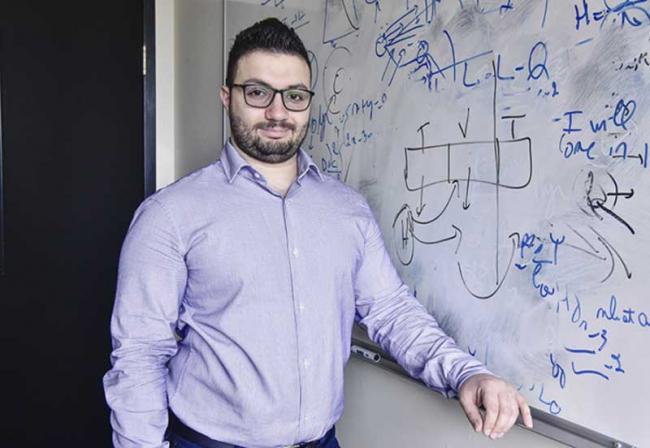
“When it comes to counting craters on the moon, it’s a pretty archaic method. Basically we need to manually look at an image, locate and count the craters and then calculate how large they are based on the size of the image. Here we’ve developed a technique from artificial intelligence that can automate this entire process that saves significant time and effort,” Mohamad Ali-Dib, a postdoctoral researcher at the Centre for Planetary Sciences (CPS) at U of T, Scarborough. said.
The research, which is currently under review in the journal Icarus, received funding from the Natural Sciences and Engineering Research Council of Canada (NSERC).
Algorithms had been developed in the past by researchers to identify and count lunar craters but could not get the desired results.
“It’s the first time we have an algorithm that can detect craters really well, for not only parts of the moon, but also areas of Mercury,” Ali-Dib, who developed the technique along with alumnus Ari Silburt, postdoctoral researcher Chenchong Charles Zhu, and a group of researchers at CPS and the Canadian Institute for Theoretical Astrophysics (CITA), said.
To determine its accuracy, the neural network was first trained by researchers on a large data set covering two-thirds of the moon.
These trained network were then tested on the remaining third of the moon.
This strategy worked very well and it was able to identify about 6,000 previously unidentified craters on the moon, twice as many craters from traditional manual counting.
The technique is based on a class of machine learning algorithms known as convolutional neural network and has reportedly been successfully used for computer vision to power robots and even self-driving cars.
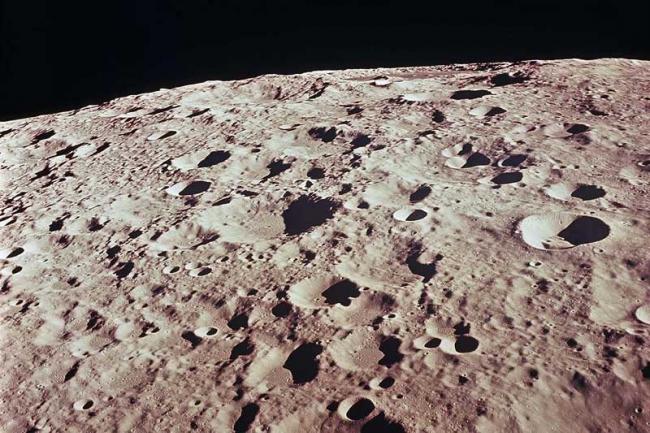 The algorithms had taken the data from elevation maps gathered from orbiting satellites.
This technique was developed by researchers after a series of workshops held at U of T Scarborough, co-organized by Associate Professor Kristen Menou reportedly throwing light on how specific scientific problems could be tackled both by machine learning and deep learning
“Tens of thousands of unidentified small craters are on the moon, and it’s unrealistic for humans to efficiently characterize them all by eye,” Ari Silburt, a former graduate student in U of T’s department of astronomy and astrophysics and now a postdoc at Penn State University said.
“There’s real potential for machines to help identify these small craters and reveal undiscovered clues about the formation of our solar system.”
Knowing the size and location of craters on bodies like the moon is important because it shows researchers the history of our solar system.
The study of impact from craters of all shapes, sizes and ages enables researchers to better understand the distribution of material and the physics that occurred in the early stages of our solar system, said Ali-Dib.
The ages of large craters can also be determined by counting how many small craters are found inside it.
“For this technique to work you need an airless body like the moon or Mercury, bodies where there’s little erosion taking place,” adds Ali-Dib.
Ali-Dib and his team is expected to promote the use of algorithm to facilitate researchers to find more craters.
They also intend to test this technique on other solar system bodies like Mars, Ceres and the icy moons of Jupiter and Saturn.
(Reporting by Asha Bajaj)
Images: sourced from social media
Support Our Journalism
We cannot do without you.. your contribution supports unbiased journalism
IBNS is not driven by any ism- not wokeism, not racism, not skewed secularism, not hyper right-wing or left liberal ideals, nor by any hardline religious beliefs or hyper nationalism. We want to serve you good old objective news, as they are. We do not judge or preach. We let people decide for themselves. We only try to present factual and well-sourced news.
Support objective journalism for a small contribution.


