


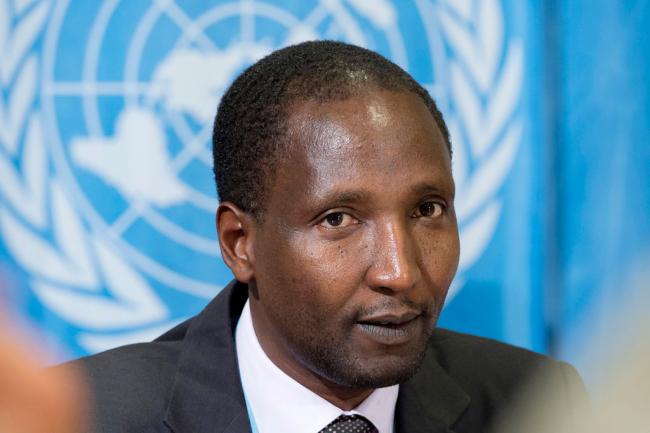
Addressing economic inequalities key to countering terrorism without fueling racism – UN expert
“After recent terrorist attacks, I have witnessed the proliferation of anti-Muslim rhetoric and the rise of right-wing extremist parties,” Mutuma Ruteere, the UN Special Rapporteur on contemporary forms of racism told the Geneva-based Human Rights Council.
Introducing his latest report, he said: “This has led to an atmosphere of fear towards Muslims in countries where they are seen as a separate ethnic group or viewed as foreign.”
“Meanwhile,” the UN expert continued, “counter-terrorism policies have disproportionally affected people from Middle Eastern countries, considerably restricting their freedom of movement. Several countries have amended legislation to make it easier to strip citizens of their nationalities if they are suspected of terrorist-related activities.”
Ruteere called addressing economic inequalities “key” to meeting the challenge of countering terrorism without fuelling racism, xenophobia and discrimination.
“With the onset of economic crises worldwide, populist parties have gained support by capitalizing on constituents' concerns over the financial burdens of migration and their belief that migrants engage in crime, take jobs away from nationals, pose a threat to national identity or have religious practices that are incompatible with modern societies,” he explained.
He also noted the particular challenges being posed to human rights and democracy by neo-Nazis, skinhead groups and other extremist movements.
“Consistent vigilance against racist and xenophobic crimes is required,” underscored Ruteere. “States must do more to combat the rise in extremist groups, and highlight good practices developed by each other and by other stakeholders.”
“Extremists continue to blame vulnerable groups for society's problems and incite intolerance and violence against them. States and other relevant groups must ensure better protection for victims and prevent future crimes,” he stressed.
Ruteere's report also looked at racism in sport, the Internet and social media, the role of education in the prevention of racism, and the use of racial profiling in law enforcement.
While pointing out that new technologies, including the Internet, are key tools in preventing racism and discrimination, he noted: “The intersection of poverty and racism means that excluded minority groups might have less access to the internet. States should, therefore, adopt measures to make the Internet widely available, increasing opportunities for meaningful interaction and participation.”
Special Rapporteurs and independent experts are appointed by the Geneva-based UN Human Rights Council to examine and report back on a specific human rights theme or a country situation. The positions are honorary and the experts are not UN staff, nor are they paid for their work.
UN Photo/Jean-Marc Ferré
Source: www.justearthnews.com
Support Our Journalism
We cannot do without you.. your contribution supports unbiased journalism
IBNS is not driven by any ism- not wokeism, not racism, not skewed secularism, not hyper right-wing or left liberal ideals, nor by any hardline religious beliefs or hyper nationalism. We want to serve you good old objective news, as they are. We do not judge or preach. We let people decide for themselves. We only try to present factual and well-sourced news.
Support objective journalism for a small contribution.


