Nitin Gadkari releases India’s first ever Highway Capacity Manual
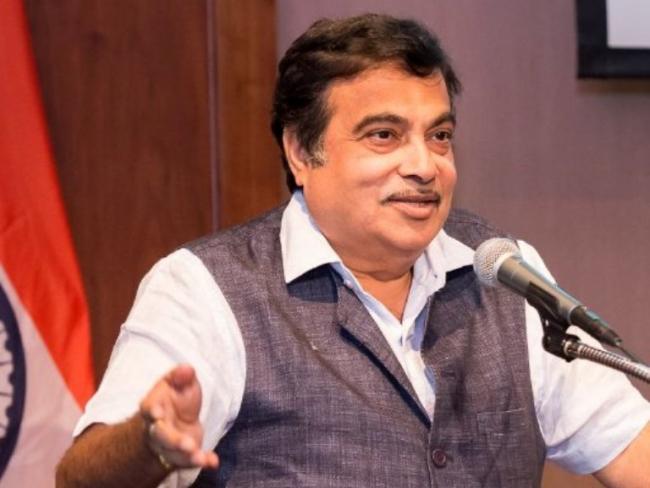
New Delhi, Feb 12 (IBNS): Minister of Road Transport & Highways, Shipping and Water Resources, River Development and Ganga Rejuvenation Nitin Gadkari released India’s first ever Highway Capacity Manual in New Delhi on Monday.
The manual, known as Indo-HCM, has been developed by CSIR – CRRI on the basis of an extensive, country-wide study of the traffic characteristics on different categories of roads like single lane, two-lane, multi-lane urban roads, inter-urban highways and expressways and the associated intersections on these roads. The study involved seven academic institutions including IITs at Roorkee, Mumbai and Guwahati, School of Planning and Architecture, New Delhi, Indian Institute of Engineering and Science and Technology, Shibpur, Sardar Vallabhai Patel National Institute of Technology, Surat and Anna University, Chennai.
The manual lays down guidelines for when and how to expand or manage different types of roads and their intersections and the level of services to be put in place.
It is designed to be a useful tool for guiding road engineers and policy makers in the country. It has been developed based on the unique nature and diversity of traffic on Indian roads.
While countries like USA, China, Malaysia, Indonesia, Taiwan developed their own Highway Capacity Manuals long time back, this is the first time that the manual has been developed in India.
Speaking on the occasion Shri Nitin Gadkari expressed hope that the long awaited manual would help in the scientific planning and expansion of road infrastructure in the country.
Calling upon the scientific fraternity, as well as the designers, policy makers and executioners of highways projects the Minister said that India urgently needs to catch up with the world’s best technology and practices being used in the sector so that we are able to build world class infrastructure that is safe, cost effective and environment friendly.
Gadkari also underscored the need to popularize the use of new material like fly-ash, plastic, oil slag and municipal waste in road construction, saying that scientists and the media should also play an active role in this regard.
He also called upon researchers and engineers to expedite formulation of a good design for safe and effective speed breakers for Indian roads.
Support Our Journalism
We cannot do without you.. your contribution supports unbiased journalism
IBNS is not driven by any ism- not wokeism, not racism, not skewed secularism, not hyper right-wing or left liberal ideals, nor by any hardline religious beliefs or hyper nationalism. We want to serve you good old objective news, as they are. We do not judge or preach. We let people decide for themselves. We only try to present factual and well-sourced news.
Support objective journalism for a small contribution.