 India-Iran
India condoles Khamenei's death as foreign secretary meets Iranian envoy in Delhi
New Delhi/IBNS: India has formally conveyed condolences to Iran following the death of its Supreme Leader Ali Khamenei, who died hours after US–Israeli air strikes in Tehran.
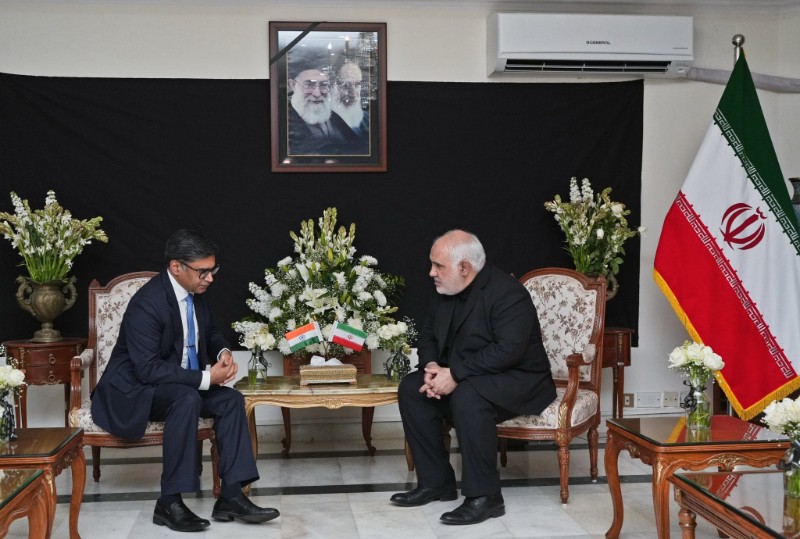
Foreign Secretary Vikram Misri met Iran’s ambassador to India, Mohammad Fathali, on Thursday and signed the condolence register opened at the embassy in New Delhi to honour Khamenei’s passing.
The meeting marked the first formal gesture by the Indian government following the Iranian leader’s death earlier this week.
Khamenei, who had led Iran for more than three decades, was killed in US-Israeli air strikes on Sunday amid escalating hostilities in the Middle East.
Diplomatic gesture signals subtle shift
The condolence message appears to signal a nuanced adjustment in New Delhi’s approach to the crisis.
In the immediate aftermath of the air strikes that killed Khamenei, India refrained from issuing a direct condemnation of the attack.
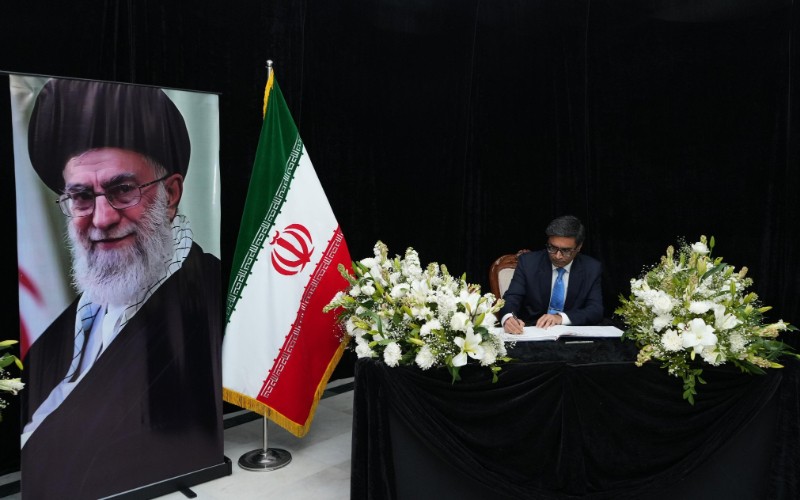 Foreign Secretary Vikram Misri signs Khamenei's condolence register at Iran embassy in Delhi. Photo: XPD, MEA
The government maintained a cautious silence despite strong demands from opposition parties urging a formal statement.
The diplomatic visit by Misri to the Iranian embassy therefore represents a measured expression of sympathy while avoiding direct commentary on the military action itself.
Modi calls for dialogue and diplomacy
Prime Minister Narendra Modi later addressed the broader situation in the Middle East, emphasising the need for peaceful engagement.
Speaking about the unfolding crisis, Modi reiterated India’s long-standing position that dialogue and diplomacy remain the most effective ways to resolve international disputes.
He stressed that India consistently advocates negotiations rather than confrontation in addressing geopolitical tensions.
Addressing the joint press meet with President Alexander Stubb of Finland. @alexstubb https://t.co/5EbPxNhi25
— Narendra Modi (@narendramodi) March 5, 2026
Alignment with G7 response
India’s cautious response mirrors the approach taken by the Group of Seven democracies.
None of the G7 nations issued formal condolences following Khamenei’s death, reflecting the complex diplomatic landscape surrounding Iran and its relations with Western countries.
By expressing condolences without criticising the strikes, India has maintained a carefully balanced diplomatic posture amid the escalating regional conflict.
Oppositions call for stronger statement
Opposition leaders in India have argued that the government should have responded more explicitly, given the long-standing ties between New Delhi and Tehran.
For decades, India maintained extensive energy and trade relations with Iran. At one stage, Iran supplied nearly 13 per cent of India’s crude oil imports.
However, bilateral trade and energy cooperation declined sharply after the United States imposed sanctions on Iran following its withdrawal from the Joint Comprehensive Plan of Action.
These sanctions forced India and several other countries to significantly reduce their purchases of Iranian oil.
#WATCH | Foreign Secretary Vikram Misri visited the @Iran_in_India and signed the condolence book, expressing condolences for deceased Iranian Supreme Leader Ayatollah Ali Khamenei.@MEAIndia #AyatollahAliKhamenei #KhameneiDeath pic.twitter.com/g9RuFKQZhL
— DD News (@DDNewslive) March 5, 2026
Longstanding strategic relationship
Despite the downturn in energy trade, India and Iran continue to maintain diplomatic and strategic ties.
The relationship historically spans energy cooperation, regional connectivity projects and trade links, including infrastructure initiatives connecting India with Central Asia through Iran.
As tensions in the Middle East intensify following Khamenei’s death, India appears to be navigating a delicate diplomatic path — maintaining its relations with Iran while avoiding direct confrontation with Western partners.
The meeting between the Foreign Secretary and Iran’s ambassador illustrates New Delhi’s effort to preserve this balance at a time of heightened geopolitical uncertainty.
Support Our Journalism
We cannot do without you.. your contribution supports unbiased journalism
IBNS is not driven by any ism- not wokeism, not racism, not skewed secularism, not hyper right-wing or left liberal ideals, nor by any hardline religious beliefs or hyper nationalism. We want to serve you good old objective news, as they are. We do not judge or preach. We let people decide for themselves. We only try to present factual and well-sourced news.
Support objective journalism for a small contribution.