 Yellow Taxi
Yellow Taxis and the Colours of Puja
Art and Kolkata are like a close-knit couple, thriving in a space not clearly defined, yet always with ample room to grow.
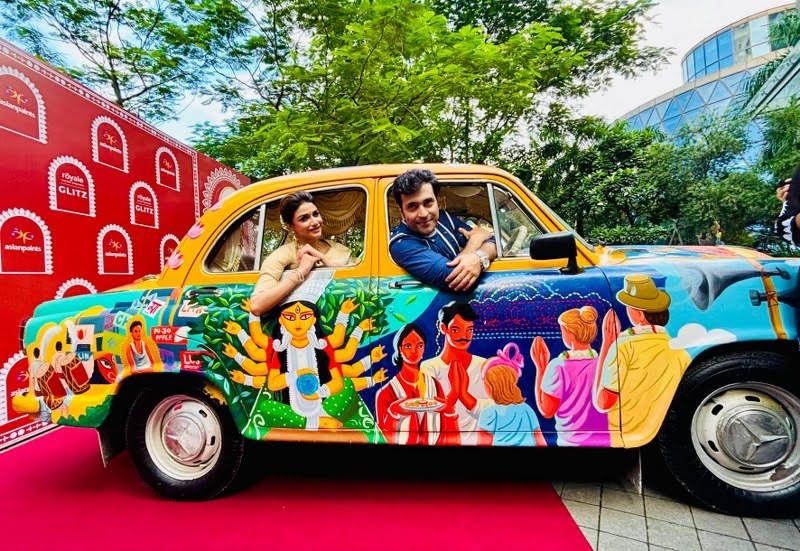
This autumn, as the city celebrates its unrivalled festival, the iconic yellow taxis have taken on a new role — canvases of colour and culture. Dressed in vibrant motifs of Durga Puja, these vehicles now carry with them the spirit of Bengal’s quintessential fiesta.
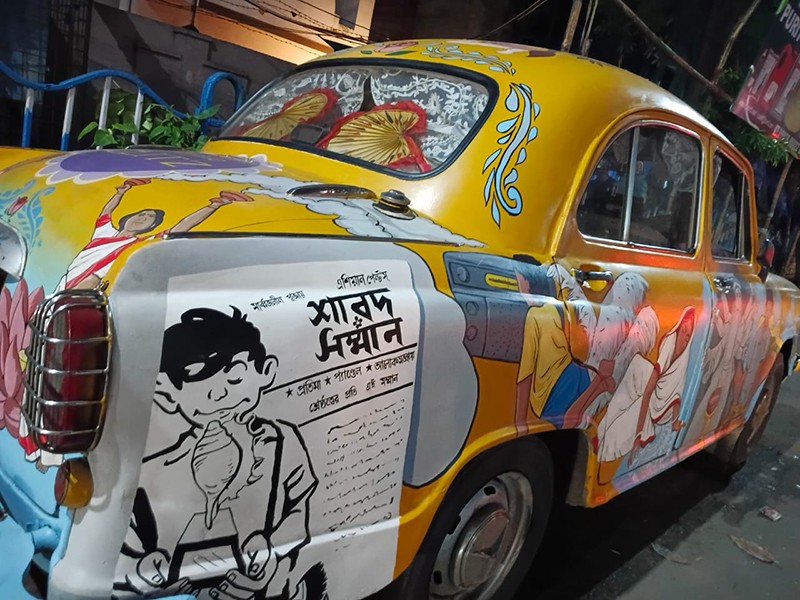
Painted on their bodies are alpona (rangoli), the demon Asura slain by Goddess Durga, dhakis (traditional drummers), women dancing with dhunuchi (incense burners), a woman blowing the conch, red-bordered fans typically found in puja rooms, a large kettle, and even a hand-pulled rickshaw.
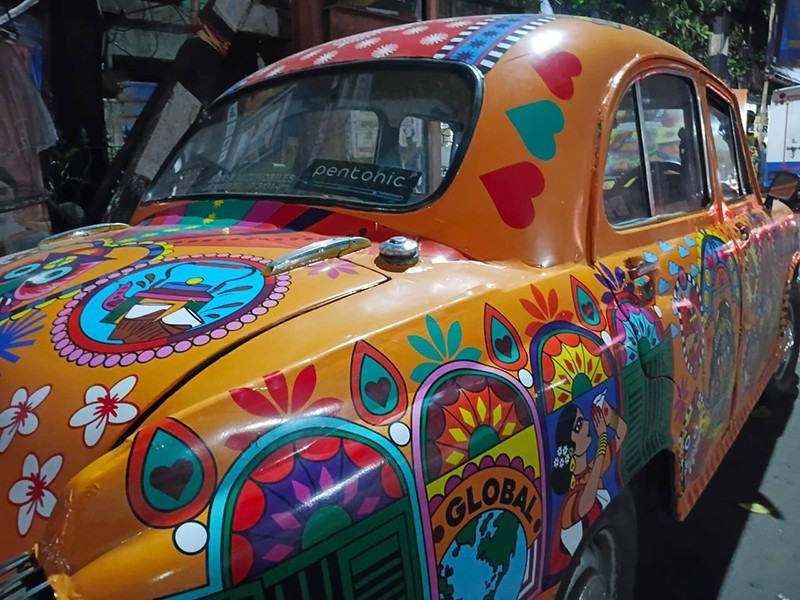
On one side sits a green kharkhori janala — the louvered window once common in old Kolkata homes, now a vanishing sight. A closer look reveals an insignia on the environment and a black-and-white rendering of the Asian Paints Sharod Samman award, complete with its mascot. The award honours the best Durga idols and pandals.
The initiative, a project of Asian Paints Limited, was explained to me by a taxi driver who eagerly showed me a few of these art-clad taxis parked on Shyama Prosad Mukherjee Road in Charu Market, South Kolkata.
“Didi, take a ride in one of these,” he urged with a smile. I promised I would.
Taxis first appeared in Kolkata in 1908. In 1962, the Calcutta Taxi Association adopted the bright yellow Ambassador model, cementing its iconic status. The car itself had been introduced by Bengal-based auto major, the C K Birla Group. The rest, as they say, is history.
Ironically, these yellow cabs may soon become just that — history. With a 15-year age limit on commercial vehicles, the sturdy Ambassador is slowly vanishing from the city’s streets. Though newer models painted yellow now ply, they lack the spaciousness of the classic. And for years, app-based cabs have only tightened the competition.
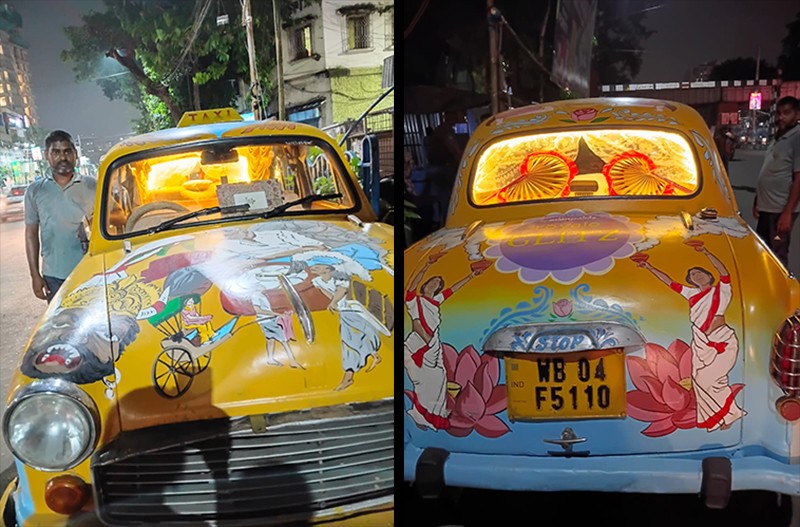
Yet, in this season of celebration and devotion, one can hope that the people of Kolkata — forever nostalgic and deeply rooted in tradition — will continue to cherish and support these timeless motors, now reborn as moving works of art.
Images and Text: Pritha Lahiri
Support Our Journalism
We cannot do without you.. your contribution supports unbiased journalism
IBNS is not driven by any ism- not wokeism, not racism, not skewed secularism, not hyper right-wing or left liberal ideals, nor by any hardline religious beliefs or hyper nationalism. We want to serve you good old objective news, as they are. We do not judge or preach. We let people decide for themselves. We only try to present factual and well-sourced news.
Support objective journalism for a small contribution.