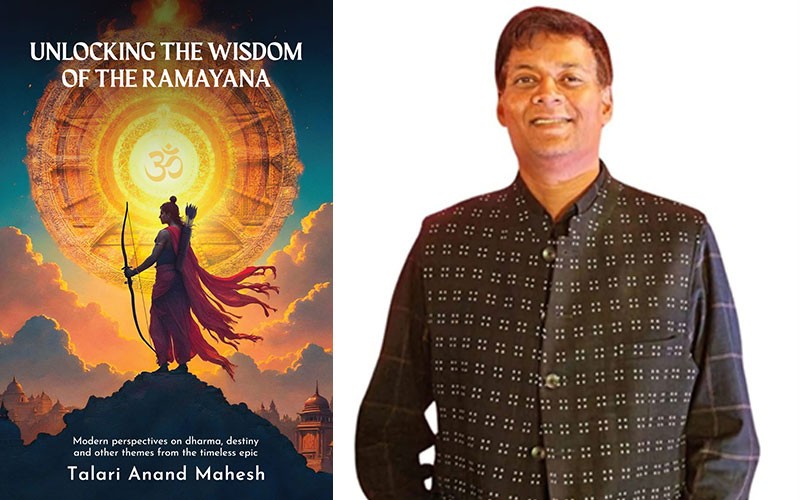
Ramayana tales lesson to Gen Z, professionals, modern families & world: New Book
Can the Ramayana be more than the epic clash between good and evil and the narratives of duty, devotion, love, and destiny? Yes, the sacred text is a journey through ideals of righteousness that help people navigate their personal and professional lives with wisdom and integrity, according to a new book.
There's much more to it. Even in the age of artificial intelligence, the Ramayana can be a great source for all, including Generation Z, for making informed decisions in the rush of life. It is not about making a choice but making it right!
These revelations are well captured in a recently released book named ‘‘Unlocking the Wisdom of the Ramayana’’ by Talari Anand Mahesh, which attempts to reflect on the relevance of ancient wisdom in the modern world.
Each of the characters of this timeless epic – from Rama’s adherence to Dharma, Hanuman’s steadfast devotion, Sita’s remarkable resilience, to Ravan’s overwhelming arrogance - provides valuable insights into human nature, leadership, ethics, and decision-making, finds the new interpretation of the religious text.
Interestingly, the writer points out that his book aims to extract lessons from the Ramayana, which has inspired millions for centuries, shaping India’s moral and cultural fabric. The journey of Rama from Bala Kand to Uttara Kanda has lessons galore in personal relationships, professional leadership or navigating ethical dilemmas to teach people, the book notes.
Author Anand Mahesh writes that Ravana’s disregard for humans led to his ultimate defeat, serving as a stark reminder of the dangers of underestimating the seemingly insignificant. His overconfidence made him vulnerable which failed to recognise the power of humans. Its lesson lies in preparedness and vigilance for individuals and organisations.
‘’In the global context, the story serves as a call to appreciate diversity, honour all contributions, and recognise the potential in every person and situation. Turning a blind eye to the seemingly insignificant can lead to missed opportunities or unforeseen threats,’’ he adds.
Noting that the tale of Vishwamitra, Dasharatha, and Rama is more than just a story of ancient heroism, the author says: ‘’ It is a parable for modern life where chaos often threatens to overwhelm our aspirations. It teaches us that we can overcome even the most formidable challenges with a clear mind, a steady heart, and the wisdom to seek help when needed.’’
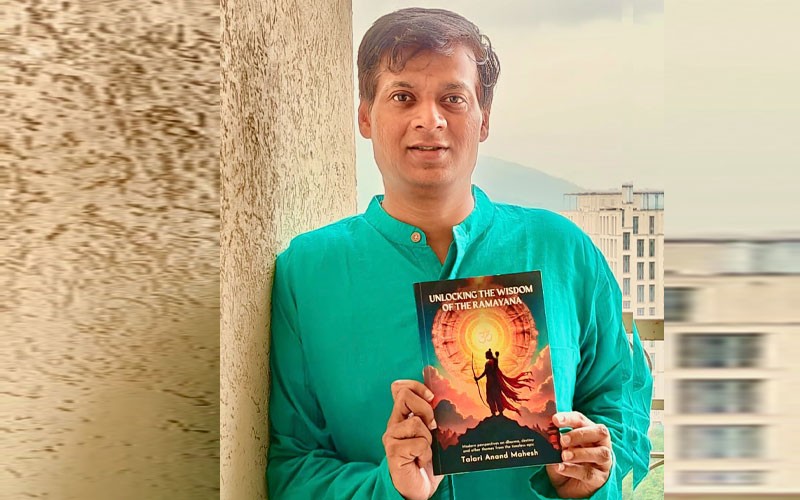 Talari Anand Mahesh, author of Unlocking the Wisdom of the Ramayana, explores the epic’s relevance to modern life.
Mahesh shares an example of Meena, a working mother of two, and how her experiences mirror the wisdom of Vishwamitra’s tale: staying clear-headed, seeking assistance, and trusting in the strength of teamwork can transform overwhelming situations into triumphs.
This is the hallmark of this book, which relates the epic tales to modern-day situations and shares lessons in abundance. ‘’Through his qualities, Rama offers us a blueprint for personal and professional growth. His life demonstrates that leadership starts with self-discipline and extends into service. His dharma-centric approach serves as a guide for anyone striving to live with dignity,’’ it points out.
"Remember, my son,” King Dasharatha concluded, his voice both kind and stern, ‘’You must trust the goodness of others, but you must verify. Be prepared for the unexpected and always lead with empathy and understanding. The world is full of uncertainties, but with awareness and guidance, you can lead your people with wisdom and integrity.’’
Mahesh pens that in leadership, whether in a royal court family, a corporation, a community, or even a school, these lessons remain as relevant as ever. ‘’In today’s world, where desires often cloud our judgements and the pursuit of power, wealth, or fleeting pleasure can lead us astray, Rama’s lesson remains eternal. It serves as a reminder to be vigilant about our senses, recognise the impact our desires can have on ourselves and others, and always act according to our higher principles, even when it is difficult.’’
In the forest, Sita’s harsh words stemmed from fear and stress, yet Lakshmana reacted emotionally instead of rationally assessing her state. This highlights that the broader context before responding to others’ words or actions. Fear and stress can cloud perception, and acting impulsively may escalate problems instead of resolving them.
Observing that Hanumat’s journey is a testament to the power of unwavering focus and adaptability, the author writes: ‘’He teaches us that true success lies in balancing determination with flexibility and intelligence with skill. Like him, we must remain steadfast in our goals, undeterred by distractions or fatigue, while seeking creative solutions to the challenges that arise.’’
The 212-page book finds that in a world that moves at breakneck speed, clinging to rigid plans is like trying to catch the wind with bare hands – futile and frustrating. True success, whether in academics, family life, or the workplace, belongs to those who dare to think beyond the rulebook.
After all, it concludes, history is not written by those who follow the path; it is shaped by those who dare to carve their own. Taking time to respect the process and care for the people involved turns impulsive actions into wise choices.

(The writer is a corporate professional and a former journalist with UNI and Times Group. He writes on books, cinema, and music. He can be reached at sanjivkrs@gmail.com )
Support Our Journalism
We cannot do without you.. your contribution supports unbiased journalism
IBNS is not driven by any ism- not wokeism, not racism, not skewed secularism, not hyper right-wing or left liberal ideals, nor by any hardline religious beliefs or hyper nationalism. We want to serve you good old objective news, as they are. We do not judge or preach. We let people decide for themselves. We only try to present factual and well-sourced news.
Support objective journalism for a small contribution.