 Taslima Nasreen
As Taslima Nasreen returns to Kolkata, a look at her controversial books that changed her life journey
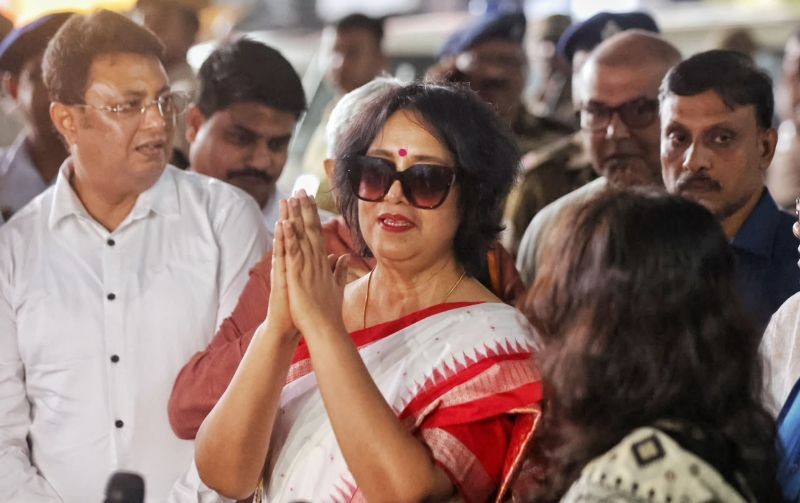
Kolkata/IBNS: "I feel extremely happy to be back here," exiled Bangladeshi writer Taslima Nasreen said after landing in Kolkata on Friday, marking her first visit to the city since she was forced to leave in 2007 following violent protests.
Nasreen arrived at Netaji Subhas Chandra Bose International Airport on Friday afternoon.
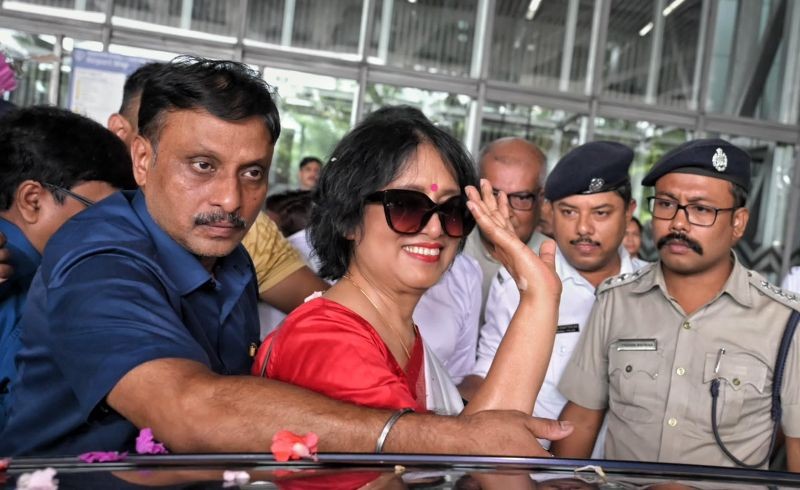 Taslima Nasreen outside the airport. Photo: Avishek Mitra/IBNS
Her return comes just months after the Bharatiya Janata Party (BJP) formed its maiden government in West Bengal, ending 34 years of Left Front rule followed by 15 years of the Trinamool Congress under Mamata Banerjee.
Civic reception at Rabindra Sadan
Nasreen is set to receive a civic reception during a literary programme at Rabindra Sadan on Saturday.
The event will begin at 5:30 pm and will be attended by West Bengal Chief Minister Suvendu Adhikari.
Years of exile
Known for her outspoken views on women's rights, secularism and criticism of religious fundamentalism, Nasreen has lived in exile since 1994 after facing severe backlash in Bangladesh.
Several fatwas were issued against her during the tenure of then Bangladesh Prime Minister Khaleda Zia, forcing her to leave the country.
Many of her works, including the controversial novel Lajja (1993) and memoir Amar Meyebela (1998), were banned in Bangladesh.
Lajja drew widespread criticism for portraying the persecution of Bengali Hindus in the aftermath of the Babri Masjid demolition.
After leaving Bangladesh, Nasreen spent nearly a decade in exile in Sweden, Germany, France and the United States before moving to Kolkata in 2004.
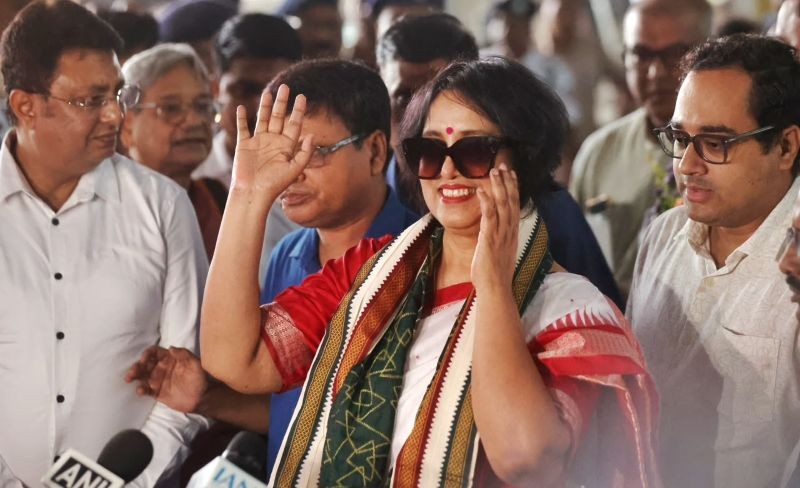 Taslima Nasreen outside the airport. Photo: Avishek Mitra/IBNS
Why did she leave Kolkata in 2007?
In November 2007, violent protests by Islamist groups erupted in Kolkata over Nasreen's presence in the city.
The unrest escalated into a major law-and-order challenge, prompting the then Left Front government led by Buddhadeb Bhattacharjee to ask her to leave West Bengal.
She was shifted to Delhi, where she spent nearly three months under tight security and partial house arrest after being physically attacked.
In 2008, she left India and moved to the United States.
Some of Taslima Nasreen's most controversial works
Lajja (1993)
Nasreen's best-known and most controversial novel, Lajja is set in Bangladesh after the demolition of the Babri Masjid and follows a Hindu family facing persecution amid communal violence.
The novel sharply criticises religious extremism and the treatment of minorities. It was banned in Bangladesh and triggered widespread protests and death threats against the author.
Dwikhandito
The third volume of her autobiography, Dwikhandito offers candid accounts of her personal life, literary circles and relationships.
The memoir sparked protests in both West Bengal and Bangladesh over passages considered offensive to religious sentiments and certain public figures. It was banned in West Bengal for a period before the ban was lifted.
Ka
Another volume in her autobiographical series, Ka discusses her interactions with prominent writers and intellectuals in explicit detail.
The book was banned in Bangladesh over allegations of obscenity and defamation.
Amar Meyebela
The first volume of her autobiography recounts her childhood, family life and formative years in Bangladesh.
It was criticised for its portrayal of conservative social and religious practices and was banned in Bangladesh.
Uttal Hawa
A political novel exploring social unrest, women's rights and religious conservatism, Uttal Hawa generated debate for its outspoken criticism of fundamentalism.
Shodh
A feminist novel centred on marriage, gender inequality and revenge, Shodh challenged patriarchal norms and attracted criticism from conservative groups, though it was less controversial than Lajja.
Support Our Journalism
We cannot do without you.. your contribution supports unbiased journalism
IBNS is not driven by any ism- not wokeism, not racism, not skewed secularism, not hyper right-wing or left liberal ideals, nor by any hardline religious beliefs or hyper nationalism. We want to serve you good old objective news, as they are. We do not judge or preach. We let people decide for themselves. We only try to present factual and well-sourced news.
Support objective journalism for a small contribution.