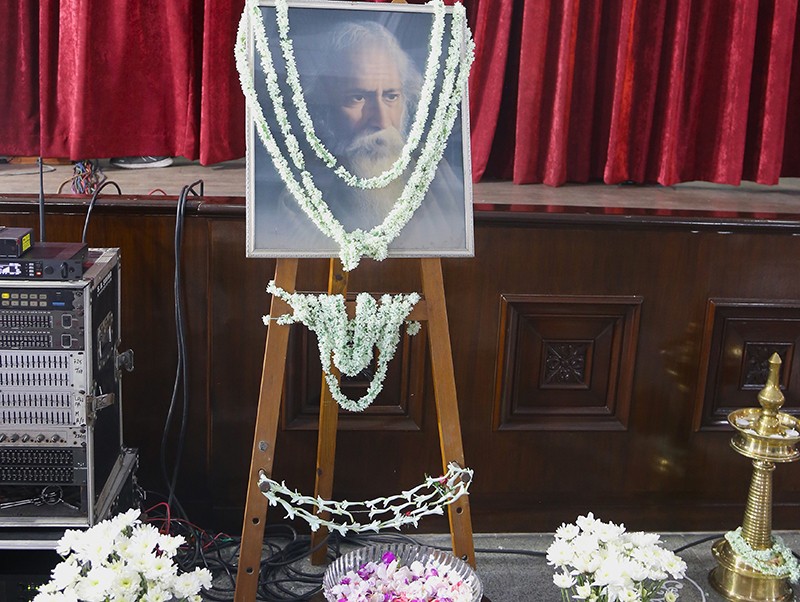
 Loreto College
Loreto College marks Baishe Srabon and Vriksharopana Utsav with cultural and environmental programmes
Kolkata/IBNS: Loreto College, to commemorate Baishe Srabon and Vriksharopana Utsav, organised a programme with cultural, environmental, and interactive events exploring Rabindranath Tagore’s vision of rural enterprise, sustainability, and community empowerment.
In the Bengali calendar, Baishe Srabon marks the day of Rabindranath Tagore’s demise (August 7, 1941). The same date also marks the observation of Vriksharopana Utsav, a celebration of nature’s bounty through the planting of trees—a ritual that Tagore initiated in 1928 by planting a bokul sapling in Pearson Pally, Santiniketan.
To commemorate the significance of this day, the Internal Quality Assurance Cell (IQAC) of Loreto College, Kolkata, organised a series of innovative programmes on August 7 and 8, 2025.
The initiative was driven by the encouraging support of Teacher-in-Charge Sister Dr. A. Nirmala. The principal objective of the event was to go beyond Tagore’s identity as a poet and philosopher in order to venture into a relatively underexplored dimension of his thought: his vision of rural enterprise and economic regeneration coupled with community empowerment and environmental sustainability.
On August 7, under the direction of Dr. Amrita Dasgupta, a cultural presentation entitled “Amar Nayano Bhulano Ele: Rheenshodh (Reparation)” was staged by the faculty and staff of the college before a rapt audience of students.
The programme upheld a longstanding annual tradition at Loreto College whereby current and former members of the faculty and staff come together to celebrate Tagore’s philosophy and vision through the performative arts.
This year, the programme wove together an intricate tapestry of Tagore’s songs from Sarat and Barsha parjaye, an excerpt from his short story “Shasti”, and an adaptation of his play Rheenshodh.
Through narration, dance, and music, the presentation highlighted Tagore’s economic philosophy concerning rural life.
Building on the same set of themes, the programme on August 8 began with a sapling-planting initiative inspired by Tagore’s Vriksha Ropana Utsav, organised by the W.E. Nature Society with the active collaboration of the support staff of the college.
This was followed by a heartwarming musical performance by the children of Boinchtala, the adopted village of the NSS Unit of Loreto College.

A wall magazine on “Bharat Tirtha: Ancient Roots, Tagore’s Vision” was inaugurated thereafter by the Indian Knowledge Systems (IKS) Committee.
The Literary Society also announced a national-level creative writing competition on “Revitalising Tagore’s Legacy of Agricultural Entrepreneurship”, to be conducted for undergraduate students all over India throughout the month of August.
A special highlight of the second day was an interactive session with renowned industrialist and Padma Shri awardee Harshavardhan Neotia, whose work reflects the fusion of enterprise with strong aesthetic, cultural, and ethical principles.
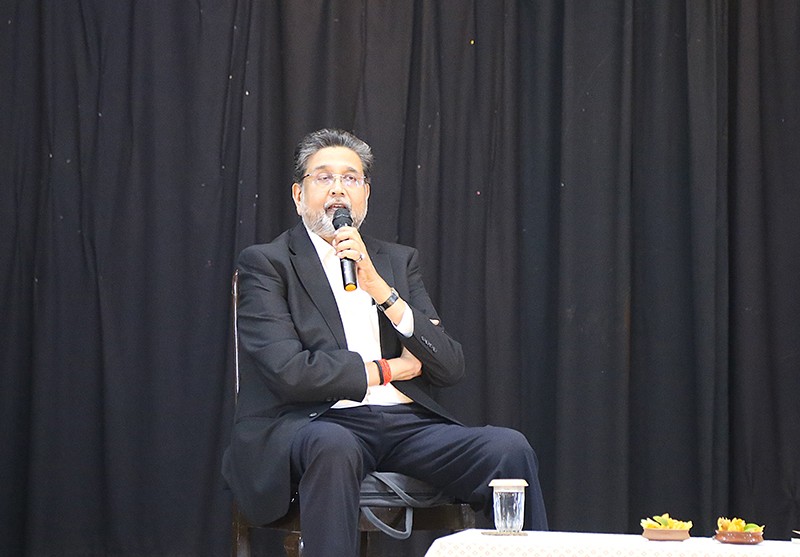
The conversation, which was facilitated by Dr. Anindita Bandyopadhyay, hosted by Dr. Sukanya Dasgupta, and moderated by Nilavo Roy, focused on Tagore’s entrepreneurial legacy and its impact on Neotia’s notable contributions in the field of social housing.
Neotia remarked on the strong sense of social responsibility that had governed many of his projects and the lessons on sustainability and holistic development that he had derived from his extensive reading of Tagore.
The session concluded with an open discussion during which Neotia warmly engaged with the students of Loreto College.
Support Our Journalism
We cannot do without you.. your contribution supports unbiased journalism
IBNS is not driven by any ism- not wokeism, not racism, not skewed secularism, not hyper right-wing or left liberal ideals, nor by any hardline religious beliefs or hyper nationalism. We want to serve you good old objective news, as they are. We do not judge or preach. We let people decide for themselves. We only try to present factual and well-sourced news.
Support objective journalism for a small contribution.