 Union Budget
No more harsh prosecution? Budget 2026 rewrites Income Tax rules
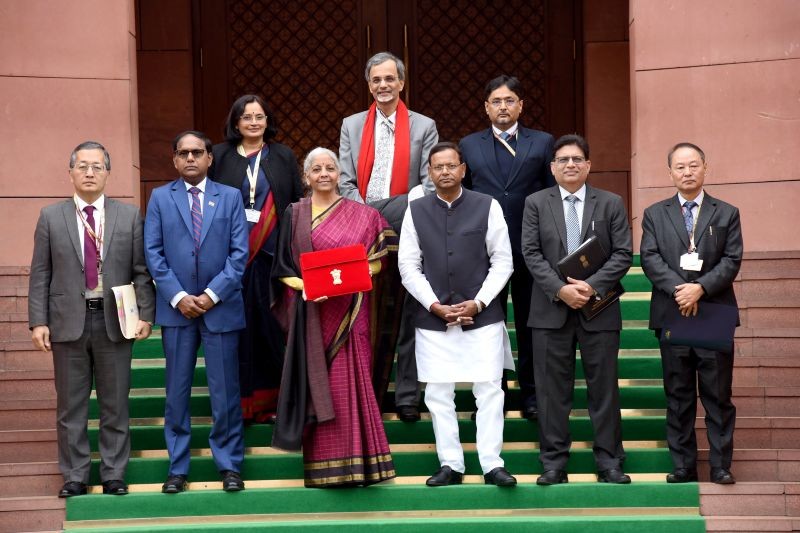
The Union Budget presented in the Parliament on Sunday proposed a series of direct tax reforms aimed at rationalising penalties and prosecution provisions under the Income Tax Act.
Finance Minister Nirmala Sitharaman announced that assessment and penalty proceedings will be integrated through a common order to avoid multiplicity of proceedings and reduce litigation.
Under the new framework, taxpayers will not face any interest liability on the penalty amount during the pendency of an appeal before the first appellate authority, irrespective of the outcome. The quantum of mandatory pre-payment has also been reduced from 20% to 10%, and will continue to be calculated only on the core tax demand.
As an additional measure to reduce disputes, taxpayers will be allowed to update their returns even after reassessment proceedings have been initiated, by paying an additional 10% tax over and above the applicable rate for the relevant year. The assessing officer will base proceedings solely on the updated return.
While a framework for immunity from penalty and prosecution already exists for cases of underreporting, the Finance Minister proposed extending this immunity framework to cases of misreporting as well. In such cases, however, taxpayers will be required to pay 100% of the tax amount as additional income tax over and above the tax and interest due.
Penalties for certain technical defaults — including failure to get accounts audited, non-furnishing of transfer pricing audit reports, and default in furnishing statements of financial transactions — are proposed to be converted into fees.
EASE OF LIVING BY DIRECT TAX REFORMS : UNION BUDGET 2026-2027
— PIB India (@PIB_India) February 1, 2026
🌀Any interest awarded by the Motor Accident Claims Tribunal to a natural person to be exempt from income tax
🌀Scheme for small taxpayers to enable obtaining a lower or nil deduction certificate by a rule-based… pic.twitter.com/S0an4pmOi2
The prosecution framework under the Income Tax Act will also be rationalised while maintaining deterrence for serious offences. Non-production of books of account and documents, as well as TDS compliance where payment is made in kind, are proposed to be decriminalised. Minor offences will attract only fines.
Remaining offences will be graded in proportion to the quantum of the offence and will entail only simple imprisonment, with the maximum term reduced to two years. Courts will also be empowered to convert imprisonment into fines.
Additionally, while there is currently no penalty for non-disclosure of non-immovable foreign assets valued at less than ₹20 lakh in aggregate, the government has proposed granting immunity from prosecution in such cases with retrospective effect from October 1, 2024.
Support Our Journalism
We cannot do without you.. your contribution supports unbiased journalism
IBNS is not driven by any ism- not wokeism, not racism, not skewed secularism, not hyper right-wing or left liberal ideals, nor by any hardline religious beliefs or hyper nationalism. We want to serve you good old objective news, as they are. We do not judge or preach. We let people decide for themselves. We only try to present factual and well-sourced news.
Support objective journalism for a small contribution.