 Union Budget
Customs made easy! Budget 2026–27 promises faster clearance, less paperwork
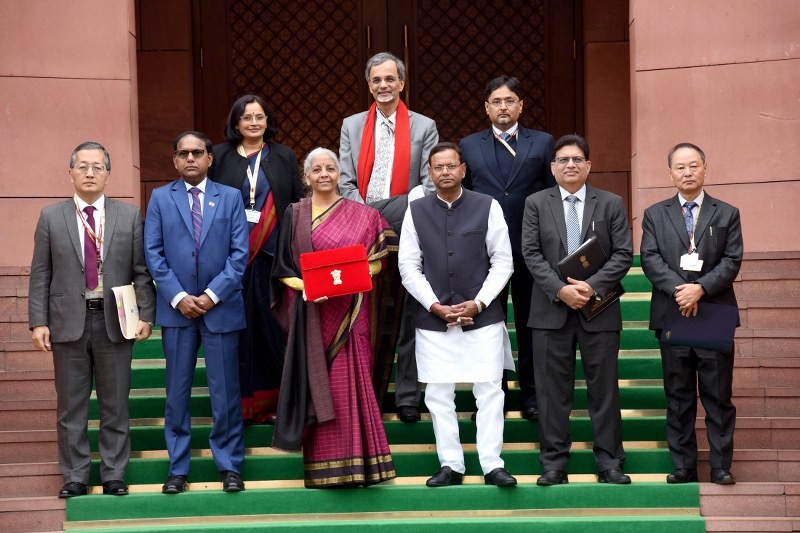
Union Finance Minister Nirmala Sitharaman, while presenting the Union Budget 2026–27 in Parliament on Sunday, announced a series of proposals under Customs and Central Excise aimed at simplifying the tariff structure, supporting domestic manufacturing, enhancing export competitiveness and correcting inverted duty structures.
Ease of Living
To rationalise customs duties and improve ease of living, the Budget proposes reducing the tariff rate on all dutiable goods imported for personal use from 20 per cent to 10 per cent.
In a move to provide relief to patients, particularly those battling cancer, the government has proposed exempting basic customs duty on 17 specified drugs and medicines. The Budget also adds seven more rare diseases to the list eligible for duty-free personal imports of drugs, medicines and Food for Special Medical Purposes (FSMP) used in treatment.
The government further proposed revising baggage clearance provisions for international travellers to address genuine passenger concerns. The revised rules will enhance duty-free allowances and provide greater clarity on the temporary import and export of personal goods.
Additionally, honest taxpayers will be given an opportunity to settle pending dues and close cases by paying an additional amount in lieu of penalty, the Finance Minister said.
Customs Processes
The Budget outlines multiple measures to streamline customs procedures, reduce physical intervention and ensure smoother and faster movement of goods while providing greater certainty to trade.
Trust-Based Systems
To promote trust-based compliance, the duty deferral period for Tier 2 and Tier 3 Authorised Economic Operators (AEOs) will be extended from 15 days to 30 days. Eligible manufacturer-importers will also be granted the same duty deferral facility, encouraging them to obtain full Tier 3 AEO accreditation.
The validity period of advance rulings, which are binding on Customs authorities, will be extended from three years to five years. Government agencies will be encouraged to leverage AEO accreditation for preferential cargo clearance.
Regular importers with trusted and longstanding supply chains will be recognised under the risk management system, reducing the need for repeated cargo verification. Export cargo using electronic sealing will be allowed clearance directly from factory premises to the vessel.
For imports not requiring compliance checks, filing of the bill of entry by a trusted importer and arrival of goods will automatically notify Customs to complete clearance formalities.
Sitharaman also announced a transformation of the customs warehousing framework into a warehouse operator-centric system, based on self-declarations, electronic tracking and risk-based audits. The reforms aim to move away from officer-dependent approvals, reduce transaction delays and lower compliance costs, she said.
Support Our Journalism
We cannot do without you.. your contribution supports unbiased journalism
IBNS is not driven by any ism- not wokeism, not racism, not skewed secularism, not hyper right-wing or left liberal ideals, nor by any hardline religious beliefs or hyper nationalism. We want to serve you good old objective news, as they are. We do not judge or preach. We let people decide for themselves. We only try to present factual and well-sourced news.
Support objective journalism for a small contribution.