 FTA
FTA
India-New Zealand trade deal to kick in on October 20: Here’s what you need to know
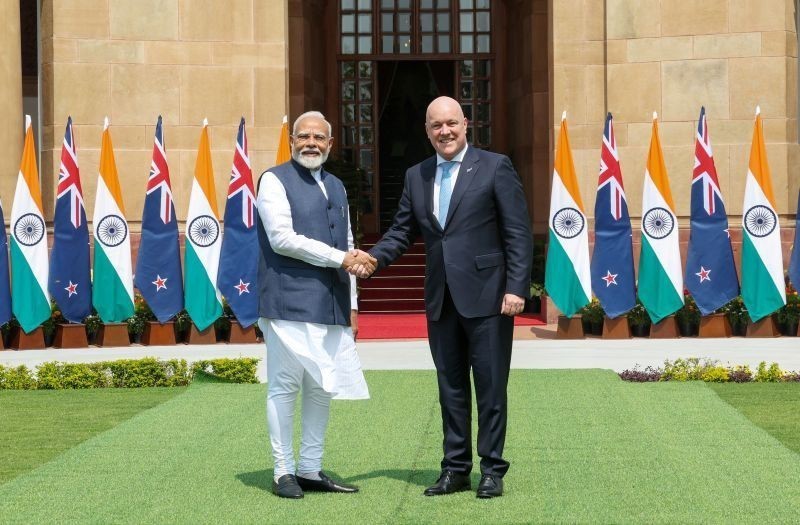
Indian Commerce and Industry Minister Piyush Goyal on Monday announced that the India-New Zealand Free Trade Agreement (FTA), signed in April, will come into force on October 20.
Goyal announced the development in a post on X, saying: “A new chapter unlocks in the India-New Zealand economic partnership.”
New Zealand and India have formally ratified the FTA, marking a new phase in the economic relationship between the two countries.
New Zealand Trade and Investment Minister Todd McClay exchanged the formal ratification documents with India’s High Commissioner to New Zealand, Muanpuii Saiawi, at Parliament, confirming that New Zealand had completed all necessary domestic procedures.
“The New Zealand-India FTA will level the playing field and unlock access for Kiwi businesses in one of the fastest growing markets in the world,” McClay said.
He said the agreement would help New Zealand exporters diversify their markets and build resilience amid increasing uncertainty in global trade.
Key benefits for New Zealand
Under the agreement, 57 per cent of New Zealand’s exports to India will become tariff-free from the first day of implementation. This includes sheep meat, wool and coal, as well as more than 95 per cent of forestry and wood exports.
A second round of tariff cuts is scheduled for January 1, 2027. New Zealand exporters will also receive preferential quota access to the Indian market for products including albumins, apples and kiwifruit.
McClay said the agreement would provide greater certainty for New Zealand services exporters, investors and businesses seeking to expand their presence in India.
Major features of the India-New Zealand FTA
The agreement provides duty-free access to New Zealand for 100 per cent of Indian exports, according to the terms outlined by the two countries.
It also includes a USD 20 billion investment commitment over 15 years, aimed at strengthening long-term economic and strategic cooperation between India and New Zealand.
Through an Agricultural Productivity Partnership, the two countries will collaborate with farmers to improve productivity and help integrate them into global value chains.
The agreement is also expected to benefit Indian MSMEs and support employment by providing zero-duty access to labour-intensive sectors, including textiles, apparel, leather, footwear, gems and jewellery, engineering goods and processed foods.
India has offered market access across 70.03 per cent of its tariff lines, while 29.97 per cent have been placed in the exclusion category. These excluded tariff lines account for around 95 per cent of New Zealand’s bilateral trade.
Products excluded from tariff concessions include dairy products such as milk, cream, whey, yoghurt and cheese; animal products other than sheep meat; vegetables and agricultural products including onions, chickpeas, peas, corn and almonds; sugar and artificial honey; animal, vegetable and microbial fats and oils; arms and ammunition; gems and jewellery; copper and related articles; and aluminium and related products, among others.
Around 30 per cent of tariff lines will see duties eliminated immediately, covering products such as wood, wool, sheep meat, raw hides and leather.
Another 35.60 per cent of tariff lines will undergo phased tariff elimination over three, five, seven or 10 years. These include petroleum oils, malt extract, vegetable oils, selected electrical and mechanical machinery, and peptones.
Tariffs on 4.37 per cent of products will be reduced rather than completely eliminated. These include wine, pharmaceutical drugs, polymers, aluminium, and iron and steel articles.
Around 0.06 per cent of tariff lines will be covered by tariff-rate quotas, including Mānuka honey, apples, kiwifruit and albumins, including milk albumin.
The FTA is expected to deepen bilateral trade and investment ties while providing businesses in both countries with greater market access and improved certainty for cross-border commerce.
Support Our Journalism
We cannot do without you.. your contribution supports unbiased journalism
IBNS is not driven by any ism- not wokeism, not racism, not skewed secularism, not hyper right-wing or left liberal ideals, nor by any hardline religious beliefs or hyper nationalism. We want to serve you good old objective news, as they are. We do not judge or preach. We let people decide for themselves. We only try to present factual and well-sourced news.
Support objective journalism for a small contribution.