 Indian Handlooms
Empowering women handloom workers is key to sustainable development of the sector, say entrepreneurs and economic experts
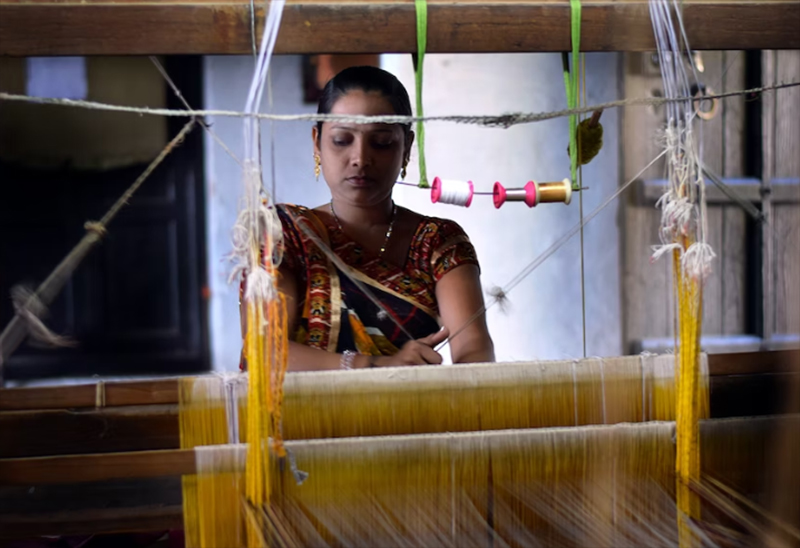
Kolkata/IBNS: According to the Handloom Census 2019-20 undertaken by the Union Ministry of Textiles, India has nearly 35,22,512 handloom workers employed across the country, out of which 72 per cent or around 25,46,285 are women workers.
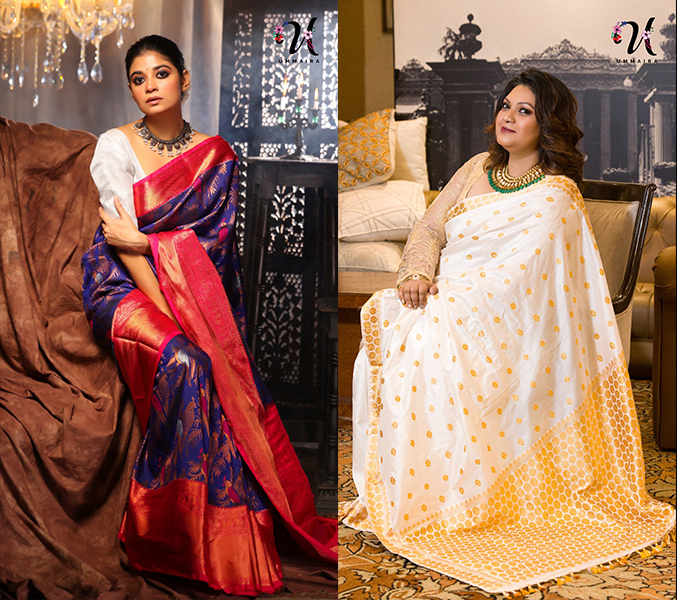
Although women form the backbone of the handloom sector, yet their significant contribution often goes unnoticed, said Debaraoopa Bhattacharya, founder, Ummaira, an ethnic apparel brand which has been closely working with the sector.
India’s diverse handloom options reflect the nation’s rich cultural heritage, with the handloom sector standing as one of the largest economic contributors, preserving traditions across generations.
According to a 2021 report by NABARD, the handloom sector, the second largest employer after agriculture and dominated by women, is characterised by households having low levels of education, low levels of income ridden with high inequalities and low credit penetration.
Other women entrepreneurs owning boutique apparel brands too reiterated Bhattacharya’s observations while talking on the side-line of the country-wide celebration of National Handloom Day (August 7).
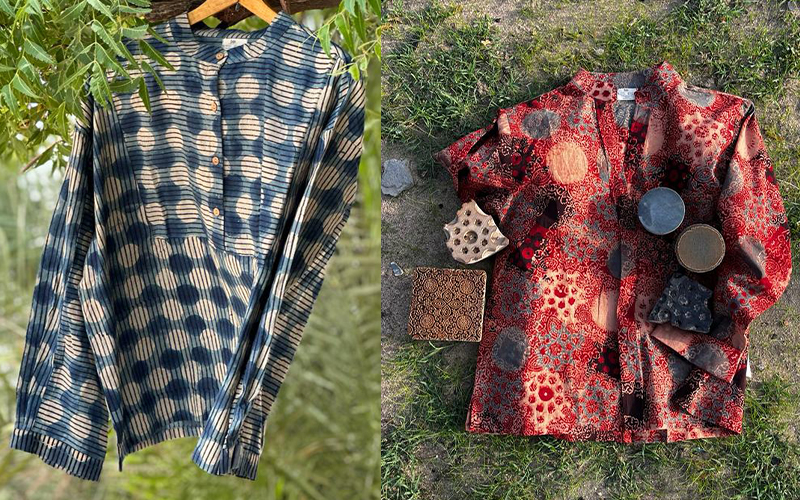
According to Matrika Bhandari, co-founder, Inkriti, “It’s always amazing to see women artisans break free of social boundaries and rise in various crafts like pattachitra, kalamkari, and embroidery. However, in the case of handlooms, history shows their involvement in supporting activities rather than the main act of weaving.”
According to Bhattacharya, “Strengthening education, promoting self-employment, and empowering women politically and socially are essential steps to empower them and enable them to make and implement decisions for themselves and their craft. It is time to recognise their dedication and empower them further to take centre stage in the handloom journey.”
Drawing from her own experience, Bhandari said, “Education and awareness have played a crucial role in empowering women artisans, as I have personally witnessed through my work with Somaiya Kala Vidya in Kutch, Gujarat.”
Design education and skill-training programs are enabling traditional artisans to encourage their daughters and family members to pursue crafts more holistically, she said.
According to the label Vilasa, the growing consciousness about slow and genuine handcrafted products has led to a renewed demand for handloom products, empowering females to play diverse roles in the traditionally male-dominated industry.
Sreya Samanta, running the eponymous label, said, “Traditionally, the handloom industry was male-oriented, with women confined to supporting roles or household-based activities like spinning yarns. However, key factors such as growing awareness, changing societal attitudes, market demand for sustainable products, and economic necessity have empowered females to break barriers and embrace diverse roles in the handloom sector.”
While governments at both the state and Centre levels are implementing various programmes for overall improvement of the sector and for the women workers, it is heartening to find the boutique apparel labels, especially those led by women, are also coming forward to empower the women workers.
Support Our Journalism
We cannot do without you.. your contribution supports unbiased journalism
IBNS is not driven by any ism- not wokeism, not racism, not skewed secularism, not hyper right-wing or left liberal ideals, nor by any hardline religious beliefs or hyper nationalism. We want to serve you good old objective news, as they are. We do not judge or preach. We let people decide for themselves. We only try to present factual and well-sourced news.
Support objective journalism for a small contribution.