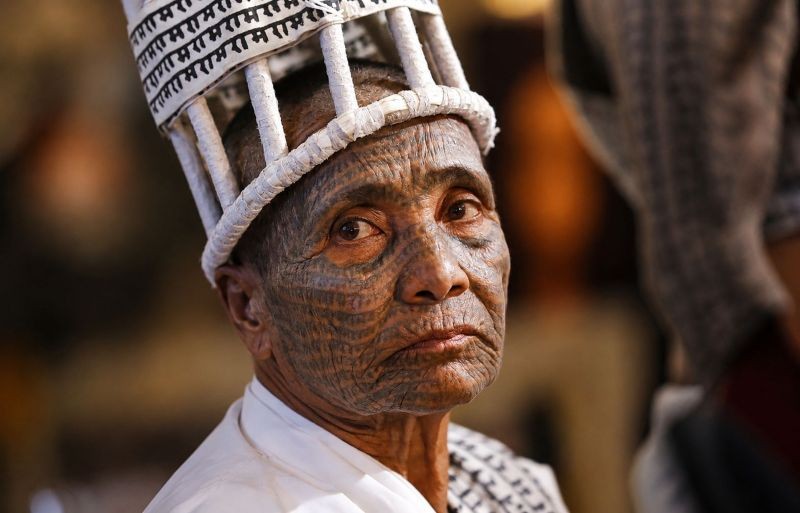
 Ramnami
When the Body Becomes a Temple: The Ramnami Samaj's Century-Old Rebellion Now Inspires Kolkata's Durga Puja
Denied entry into temples, they did not argue — they carried Ram on their skin instead. TWF-IBNS correspondent Souvik Ghosh traces how Chhattisgarh's Ramnami Samaj, a Dalit devotional community that began tattooing the name of Ram across their bodies in the 1890s as a quiet act of resistance against caste exclusion, has travelled from the margins of religious history to the heart of this year's Durga Puja — where their extraordinary story of faith, identity and defiance is the centrepiece in Chaltabagan, one of North Kolkata's most celebrated pandals.
There was an almost palpable sense of awe in the room as three members of the Ramnami Samaj walked into a star hotel in Kolkata, their bodies carrying a story that needed no introduction. The word ‘Ram’ was tattooed across their faces, arms and bodies—not as an ornament, but as an extraordinary expression of faith, identity and resistance.
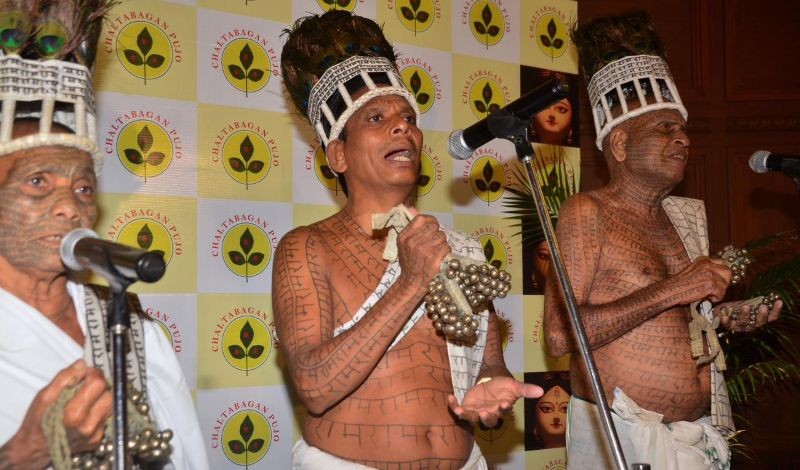 Ramnami Samaj members are at the heart of this year's Chaltabagan Durga Puja in Kolkata. Photo: Avishek Mitra/IBNS
For many in the gathering, accustomed to seeing devotion expressed through temples, idols and rituals, the sight was striking: here was a community that had turned its own skin into a living shrine.
As they softly chanted the name of Ram, the tattoos drew curious and reverent glances, creating a moment in which a century-old act of defiance against caste exclusion suddenly felt immediate, powerful and deeply moving.
Inspired by their legacy, the Manicktala Chaltabagan Lohapatty Durga Puja Committee in Kolkata has centred the theme of its 84th edition, titled ‘Nishan’, on this awe-inspiring Ramnami Samaj.
‘Devotion requires no permission’
A community that faced caste-based discrimination responded to indignity not by abandoning its faith, but by embracing Lord Ram through its own body — making devotion a personal and inseparable experience.
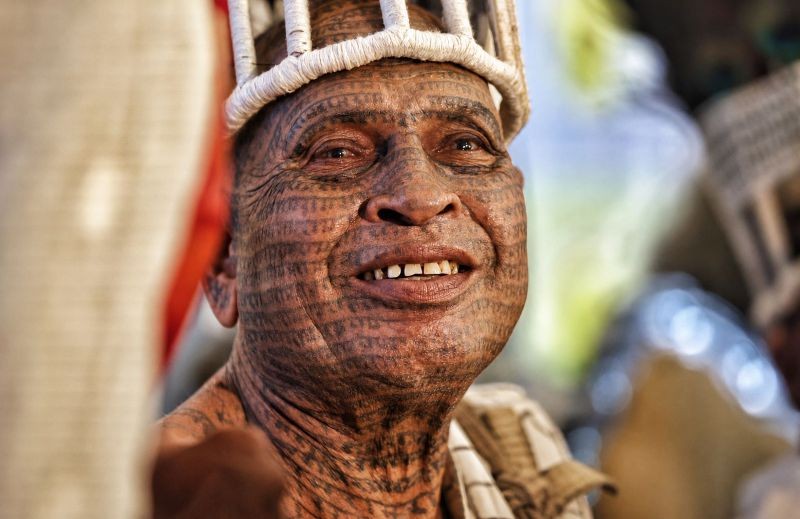 From temple exclusion to ‘Ram’ inscribed on their bodies- a member of the Ramnami Samaj. Photo: Avishek Mitra/IBNS
“Having been denied entry, the community did not argue but transformed their bodies into a mobile temple, underlining their bond with Lord Ram beyond idol worship,” said GulaRam Ramnami, a representative of the community, at the theme launch of the puja in Kolkata.
The practice became both an assertion of identity and a statement that one's access to the divine need not depend on social status, institutional permission or entry into a place of worship.
The rules that govern the community
The Ramnamis have also developed their own set of practices aimed at maintaining what they consider purity in life.
Community members follow a vegetarian diet and abstain from intoxicants and narcotics. They also emphasise non-violence and avoiding harm to animals.
Explaining the philosophy behind these practices, GulaRam Ramnami said, “We take off shoes before entering temples because we are aware of God's disapproval of such stuff. Similarly, the community embraced a vegetarian diet, forbade narcotics and vowed not to harm any animal through their actions.”
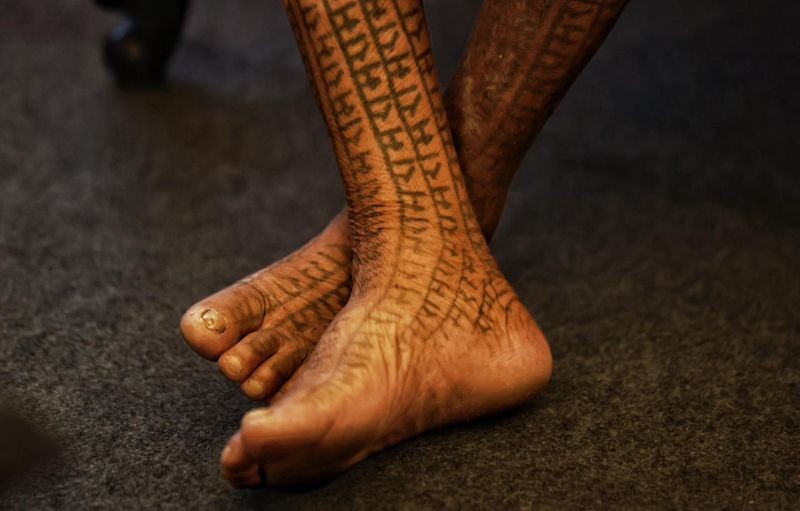 The word ‘Ram’ tattooed across the feet of a Ramnami Samaj member, reflecting a century-old tradition of faith and resistance. Photo: Avishek Mitra/IBNS
‘This is not about publicity’
GulaRam Ramnami also drew a distinction between the Ramnami tradition and contemporary tattoo culture, where people may tattoo the names of deities or loved ones on their bodies.
“Many tattoo the names of Ram or Mother on their bodies, but our practice is completely different. We don't do it for publicity but out of deep devotion,” he said.
For the Ramnamis, the inscription is not merely a visual symbol. It represents a spiritual commitment and an identity that is carried wherever they go.
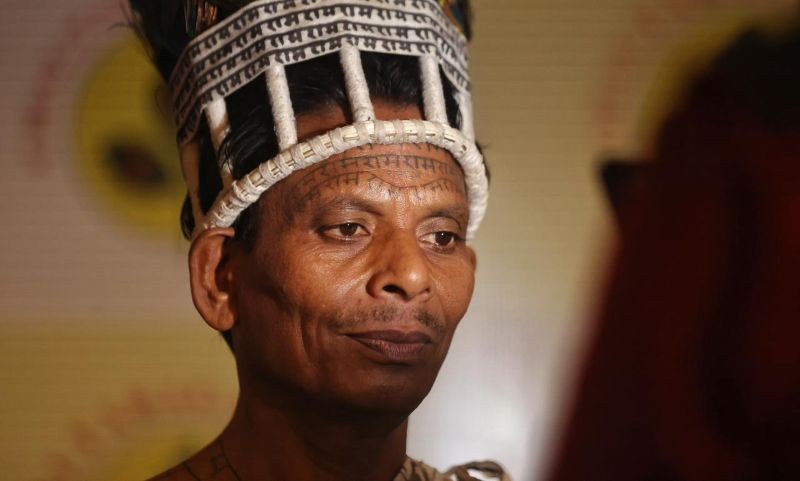 GulaRam Ramnami, a representative of the Ramnami Samaj. Photo: Avishek Mitra/IBNS
Who are the Ramnamis?
The Ramnami community emerged in the late 19th century, particularly among Dalit communities in the Chhattisgarh region. The movement placed devotion to Lord Ram at its centre, challenging the idea that caste status or access to temples should determine one's relationship with the divine.
For the community, the name ‘Ram’ itself is sacred. Devotion is expressed through the repeated inscription of ‘Ram’ on the body, clothing and other personal objects, as well as through chanting the name.
Some devotees have the name tattooed on specific parts of their bodies, while others carry inscriptions extensively across their bodies, including the forehead and face.
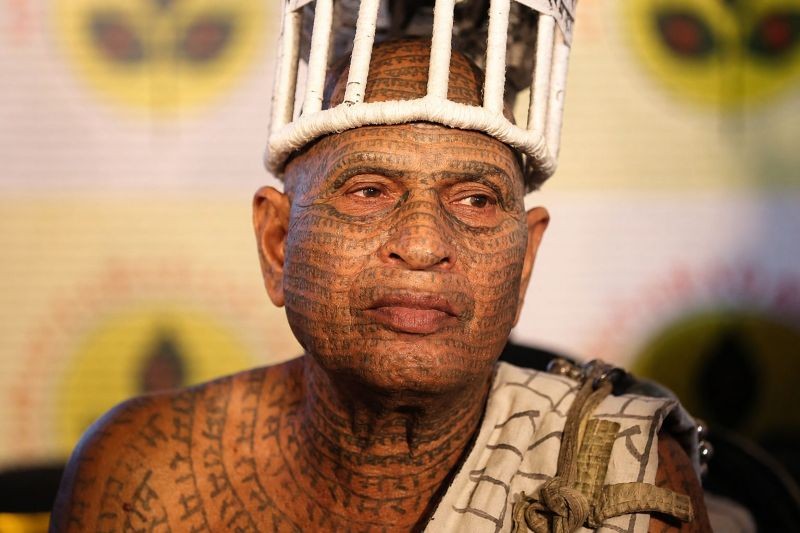 A beaming and proud Ramnami Samaj member in Kolkata. Photo: Avishek Mitra
When the body became a temple
The Ramnami tradition emerged from a social context in which caste-based exclusion shaped access to religious spaces. Instead of allowing such restrictions to distance them from their faith, the community developed a form of devotion that could not be confined to a temple.
The body itself became a site of worship, with the name of Ram serving as a permanent marker of faith.
The practice thus came to represent two intertwined ideas — resistance to social exclusion and an intensely personal devotion to Lord Ram.
From Chhattisgarh to Kolkata’s Durga Puja
It is this intersection of faith, identity and resistance that Chaltabagan’s ‘Nishan’ seeks to bring into the cultural landscape of Kolkata’s Durga Puja.
By placing the Ramnami Samaj at the heart of its theme, the 84th edition of the Manicktala Chaltabagan Lohapatty Durga Puja Committee looks beyond the familiar imagery of the festival to explore how a community turned a symbol of devotion into an inseparable part of its identity.
Sundeep Bhutoria, chairman of the puja committee, said the Ramnami community is a living testament to how a “faithfully inscribed mark” can transcend and ultimately defeat the barriers once used to exclude them.
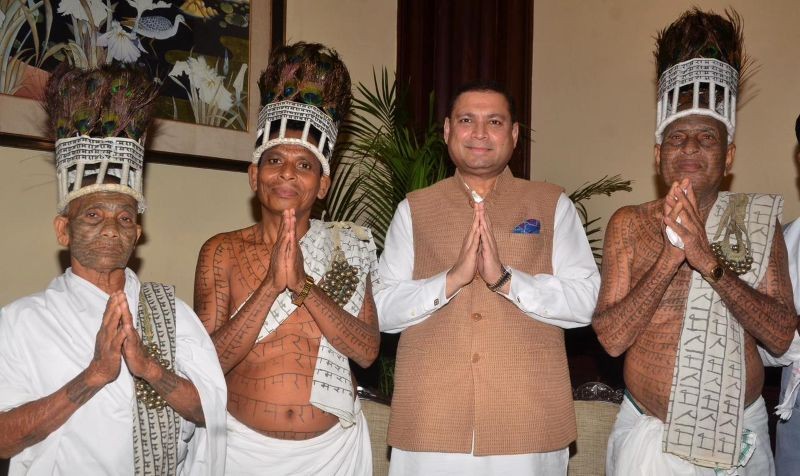 Sundeep Bhutoria, chairman of the puja committee, introduces members of the Ramnami Samaj in Kolkata. Photo: Avishek Mitra/IBNS
“Nishan is the mark that is written; the musical composition is the audible mark; the Ramnami Samaj are the living proof that a mark, faithfully inscribed, can outlast everything that was used to exclude the people who carry it,” Bhutoria said.
(Photos by Avishek Mitra/IBNS)
Support Our Journalism
We cannot do without you.. your contribution supports unbiased journalism
IBNS is not driven by any ism- not wokeism, not racism, not skewed secularism, not hyper right-wing or left liberal ideals, nor by any hardline religious beliefs or hyper nationalism. We want to serve you good old objective news, as they are. We do not judge or preach. We let people decide for themselves. We only try to present factual and well-sourced news.
Support objective journalism for a small contribution.