October 20, 2026 12:37 pm (IST)

Follow us:


UN urges coordinated action on food security
New York, Apr 23 (IBNS): Overfishing, habitat destruction and pollution are atop the agenda of a United Nations-backed summit on the role of oceans in global food security, livelihoods and economic development which opened on Tuesday in The Hague, the Netherlands.
“Urgent coordinated action is needed to restore the health of the world’s oceans and secure the long-term well-being and food security of a growing global population,” the UN Food and Agriculture Organization (FAO) said about the key message of the four-day summit, which is co-organized by the World Bank and Member States, including the Dutch host Government.
“Healthy oceans have a central role to play in solving one of the biggest problems of the 21st century – how to feed 9 billion people by 2050,” said Árni M. Mathiesen, FAO Assistant Director-General for Fisheries and Aquaculture.
On average, 17 per cent of global animal protein intake comes from fisheries and aquaculture, and demand for fish protein is expected to double in the next 20 years, FAO reported, yet some 28 per cent of global stocks are already overfished.
More than 500 delegates are expected to attend the event, including ministers and senior representatives from the fishing industry, coastal communities, science and civil society.
They will discuss underlying causes that have led to the overfishing, increased marine pollution and loss of critical habitat, as well as potential solutions.
The participants will also look at balancing the demands for growth with conservation of marine areas, and ensuring that private sector growth does not come at the expense of protecting the livelihoods of local communities.
“Solutions exist that balance the ecological and economic demands on the ocean,” said Juergen Voegele, Director of Agriculture and Environmental Services at the World Bank.
“We have the opportunity to align all our efforts and bring solutions to scale locally. With public-private partnerships and shared approaches we can restore ocean health and provide food and jobs for communities worldwide,” he added.
The summit will also focus on blue growth which emphasizes conservation and sustainable management of aquatic resources and equitable benefits to the coastal communities that rely on them.
The term “blue economy” stems from the 2012 UN Conference on Sustainable Development (Rio+20), and refers to food, jobs and opportunities for development provided by ocean and coastal assets.
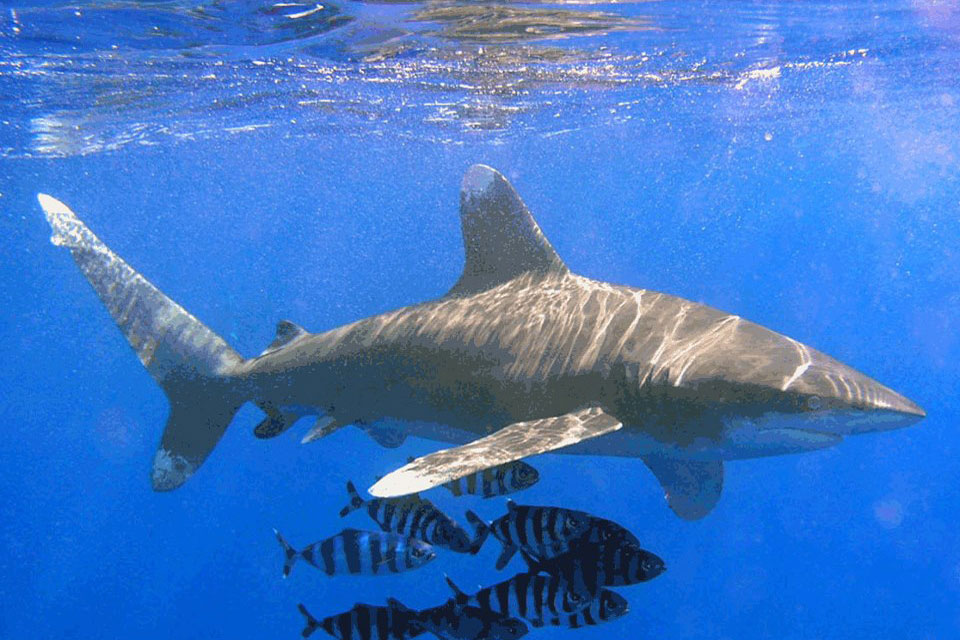
(Photo: CITES)
Support Our Journalism
We cannot do without you.. your contribution supports unbiased journalism
IBNS is not driven by any ism- not wokeism, not racism, not skewed secularism, not hyper right-wing or left liberal ideals, nor by any hardline religious beliefs or hyper nationalism. We want to serve you good old objective news, as they are. We do not judge or preach. We let people decide for themselves. We only try to present factual and well-sourced news.
Support objective journalism for a small contribution.



Latest Headlines
Think planes are the problem? Rotting food waste emits 5 times more greenhouse gases, finds study
Tue, Oct 06 2026
Global whale conservation in focus as India makes key pitch at IWC-70. All details here
Mon, Sep 28 2026
Nepal avalanche horror: 4 bodies recovered, 12 remain missing
Mon, Sep 28 2026
Nepal: Avalanche strikes Himlung Himal base camp, 10 feared missing
Sun, Sep 27 2026
India, Nepal, China to join hands? Balen Shah’s big Himalayan climate proposal at UNGA
Fri, Sep 25 2026