October 20, 2026 12:37 pm (IST)

Follow us:


UN summit commits to improve ocean health
New York, Apr 26 (IBNS): A United Nations-backed summit wrapped up in the Netherlands on Friday with a set of concrete actions to turn around the health of the world's oceans and food security for millions by tackling key threats such as climate change, overfishing, habitat loss and pollution.
The summit – which brought together hundreds of Government officials, ocean science experts, business leaders, philanthropists and heads of international organizations – was an initiative of the Dutch Government, the UN Food and Agriculture Organization (FAO) and the World Bank.
“This summit has put an accent on action and the route to navigate on oceans, fisheries management and aquaculture is much clearer than before,” said Árni M. Mathiesen, FAO Assistant Director-General for Fisheries and Aquaculture.
Actions agreed at the summit focused specifically on improving governance, enhancing sustainable financing, building partnerships for action and sharing knowledge on successful solution implementation.
The gathering called for, among other steps, a stand-alone Sustainable Development Goal on oceans as part of the post-2015 development framework; much stronger recognition of the escalating impacts from climate change on oceans; and eliminating harmful fisheries subsidies that contribute to overfishing.
Sharing of knowledge, experiences and solutions through information and communications technology that can enforce and monitor in real time and connect communities globally was among the other actions participants called for.
“This summit has presented the way forward for a new type of growth – blue growth which is sustainable, equitable and takes the value of the ocean’s ecosystem services into account,” World Bank representative Valerie Hickey stated.
‘Blue growth’ emphasizes conservation and sustainable management of aquatic resources and equitable benefits to the coastal communities that rely on them. The term “blue economy” stems from the 2012 UN Conference on Sustainable Development (Rio+20), and refers to food, jobs and opportunities for development provided by ocean and coastal assets.
“Together, we can restore ocean health at the speed and scale necessary to drive broad-based blue growth, secure food security and turn down the heat on climate change,” added Hickey. “We have the set of actions needed – let’s move on them now.”
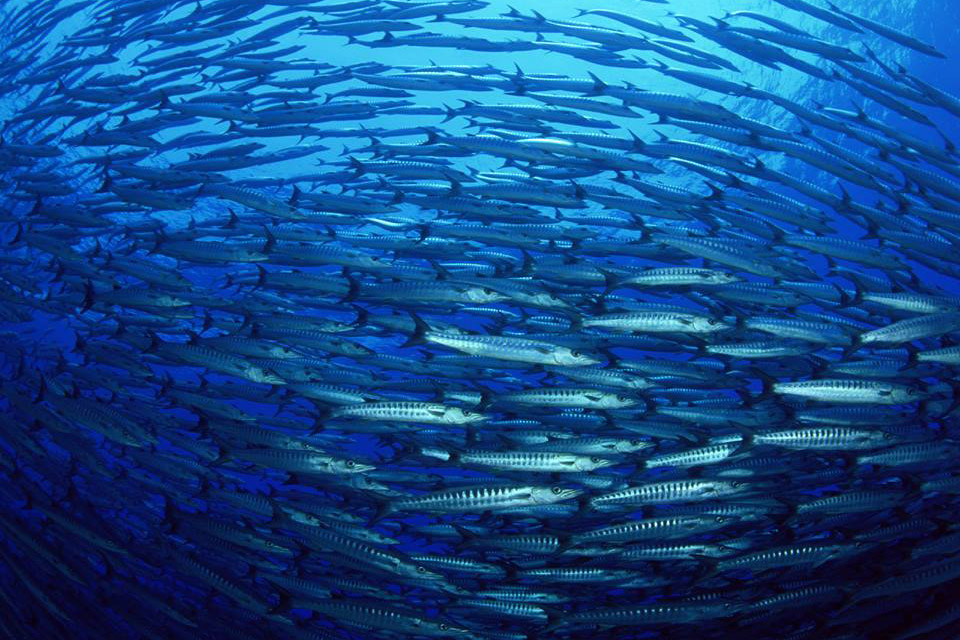
(Healthy oceans have a central role to play in solving one of the biggest problems of the 21st century – how to feed 9 billion people by 2050. Photo: FAO)
Support Our Journalism
We cannot do without you.. your contribution supports unbiased journalism
IBNS is not driven by any ism- not wokeism, not racism, not skewed secularism, not hyper right-wing or left liberal ideals, nor by any hardline religious beliefs or hyper nationalism. We want to serve you good old objective news, as they are. We do not judge or preach. We let people decide for themselves. We only try to present factual and well-sourced news.
Support objective journalism for a small contribution.



Latest Headlines
Think planes are the problem? Rotting food waste emits 5 times more greenhouse gases, finds study
Tue, Oct 06 2026
Global whale conservation in focus as India makes key pitch at IWC-70. All details here
Mon, Sep 28 2026
Nepal avalanche horror: 4 bodies recovered, 12 remain missing
Mon, Sep 28 2026
Nepal: Avalanche strikes Himlung Himal base camp, 10 feared missing
Sun, Sep 27 2026
India, Nepal, China to join hands? Balen Shah’s big Himalayan climate proposal at UNGA
Fri, Sep 25 2026