


Adapt, move or die: animals and plants react to climate change, reveals study
Birmingham, Aug 30 (IBNS): Nature is on the move as plants and animals react to the threat of extinction from climate change by changing their location or behaviour – a critical review reveals.
Scientists at the University of Birmingham are working with archives of living fossils to help understand how current species will react to an ever-warming planet. The study of these archives, combined with predictive modelling will allow us to forecast changes in biodiversity due to future climate change.
Their work is showcases as part of a major international effort to review current trends in biodiversity response to climatic change, led by experts at the University of Copenhagen’s Center for Macroecology, Evolution and Climate, and published in Trends in Ecology and Evolution.
Co-author Dr Luisa Orsini, Senior Lecturer in Biosystems and Climate Change at the University of Birmingham, said: “Archives of living fossils are the key to understanding how species will react to future global change. Interrogating revived dormant stages of species that adapted to climatic change, we are able to predict the fate of species facing climatic changes."
“The speed and severity of change exacerbated by human activities may surpass those of the previous several million years leading many species to extinction. A clear understanding of the fate of species is critical to preserve biodiversity.”
The study reviews current knowledge on climate change and how nature is reacting to climate change. Altered behaviour and movement can already be seen among plants and animals; flowers change flowering time and owls get darker body colour due to warmer winters.
Lead-author Professor David Nogués-Bravo from the Center for Macroecology, Evolution and Climate, University of Copenhagen, commented: “Our research group has worked through an enormous amount of studies about biodiversity’s reaction to climate change. We focused on events in the last past million years we know influenced biodiversity."
“It turns out that species actually have been able to survive new conditions in their habitat by changing either behaviour or body shape. However, the current and future magnitude and unseen speed of change in nature may push species beyond their ability to adapt.”
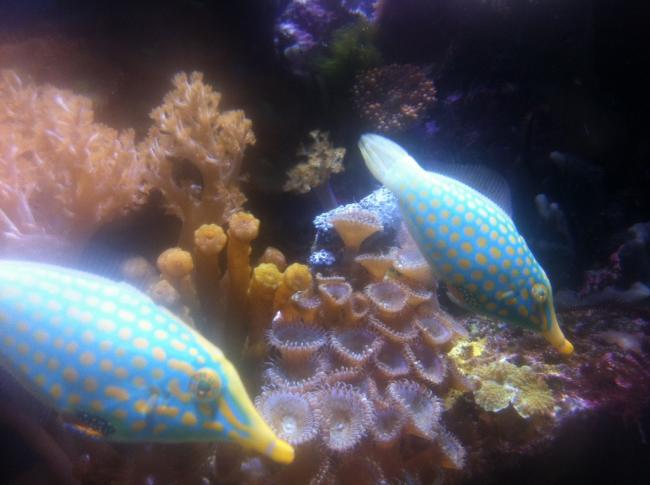
Scientists know species react by adapting locally or move, to survive when conditions in their habitat changes. Some species, when failed to adapt or move fast enough, like the Orange-spotted filefish, have already gone extinct. Global warming can also have an indirect impact on a species by increasing its susceptibility to bacterial infection.
However, the review highlights migration to new habitats is not the predominant reaction to climatic changes. It shows that local adaptation in response to change in the environment have played a key role in species survival.
The study helps to decode how biodiversity changes under climate change and may provide a platform for policy-makers to design effective conservation schemes in the future.
Support Our Journalism
We cannot do without you.. your contribution supports unbiased journalism
IBNS is not driven by any ism- not wokeism, not racism, not skewed secularism, not hyper right-wing or left liberal ideals, nor by any hardline religious beliefs or hyper nationalism. We want to serve you good old objective news, as they are. We do not judge or preach. We let people decide for themselves. We only try to present factual and well-sourced news.
Support objective journalism for a small contribution.


