 AI
AI
“Whoever wins AI wins”: Trump dismisses calls to slow down Artificial Intelligence
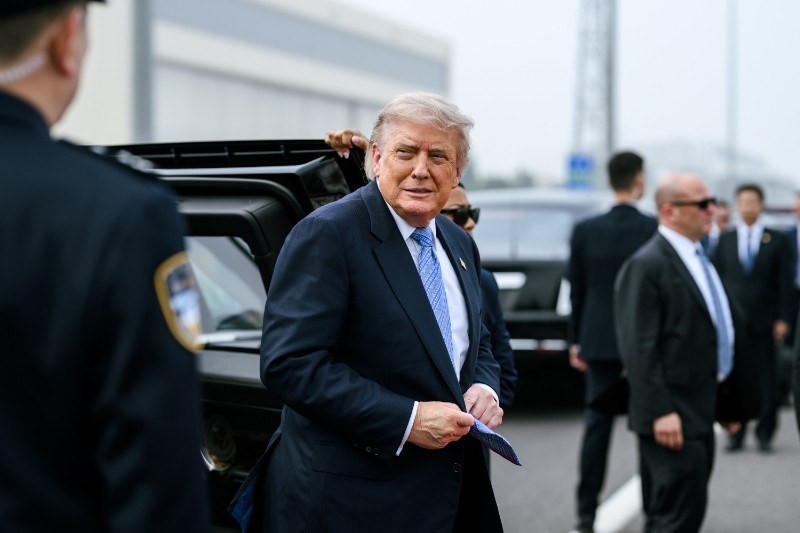
US President Donald Trump has dismissed calls to slow the development of artificial intelligence and introduce new regulations for the industry, saying “negative forces” are fueling fears about the technology.
Speaking to reporters, Trump said the US was ahead of China in AI and argued that maintaining that lead was crucial.
“We’re leading China in AI. We’re the most sophisticated country in the world, and frankly I want to keep it that way because whoever wins AI wins,” Trump said.
Rejecting calls from industry experts for a slowdown in AI development, Trump said regulations could be introduced but suggested that concerns about the technology were being overstated.
“We could put guardrails. We can do this and that. But I think you have a lot of very negative forces that are bringing it up that shouldn’t be bringing it up and they’re bringing up things that won’t happen,” he said.
Trump’s remarks came as several prominent figures in the AI industry, including Anthropic CEO Dario Amodei, OpenAI CEO Sam Altman and xAI CEO Elon Musk, have called for greater caution over the pace of AI development.
The call for a slowdown was initially made by Amodei, who argued that the rapid improvement in AI capabilities should be moderated.
“We must slow the pace at which we improve the capabilities of AI models. Progress will still seem fast, and we must make wise use of the time we gain,” Amodei wrote in an essay.
Altman subsequently backed Amodei’s position, writing on X that AI companies needed to “pace the frontier”.
“I agree with Dario that we need to pace the frontier. This has been a primary topic of discussions we’ve had at OpenAI in recent weeks,” Altman wrote.
“Committing to having independent evaluators with employee-like access is a great idea, and we will do the same. We’ll have more to share soon,” he added.
Musk also weighed in on the debate, writing on X: “I’ve been sounding the alarm on AI for a long time.”
Anthropic researcher warns of existential AI risk
Meanwhile, a senior Anthropic researcher has warned that he believes there is more than a 10% chance that artificial intelligence could kill all humans within the next decade.
Evan Hubinger, Alignment Science Lead at Anthropic, shared the assessment on X, writing: “We really do earnestly believe AI could kill all humans! I personally think it is >10% within the next decade.”
Hubinger also raised concerns about the AI industry’s preparedness to address the risks associated with increasingly powerful systems.
“I believe Anthropic is trying its best, but we do not yet have a plan to solve alignment for superintelligence and are not clearly on track to,” he wrote.
He made the remarks while responding to an X post by Jacob Coxon, who recently resigned from Anthropic and had also raised concerns about the potential risks posed by advanced AI systems.
“The people building AI earnestly believe that it could kill us all by the end of the decade. This is not a marketing stunt. If anything, many executives and senior researchers will couch their phrasing in the press to sound sensible - but I hear the same people express fear privately. No other human activity poses this level of danger,” Coxon wrote on X.
Reporter: Should the AI industry slow down or be more regulated?
— Clash Report (@clashreport) September 13, 2026
Trump: You have a lot of negative forces that are bringing it up, that are bringing up things that won’t happen. pic.twitter.com/sxSDpoH7eV
The contrasting views highlight a growing debate within the AI industry over how quickly the technology should advance, how its risks should be regulated and whether existing safeguards are sufficient to address the potential dangers posed by increasingly capable AI systems.
Support Our Journalism
We cannot do without you.. your contribution supports unbiased journalism
IBNS is not driven by any ism- not wokeism, not racism, not skewed secularism, not hyper right-wing or left liberal ideals, nor by any hardline religious beliefs or hyper nationalism. We want to serve you good old objective news, as they are. We do not judge or preach. We let people decide for themselves. We only try to present factual and well-sourced news.
Support objective journalism for a small contribution.