August 24, 2026 05:41 am (IST)

Follow us:


Ukraine: UN concerned over peoples affected by displacement
New York, May 21 (IBNS): The United Nations refugee agency estimated on Tuesday that 10,000 people, most ethnic Tatars, but also Ukrainians, Russians and mixed families, have fled Crimea and restive eastern Ukraine to other parts of the country, out of fear of insecurity or persecution.
“Displacement in Ukraine started before the March referendum in Crimea and has been rising gradually since. Registration numbers are being compiled on the basis of data we are receiving from local authorities,” Adrian Edwards, spokesperson for the UN High Commissioner for Refugees (UNHCR) said at a press briefing in Geneva.
“Among the affected population are people who have been displaced twice – first from Crimea, and then again from the eastern part of the country,” Edwards added, noting that at least a third of the displaced are children.
He said that a needs assessment has recently been completed and UNHCR is working closely with local authorities, other UN agencies and NGO partners to assist those affected. So far, this includes legal assistance, integration grants for 150 families, cash assistance for 2000 people and improved shelters for 50 families.
He said that most displaced families have gone to central (45 per cent) and western Ukraine (26 per cent), though some are also in the southern and eastern regions. The number of Ukrainian asylum-seekers in other countries has remained low.
Many of those interviewed said they left either because of direct threats or out of fear of insecurity or persecution, Edwards said. “Some report having received personal threats over the phone, via social media, or finding threatening messages left on their property,” he reported.
“People cite fear of persecution because of ethnicity or religious beliefs, or in the cases of journalists, human rights activists and among intellectuals due to their activities or professions. Others say they could no longer keep their businesses open,” he added.
A United Nations report released last Friday documents an “alarming” deterioration of the human rights situation in eastern Ukraine, along with serious problems emerging in Crimea.
At Tuesday’s briefing, Edwards said that people are being accommodated in shelters provided by local authorities, or staying in privately owned spaces, such us sanatoriums or hotels. Others are being hosted in private homes. “However the capacity of host communities to support people is fast becoming exhausted,” he warned.
Pressing needs include permanent shelter, employment opportunities, and support for community-based and local organizations in developing long-term solutions for the displaced families, he said.
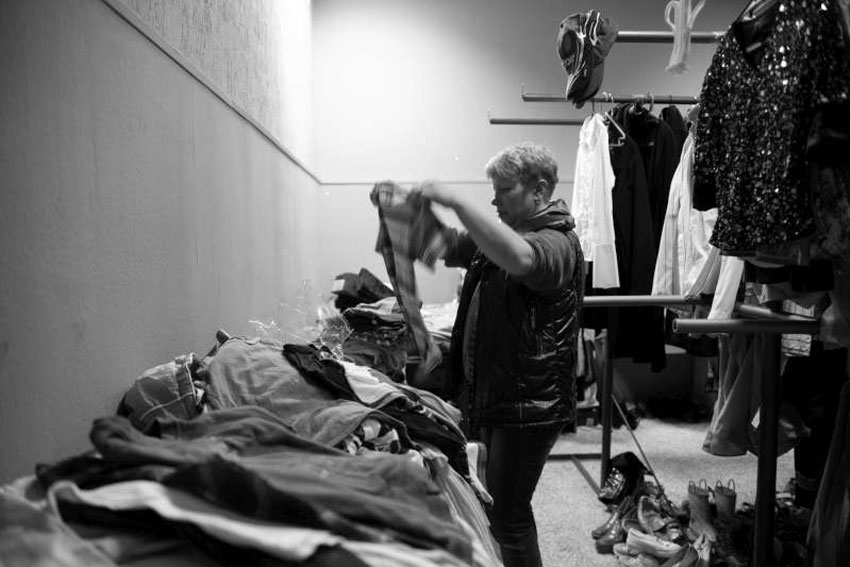
(An internally displaced woman folds clothes at a sanatorium in Ukraine that has been welcoming people from Crimea. Photo: UNHCR/N.Dovga)
Support Our Journalism
We cannot do without you.. your contribution supports unbiased journalism
IBNS is not driven by any ism- not wokeism, not racism, not skewed secularism, not hyper right-wing or left liberal ideals, nor by any hardline religious beliefs or hyper nationalism. We want to serve you good old objective news, as they are. We do not judge or preach. We let people decide for themselves. We only try to present factual and well-sourced news.
Support objective journalism for a small contribution.

Latest Headlines
Nyepi row: ‘Crazy’ Bali video lands Swiss tourist in jail over insulting Hindu holiday
Sun, Aug 23 2026
14 killed, over 120 injured as Russian drones strike shopping centre in Zelenskyy's hometown
Fri, Aug 21 2026
UAE halts all trade, financial deals with Iran amid rising Middle East tensions: What happened?
Wed, Aug 19 2026
Indian-origin industrialist Lakshmi Mittal’s Ukraine steel plant hit by Russian strike, 2 killed, 13 injured
Mon, Aug 17 2026
One of Kyiv's largest aerial attacks:Russia claims 822 Ukrainian drones downed, apocalyptic blaze videos go viral
Sun, Aug 16 2026
One of Kyiv's largest aerial attacks:Russia claims 822 Ukrainian drones downed, apocalyptic blaze videos go viral
Sun, Aug 16 2026
Russia launches fresh wave of strikes on Ukraine, 3 killed
Sun, Aug 16 2026