 Canada
New survey explores Canada's social class hierarchies, inequality
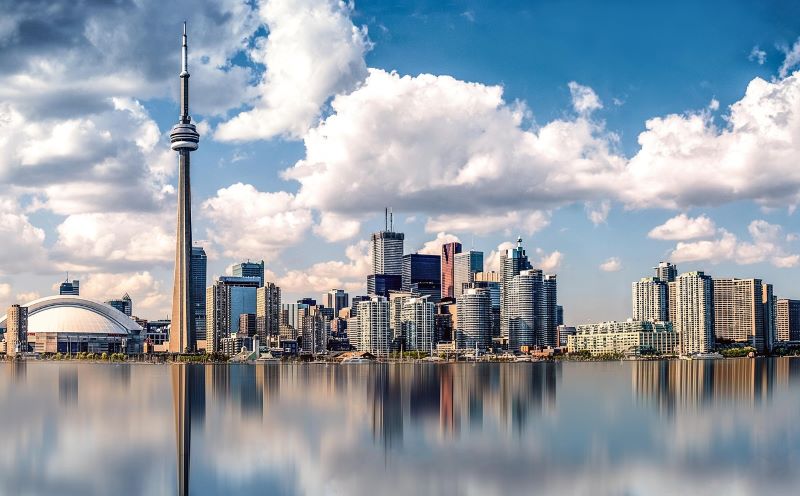
Toronto/IBNS: Canada's social class and inequality has reportedly been explored by the Angus Reid Institute in partnership with the University of Alberta Sociology Department through an in-depth survey of more than 8,000 Canadians according to new data.
Most Canadians, revealed by the new data, have either weak (40%) or no (34%) attachment to their social class identity, whereas only a few (7%) believe it is important to individual success in Canada.
Majority of Canadians believe that their accomplishments in the country can be attained by hard work (59%), education (58%) and ambition (51%).
The data also reveals that 42% of Canadians are most likely to identify as middle class with one-in-five identifying as working class (17%), lower middle class (17%) and upper middle class (17%). Six percent of Canadians believed that they belong to the lower or poverty class, while just one percent reportedly say they are upper class.
The data also revealed that Canadians who assign themselves lower on the class strata have less education and income, and are less likely to own a home, than those who self-identify higher up the class pyramid.
Canadians who believe they belong to the poverty class are also more pessimistic about their own future and are also less satisfied with their access to quality health care (45%) and education (64%) than the average (57%, 81% respectively).
Nearly 42% of Canadians identified themselves with the same social class as they label their parents, while one-third (35%) believe they’ve attained a higher class than their parents and only one-quarter (23%) have fallen down.
Canadians’ perception of what it takes to succeed in Canada, reported by the data, relies on class mobility experiences.
(Reporting by Asha Bajaj)
Support Our Journalism
We cannot do without you.. your contribution supports unbiased journalism
IBNS is not driven by any ism- not wokeism, not racism, not skewed secularism, not hyper right-wing or left liberal ideals, nor by any hardline religious beliefs or hyper nationalism. We want to serve you good old objective news, as they are. We do not judge or preach. We let people decide for themselves. We only try to present factual and well-sourced news.
Support objective journalism for a small contribution.