


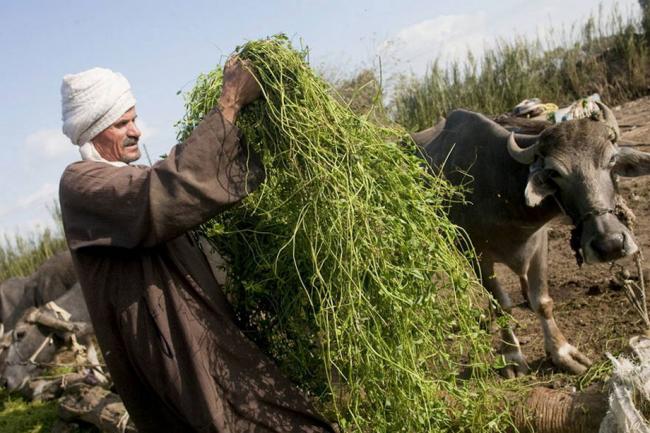
Near East and North Africa: Conflicts threaten to erode gains in region’s zero-hunger battle
“A peaceful and stable environment is an absolute pre-condition for farmers to respond to the challenges of water scarcity and climate change,” said Abdessalam Ould Ahmed, Assistant Director-General and Regional Representative for the Near East and North Africa of the Food and Agriculture Organization (FAO), in a news release.
“Achieving food security is still at hand, provided we take concerted efforts and make the right moves now,” he added.
The FAO 2016 Regional Overview of Food Insecurity in the Near East and North Africa noted that the deterioration is largely driven by conflicts and protracted crises.
The FAO assessment shows that the prevalence of severe food insecurity in the adult population of the Near East and North Africa was close to 9.5 per cent in 2014-2015, representing approximately 30 million people. Before 2010, the prevalence of undernourishment, stunting, anaemia and poverty were decreasing.
“The region is facing unprecedented challenges to its food security due to multiple risks arising from conflicts, water scarcity and climate change. Countries of the region need to implement long-term and comprehensive sustainable water management to achieve the Sustainable Development Goals (SDGs) of ending hunger by 2030,” said the FAO official said.
The Syria crisis in particular has deepened during the period 2015-2016, leaving more than half of the population in need of food assistance and 4.8 million refugees, mostly in neighbouring countries. The numbers of food insecure and the internally displaced are also rising in Iraq and Yemen.
Beyond conflicts and crises, the report argues that water scarcity and climate change are the most fundamental challenges to ending hunger, achieving food security, improving nutrition and promoting sustainable agriculture by 2030. Water scarcity is the binding factor to agricultural production in the Near East and North Africa region and the driver of the region’s dependency on food imports.
The report explores other major options for the adaptation to climate change impacts on water and agriculture, including the need for designing and implementing social protection measures for building resilience of farmers to extreme events, cutting food losses and improving trade policies.
Photo: FAO/Giulio Napolitano
Source: www.justearthnews.com
Support Our Journalism
We cannot do without you.. your contribution supports unbiased journalism
IBNS is not driven by any ism- not wokeism, not racism, not skewed secularism, not hyper right-wing or left liberal ideals, nor by any hardline religious beliefs or hyper nationalism. We want to serve you good old objective news, as they are. We do not judge or preach. We let people decide for themselves. We only try to present factual and well-sourced news.
Support objective journalism for a small contribution.


