 Mali Press Ban
Mali’s Press ban reflects growing regional intolerance, says UN rights office
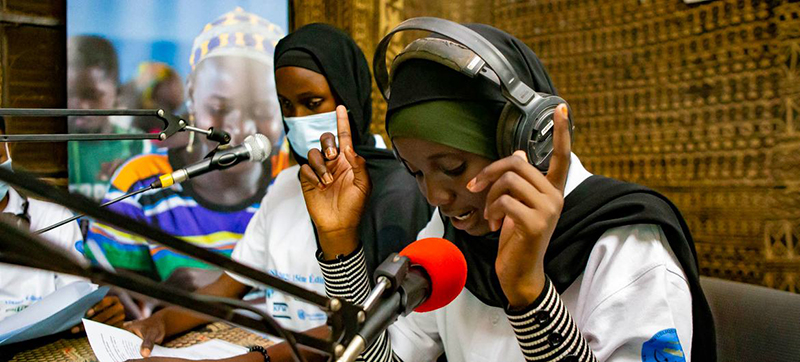
New York: Mali’s ban on two major international broadcasters operating inside the country is a worrying development in itself but it also reflects growing regional intolerance towards freedom of expression, the UN rights office, OHCHR, said on Friday.
Highlighting the “pervasive chilling effect on journalists and bloggers” of the situation in the west African nation, OHCHR spokesperson Ravina Shamdasani said that the move against Radio France International (RFI) and France24 was just “the latest in a string of (similar) actions” by the authorities.
“We are deeply dismayed by the Malian media regulator’s decision to definitively suspend Radio France International (RFI) and France24,” Ms. Shamdasani said. “We call on Mali’s transitional military authorities to reverse this ban and allow independent media to work freely in the country.”
Mali has seen two armed ousters in the last two years, the first in August 2020, the second in May last year.
Switched off
According to OHCHR, RFI and France 24 received their first suspensions on 16 March. Both broadcasters had been accused of airing “false allegations” about reports of human rights violations by the Malian army, Ms. Shamdasani explained, adding that “on 27 April, the High Authority for Communication announced that those provisional suspensions would be ‘definitive’”.
The use of digital surveillance tools has made it increasingly difficult for journalists, bloggers and rights activists to operate safely inside Mali and protect their sources, the OHCHR official said, pointing to the prevailing “climate of self-censorship” among reporters and rights defenders.
Atrocity reports
“More, not less, scrutiny is needed” of the actions of the authorities, Ms. Shamdasani insisted, her comments coming after some 500 people were allegedly summarily executed in Moura, a village in central Mali, earlier this month.
To date, UN investigators have yet to be granted access to Moura, where Malian Armed Forces accompanied by foreign military personnel reportedly carried out killings and other grave violations. Since the atrocity, OHCHR has continued to document other serious allegations of violations of international human rights law and international humanitarian law in many parts of the country.
Amid ongoing regional insecurity outside Mali and across the Sahel caused by climate shocks, violence linked to competition for dwindling resources and mass displacement, Ms. Shamdasani warned that there was “a worrying trend in some of the other countries in West Africa as well, and this applies not only to freedom of expression and then the work of journalists, but also civic space and civil society as a whole; there appears to be a growing intolerance for dissent.”
The problem extends well beyond Africa and is particularly relevant ahead of World Press Freedom Day on May 2, the OHCHR official insisted. This year’s theme is Journalism Under Digital Siege.
Danger work
“We’re seeing journalists going through tremendous risks to try to get the information out there. We’ve spoken quite often about all the misinformation during the conflict, during the current conflict in Ukraine coming from both sides, really, and the important role of journalists and the tremendous risks that they take to be able to get objective, independent information to us.”
Support Our Journalism
We cannot do without you.. your contribution supports unbiased journalism
IBNS is not driven by any ism- not wokeism, not racism, not skewed secularism, not hyper right-wing or left liberal ideals, nor by any hardline religious beliefs or hyper nationalism. We want to serve you good old objective news, as they are. We do not judge or preach. We let people decide for themselves. We only try to present factual and well-sourced news.
Support objective journalism for a small contribution.