


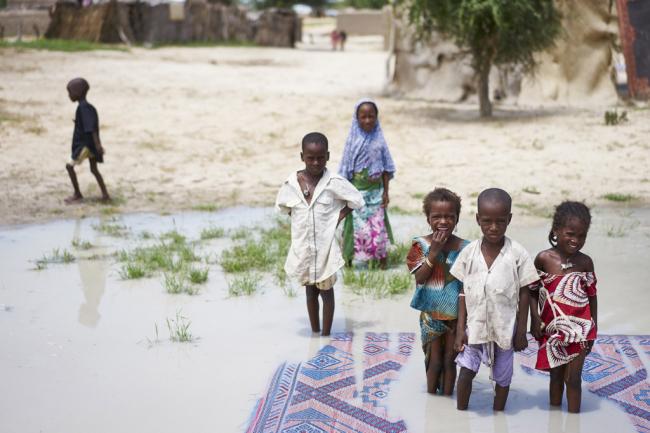
Lake Chad Basin: UNICEF warns 5.6 million children at risk of waterborne diseases in rainy season
“The rains will further complicate what is already a dire humanitarian situation, as millions of children made vulnerable by conflict are now facing the potential spread of diseases,” said Marie Pierre Poirier, UNICEF Regional Director for West and Central Africa, in a press release.
The threat of disease outbreaks in Cameroon, Chad, Niger and Nigeria coincides with growing regional insecurity and increased population movements particularly in Nigeria's north-east.
“Unsafe water, inadequate sanitation and poor hygiene conditions can lead to cholera outbreaks and to Hepatitis E, a deadly disease for pregnant women and their babies, while standing water pools can attract malaria-carrying mosquitos. Staving off disease is our top priority,” Poirier said.
The 5.6 million children in need in the Lake Chad region are spread across the four countries in varied living conditions from host communities to camps for internally displaced and refugees.
Flooding and muddy roads are expected to severely limit humanitarian access to remote areas for several weeks, just as the needs of children and families are sharply on the rise because of heightened insecurity across the region.
In Nigeria, security concerns have made it difficult to preposition supplies ahead of the rains and UNICEF is concerned about the availability of clean water for large numbers of people returning from Cameroon.
In the Diffa region of Niger, UNICEF explains, some 150,000 people are living in makeshift shelters and will be exposed to heavy rains and unsanitary conditions.
Across the Lake Chad region, UNICEF and its partners are working in communities at higher risk of cholera outbreaks to teach families about the effects of the disease and practical steps like hand washing to help avoid infection.
In Niger, Cameroon and Chad, essential drugs and bars of soap have been prepositioned in warehouses close to IDP camps in case of a cholera outbreak.
Less than 20 per cent of the $80 million required to meet urgent needs for water, sanitation and hygiene in the Lake Chad Basin for 2017 has been received.
Photo: UNICEF/Phelps
Source: www.justearthnews.com
Support Our Journalism
We cannot do without you.. your contribution supports unbiased journalism
IBNS is not driven by any ism- not wokeism, not racism, not skewed secularism, not hyper right-wing or left liberal ideals, nor by any hardline religious beliefs or hyper nationalism. We want to serve you good old objective news, as they are. We do not judge or preach. We let people decide for themselves. We only try to present factual and well-sourced news.
Support objective journalism for a small contribution.


