In 10 countries with highest out-of-school rates, 40 per cent of children are not accessing basic education
“For countries affected by conflict, school equips children with the knowledge and skills they need to rebuild their communities once the crisis is over, and in the short-term it provides them with the stability and structure required to cope with trauma,” UNICEF’s Chief of Education, Jo Bourne, said in a news release.
“Schools can also protect children from the trauma and physical dangers around them,” she added. “When children are not in school, they are at an increased danger of abuse, exploitation and recruitment into armed groups.”
The data analysis highlights the extent of an education crisis affecting countries already blighted by conflict, prolonged periods of drought, flash floods, earthquakes and high rates of extreme poverty.
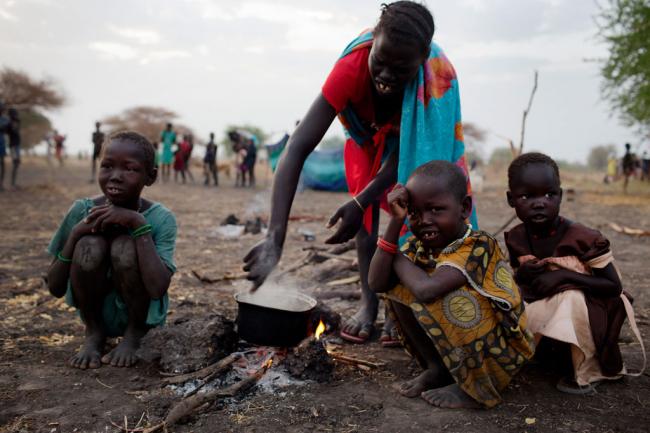
Of the ten countries, UNICEF noted that Liberia is home to the highest proportion of out-of-school children with nearly two-thirds of primary-aged children not accessing school. The second highest is South Sudan, where 59 per cent of children are missing out on their right to a primary education and one in three schools is closed due to conflict.
Afghanistan (46 per cent), Sudan (45 per cent), Niger (38 per cent) and Nigeria (34 per cent) also feature in the top ten, which, according to UNICEF, paints a clear picture of how humanitarian emergencies and protracted crises are forcing children out of school.
Though not one of the top ten countries with the highest rates of out-of-school children, Syria is home to 2.1 million school-age children – between the ages of five and 17 – who are not in school. An additional 600,000 Syrian children living as refugees in the surrounding region are also out of school. The agency also flagged that recent, reliable data from countries including Somalia and Libya are not available either from administrative or survey sources partly due to the continuing conflicts.
“UNICEF fears that without education, a generation of children living in countries affected by conflict, natural disasters and extreme poverty will grow up without the skills they need to contribute to their countries and economies, exacerbating the already desperate situation for millions of children and their families,” the UN agency stated in the news release.
Education continues to be one of the least funded sectors in humanitarian appeals, according to UNICEF. In 2015, humanitarian agencies received only 31 per cent of their education funding needs, down from 66 per cent a decade ago. Despite a 126 per cent increase in education requirements since 2005, funding increased by just four per cent. Moreover, the agency added, education systems equipped to cope with protracted crises cannot be built on the foundations of short-term – and unpredictable – appeals.
Photo: UNICEF/Kate Holt
Source: www.justearthnews.com
Support Our Journalism
We cannot do without you.. your contribution supports unbiased journalism
IBNS is not driven by any ism- not wokeism, not racism, not skewed secularism, not hyper right-wing or left liberal ideals, nor by any hardline religious beliefs or hyper nationalism. We want to serve you good old objective news, as they are. We do not judge or preach. We let people decide for themselves. We only try to present factual and well-sourced news.
Support objective journalism for a small contribution.