Effects of Ebola outbreak felt outside affected countries: UN report
Even in West African nations that experienced low or zero incidence of Ebola, the effects of the outbreak have been powerful because of the strong ties between the countries of the region, according to the report, which was produced by the UN Development Programme (UNDP).
“The consequences of Ebola are vast,” said Abdoulaye Mar Dieye, the Director of UNDP’s Regional Bureau for Africa.
He added, “Stigma, risk aversion and shutting down of borders have caused considerable amounts of damage, affecting economies and communities in a large number of countries across the sub-region.”
The UN Development Group (UNDG) says that West Africa as a whole may lose an average of at least $3.6 billion per year between 2014 and 2017, as regional trade flags amid border closures, flight cancellations and reduced foreign direct investment and tourism activity.
Per capita income for the region’s residents is also expected to fall by $18 per year between 2015 and 2017.
The poverty rate in Côte d’Ivoire has risen by at least 0.5 per cent because of Ebola, while in Senegal, the proportion of people living below the national poverty line could increase by up to 1.8 per cent in 2014. Food insecurity in Mali and Guinea-Bissau is also on the increase.
The report calls for increased involvement of West African governments and regional institutions to stop the epidemic and boost the recovery, and it points to efforts by the African Union to send doctors from Nigeria and Ethiopia, as well as coordinated efforts by the Mano River Union and the regional body known as ECOWAS.
The report also looks to prevention of future outbreaks, calling for a combination of regional and national interventions, such as efforts to strengthen health sectors across the region, the immediate creation of a regional centre for disease control and prevention, coordinated border control and establishment of early warning and disaster management systems.
Such prevention efforts can draw on the experiences of countries such as Nigeria and Senegal, whose decentralized health systems played a key role in slowing down and eradicating transmission of the disease.
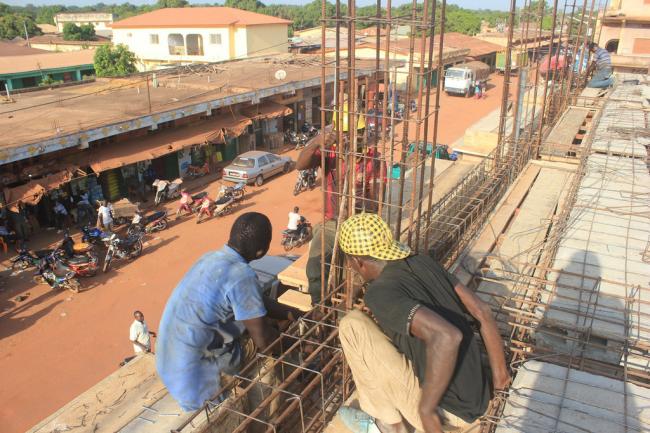
Photo: UNDP/Anne Kennedy
Support Our Journalism
We cannot do without you.. your contribution supports unbiased journalism
IBNS is not driven by any ism- not wokeism, not racism, not skewed secularism, not hyper right-wing or left liberal ideals, nor by any hardline religious beliefs or hyper nationalism. We want to serve you good old objective news, as they are. We do not judge or preach. We let people decide for themselves. We only try to present factual and well-sourced news.
Support objective journalism for a small contribution.