


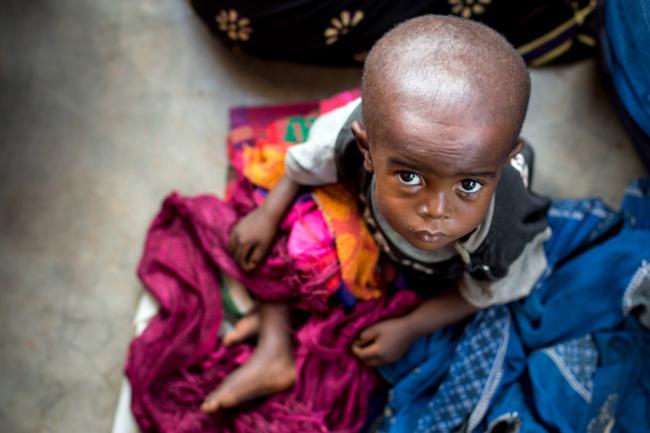
DRC's Kasai region one of world's 'largest displacement crises' for children – UNICEF
“The lives of hundreds of thousands of children and their families in Greater Kasai have been turned upside down by this brutal violence,” said Tajudeen Oyewale, UNICEF Acting Representative in the DRC in a press statement issued late last week, calling the situation in the restive region of the DRC one of the largest displacement crises for children in the world.
“A total of 1.4 million people, including 850,000 children, have been displaced, with at least 60,000 uprooted in the month of June alone,” he added.
Most of the displaced, who have lost or left behind all their essential goods and personal belongings, live now with foster families and relatives in communities that are among the poorest in the country.
A smaller number of displaced families have fled to improvised huts in the bush near their villages. These families are the most vulnerable and least accessible to humanitarian workers. They suffer from lack of adequate food, shelter, healthcare, water and sanitation.
“This is a rapidly growing humanitarian crisis, and with our partners, we are working amid great insecurity to try to help these highly vulnerable families,” said Oyewale.
UNICEF and its partners have implemented a cash assistance programme for displaced people that provides households with $100 cash support, which can be used for basic necessities. To date, UNICEF has supported 11,225 households through this programme.
In addition to the cash programme, a flexible multi-sectoral programme called Rapid Response Mechanism pre-positions materials and aid partners to rapidly respond to the needs of displaced populations. The assistance includes healthcare, nutrition, water, sanitation and hygiene, and essential non-food items – such as shelter materials, kitchen utensils, buckets of water, blankets. Some 50,000 households are expected to benefit from this programme over the coming months.
Thanks to donor support, UNICEF and its partners have so far this year, assisted 157,490 people in urgent humanitarian need.
UNICEF/UN064921
Source: www.justearthnews.com
Support Our Journalism
We cannot do without you.. your contribution supports unbiased journalism
IBNS is not driven by any ism- not wokeism, not racism, not skewed secularism, not hyper right-wing or left liberal ideals, nor by any hardline religious beliefs or hyper nationalism. We want to serve you good old objective news, as they are. We do not judge or preach. We let people decide for themselves. We only try to present factual and well-sourced news.
Support objective journalism for a small contribution.


