At governing body, UN atomic agency chief highlights agency’s priorities for 2017
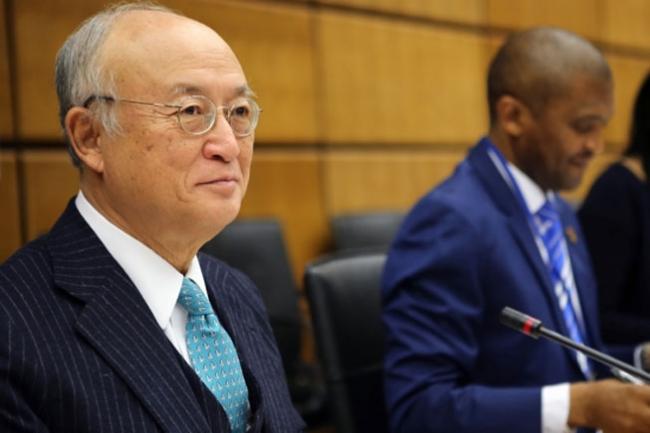
Yukiya Amano, the Director General of the International Atomic Energy Agency’s (IAEA) also briefed the Board on the agency’s verification and monitoring activities in Iran as well as on the Democratic People’s Republic of Korea and Syria.
“Together, these [three areas] account for 71 per cent of the core programme budget for 2017,” Amano said at the agency’s Board of Governors Meeting being held in Austria’s capital, Vienna.
He further reported on the agency’s assistance to countries in responding to the Zika virus, its broader activities as well as on management issues.
“Our research into ways of further developing the sterile insect technique against the Aedes mosquitoes, which transmit Zika, has been intensified,” he said, noting IAEA’s work with countries in the Western Hemisphere.
IAEA had successfully used the sterile insect technique to help the Dominican Republic respond to the Mediterranean fruit fly infestation in 2015.
Amano also updated the Board on the modernisation of IAEA nuclear applications laboratories, near Vienna and on the construction of a new insect pest control laboratory and a flexible modular laboratory.
He also briefed them on the agency’s participation at the 22nd Conference of the Parties to the UN Framework Convention on Climate Change (UNFCCC) (popularly known as COP 22,) in Marrakech and explained that nuclear power produces a steady baseload of electricity while emitting very low levels of greenhouse gases.
Nuclear power has already made a significant contribution to avoiding carbon dioxide emissions, he noted.
“Nuclear power and renewable energy sources complement each other,” he added, noting that there are some 450 nuclear power reactors in operation in 30 countries on Thursday and 60 reactors are under construction.
He next informed the Board of IAEA programmes on nuclear security as well as in the health and medical sector, including assisting Peru in using nuclear technology to improve the quality of life of patients with severe burns or lesions.
Verification and Monitoring in Iran
Amano said the IAEA continued to verify and monitor Iran’s implementation of its nuclear-related commitments under the Joint Comprehensive Plan of Action (JCPOA).
“For the second time since implementation of the JCPOA began, Iran’s inventory of heavy water exceeded 130 metric tonnes,” he said, adding:
“Iran has since made preparations to transfer a quantity of heavy water out of the country, under the verification and monitoring of the Agency. Once it has been transferred, Iran’s stock of heavy water will be below 130 metric tonnes. It is important that such situations should be avoided in future in order to maintain international confidence in the implementation of the JCPOA, which represents a clear gain for nuclear verification in Iran.”
Concern on the nuclear programme of DPR Korea
Reiterating serious concern about the nuclear programme of the Democratic People’s Republic of Korea (DPRK), which has conducted two more nuclear tests this year, the head of IAEA called upon the country to fully comply with its obligations under relevant UN Security Council resolutions and to resolve all outstanding issues, including those that have arisen during the absence of agency inspectors from the country since 2009.
“The Agency maintains its readiness to play an essential role in verifying the DPRK’s nuclear programme,” he noted.
Safeguards implementation in Syria
Speaking on the implementation of the Safeguards Agreement in Syria, Amano said that according to IAEA’s assessment, “it was very likely” that the building destroyed at the Dair Alzour site in 2007 was a nuclear reactor that should have been declared to the agency by Syria under the Agreement.
“The Agency is still unable to provide any assessment concerning the nature or operational status of three other locations,” he said, urging the country “to cooperate fully with IAEA in connection with all unresolved issues.”
Photo: IAEA/A. Nitzsche
Source: www.justearthnews.com
Support Our Journalism
We cannot do without you.. your contribution supports unbiased journalism
IBNS is not driven by any ism- not wokeism, not racism, not skewed secularism, not hyper right-wing or left liberal ideals, nor by any hardline religious beliefs or hyper nationalism. We want to serve you good old objective news, as they are. We do not judge or preach. We let people decide for themselves. We only try to present factual and well-sourced news.
Support objective journalism for a small contribution.