 WHO
WHO
Afghanistan: Medical lifeline to millions must not be cut, warns WHO
New York: The delivery of lifesaving aid and medical supplies to millions of Afghans must not be cut, the World Health Organization (WHO) said on Wednesday, citing a more than threefold rise in the number of trauma cases.
According to the UN health agency, 70 WHO-supported medical facilities across Afghanistan treated nearly 14,000 conflict-related cases last month, which compares with 4,057 cases seen a year ago.
“Sustained access to humanitarian assistance, including essential health services and medical supplies, is a critical lifeline for millions of Afghans, and must not be interrupted”, said Dr. Ahmed Al-Mandhari, WHO Regional Director for the Eastern Mediterranean.
In a related development, following the Taliban takeover and amid ongoing apprehension over the safety of minorities, rights defenders and others in in the country, the Human Rights Council announced a special session to address “serious human rights concerns”.
The all-day debate, scheduled for Tuesday, follows an official request submitted yesterday jointly by Pakistan and Afghanistan with the support of 89 countries, to date.
It also comes after repeated warnings from UN rights chief Michelle Bachelet about the ramifications of failing to stem rising violence in the country and the “disastrous consequences” for the people of Afghanistan.
Supply shortages
In a statement, WHO’s Dr. Al-Mandhari explained that months of violence has heavily impacted Afghanistan’s already fragile health system, which continues to face shortages in essential supplies amid the ongoing COVID-19 pandemic.
The WHO senior official also insisted that the health UN agency is “committed to staying” in Afghanistan, despite the uncertain situation following the Taliban takeover on Sunday.
On Tuesday, WHO dispatched trauma and burns kit equipment to Kabul’s Wazir Akbar Khan Hospital and enough basic medical kits to assist 10,000 people for three months, Dr. Al-Mandhari said.
Although initial health needs assessments of displaced populations have been taking place, further interventions “have been on hold for the past 36 hours” owing to insecurity, the WHO official added.
Displaced and suffering
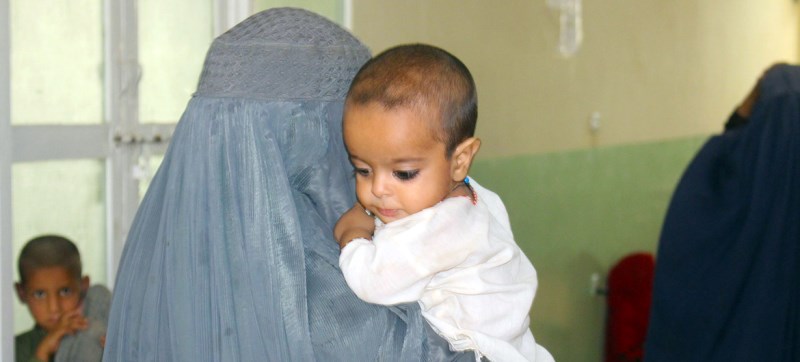
Meanwhile, in areas where people have fled in search of safety and shelter –including Kabul and other large cities – there have been increasing cases of diarrhoea, malnutrition and high blood pressure among the displaced.
“Delays and disruptions to health care will increase the risk of disease outbreaks and prevent some of the most vulnerable groups from seeking life-saving health care”, Dr. Al-Mandhari said. “There is an immediate need to ensure continuity of health services across the country, with a focus on ensuring women have access to female health workers”.
Attacks on health care workers and facilities remain a major challenge too, with 26 facilities and 31 workers affected between January and July 2021, including the death of 12 health care workers.
Stay and deliver
The WHO official’s comments came after the top UN aid coordinator for Afghanistan, Ramiz Alakbarov, appealed to the international community for support.
In a statement on Tuesday, Mr Alakbarov said that while the situation remained “highly complex” humanitarian agencies were committed to supporting vulnerable people in Afghanistan “who need us more than ever”
And in an interview with a leading news agency, he underscored that the UN would “stay in Kabul and…deliver”.
“We are very determined to be here for the people of Afghanistan”, he told the journalist. “Our role here was always for the people of Afghanistan”.
The Resident Coordinator vowed to “work with the de facto authorities, with those who control provinces, with people in power, in order to provide impartial humanitarian assistance to those who need that humanitarian assistance".
Support Our Journalism
We cannot do without you.. your contribution supports unbiased journalism
IBNS is not driven by any ism- not wokeism, not racism, not skewed secularism, not hyper right-wing or left liberal ideals, nor by any hardline religious beliefs or hyper nationalism. We want to serve you good old objective news, as they are. We do not judge or preach. We let people decide for themselves. We only try to present factual and well-sourced news.
Support objective journalism for a small contribution.