


 Bangladesh Minorities
645 incidents, 71 communal: Yunus breaks silence on minority attacks in Bangladesh in 2025
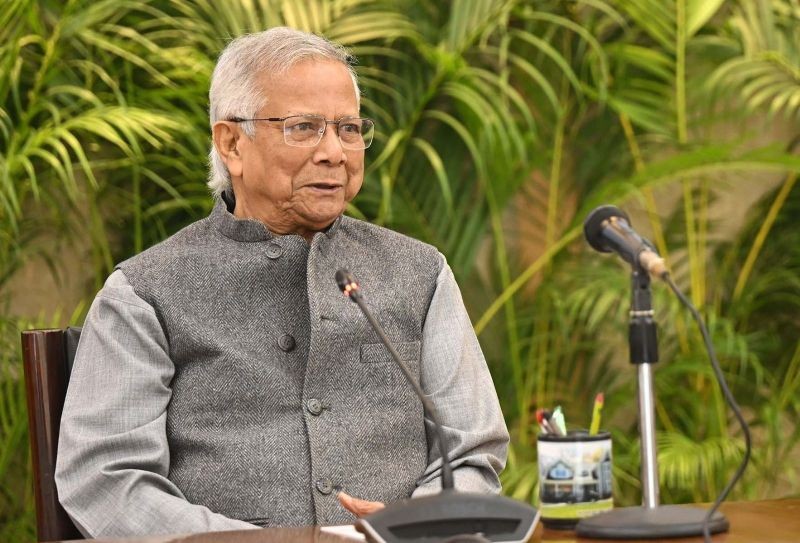
Bangladesh’s interim government chief Muhammad Yunus on Monday said police records for January to December 2025 documented 645 incidents involving members of minority communities, of which 71 were identified as having communal elements.
In a post on X, Yunus said the data was compiled from verified First Information Reports (FIRs), General Diaries, charge sheets, and investigation updates across the country.
On Incidents Affecting Minority Communities and the Broader Law and Order Situation in Bangladesh (January–December 2025)
— Chief Adviser of the Government of Bangladesh (@ChiefAdviserGoB) January 19, 2026
DHAKA, January 19: Bangladesh remains committed to confronting crime with transparency, accuracy, and resolve. A yearlong review of official police records…
“Bangladesh remains committed to confronting crime with transparency, accuracy, and resolve,” Yunus wrote. “While every incident is a matter of concern, the data presents a clear and evidence-based picture: the overwhelming majority of cases were criminal in nature rather than communal, underscoring both the complexity of law-and-order challenges and the importance of grounding public discussion in facts rather than fear or misinformation.”
According to the review, 574 incidents were assessed as non-communal, while 71 incidents involved communal elements, Yunus said.
He added that communal incidents primarily included vandalism or desecration of religious sites and idols, along with a limited number of other offences.
“In contrast, the majority of incidents affecting minority individuals or properties arose from criminal activity unrelated to religion,” Yunus said, citing neighbourhood disputes, land conflicts, political rivalries, theft, sexual violence, and cases linked to prior personal enmity.
“While all crimes are serious and demand accountability, the data demonstrates that most incidents involving minority victims were not driven by communal hostility, but by broader criminal and social factors that affect citizens across religious and ethnic lines,” he added.
Yunus acknowledged that Bangladesh continues to face significant law-and-order challenges nationwide, noting that approximately 3,000 to 3,500 people are killed in violent crimes each year.
“This is not a number to be proud of. Every life lost is a tragedy, and no society should be complacent in the face of such statistics,” he said, adding that violent crime cuts across religion, ethnicity, and geography.
Bangladesh has witnessed a recent spike in attacks on Hindus, particularly following the fall of the Sheikh Hasina-led government on August 5, 2024.
Support Our Journalism
We cannot do without you.. your contribution supports unbiased journalism
IBNS is not driven by any ism- not wokeism, not racism, not skewed secularism, not hyper right-wing or left liberal ideals, nor by any hardline religious beliefs or hyper nationalism. We want to serve you good old objective news, as they are. We do not judge or preach. We let people decide for themselves. We only try to present factual and well-sourced news.
Support objective journalism for a small contribution.


