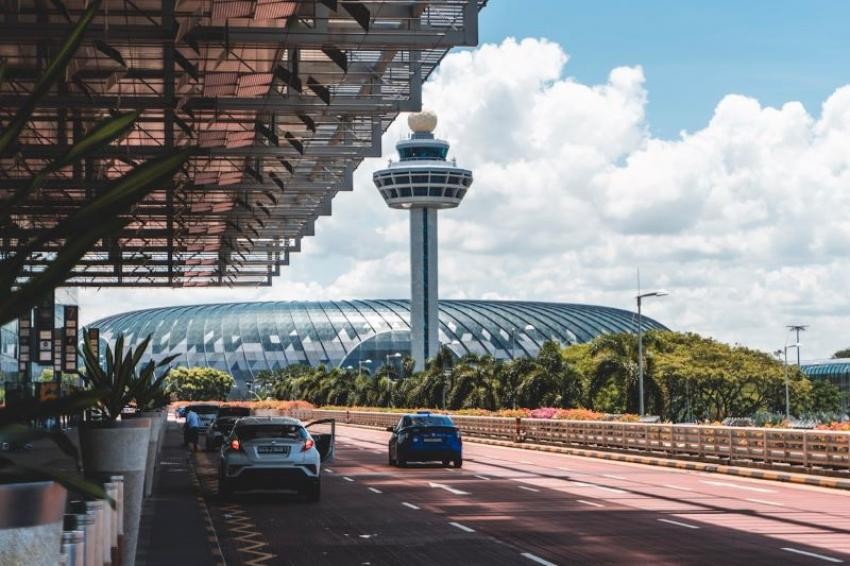
 Changi Airport
Inside Singapore Changi Airport: Why the world’s best airport keeps raising the bar
After a long-haul flight, most travellers expect slow-moving immigration queues, long walks through terminals, and a tiring wait at baggage claim. However, at Singapore Changi Airport, the experience is notably different.
Immigration moves quickly, baggage arrives without delay, and within minutes of landing, passengers often find themselves stepping out into the city—without the usual stress that defines international travel.
The same ease continues on departure. Inside the airport’s transit areas, travellers can pass time at a free 24/7 cinema, wander through a butterfly garden, or take in the world’s tallest indoor waterfall.
There’s even a glass-floored fishpond and a digital ceiling that reflects the weather outside, giving the space the feel of a carefully designed urban hub rather than a transit point.
This seamless experience has once again earned Changi global recognition. The airport has been named the World’s Best Airport at the Skytrax Awards for the second consecutive year, marking its 14th win overall.
At a time when many major airports face operational disruptions, Changi continues to stand apart.
 Butterfly Garden inside the airport. Photo: Unsplash
Efficiency at the Core
Industry experts point to a clear reason behind this consistency - a strong focus on getting the basics right. According to Max Hirsh, managing director of Airport City Academy, Changi’s strength lies in prioritising everyday operations such as speed, safety and connectivity, while remaining flexible enough to adapt to changing demands.
"Changi succeeds because it treats that balance as an ongoing project, not a one-off design feat," said Hirsh emphasising on the maintenace for decades in the face of changing demands, technologies and disruptions.
Behind the scenes, a large and coordinated system ensures that operations run smoothly. Automation, biometric systems, and predictive analytics help identify and resolve bottlenecks before they affect passengers.
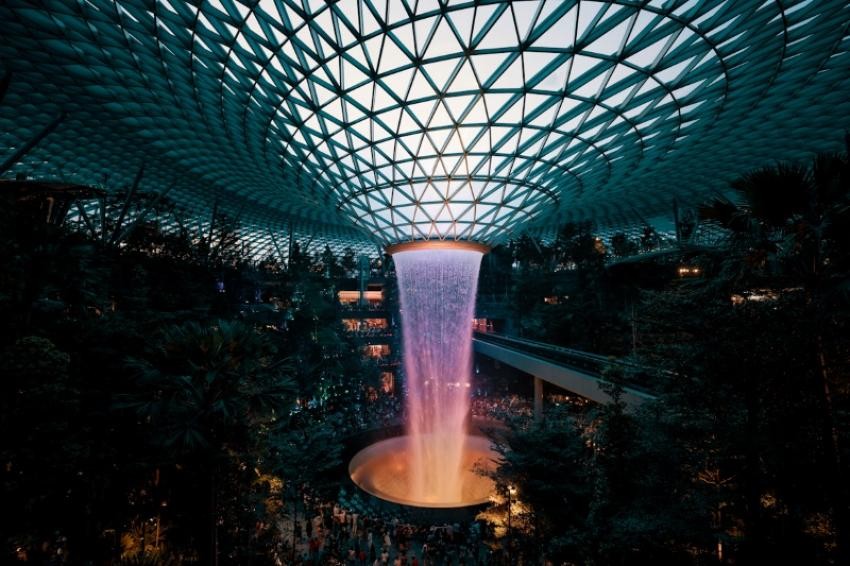 World’s tallest indoor waterfall. Photo: Unsplash
Supporting this is a workforce of around 60,000 people managing everything from baggage handling to cleaning and passenger movement, often making the airport feel, as Hirsh puts it, "one step ahead of you".
Even smaller details are carefully managed. Clear signage and intuitive layouts reduce confusion, especially for tired travellers navigating terminals.
Facilities are also closely monitored—hundreds of restrooms are equipped with digital feedback systems, allowing maintenance teams to respond quickly when needed.
"The hierarchy is simple," says Hirsh. "Efficiency first, atmosphere second, spectacle third."
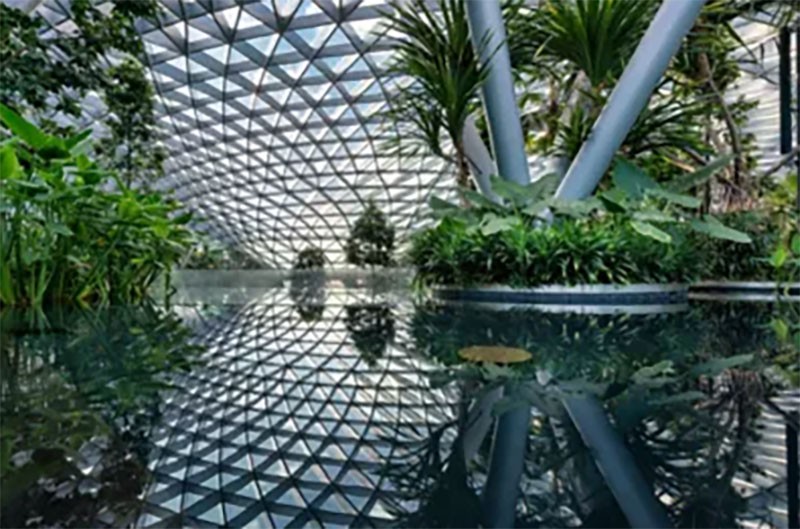 Photo: https://www.changiairport.com/en/corporate/our-media-hub/image-gallery.html
Managing Crowds Through Smart Design
While Changi is known for its attractions, these features serve a functional role as well. The Jewel Rain Vortex—the airport’s iconic indoor waterfall—draws visitors into its retail and leisure complex. Elsewhere, passengers can explore themed gardens, including butterfly, cactus and sunflower spaces, or watch a robotic bartender at work in the terminals.
New additions continue to expand the experience. The Fit and Fun Zone, introduced in early 2025, offers activities ranging from exercise stations to recreational spaces. For those with longer layovers and no visa restrictions, the airport also runs complimentary guided city tours.
Beyond entertainment, these features help distribute passenger movement across the terminals, reducing crowding and improving overall flow.
Technology That Keeps Things Moving
Much of Changi’s efficiency is also shaped by practical needs. Labour shortages in Singapore have encouraged the airport to adopt automation across key processes, including immigration and cleaning services.
"Immigration services need a lot of manpower, and not all Singaporeans are willing to do such work," explained Ivan Tan, Changi Airport Group's senior vice president for corporate and marketing communications. "So, in part, we're driven by need."
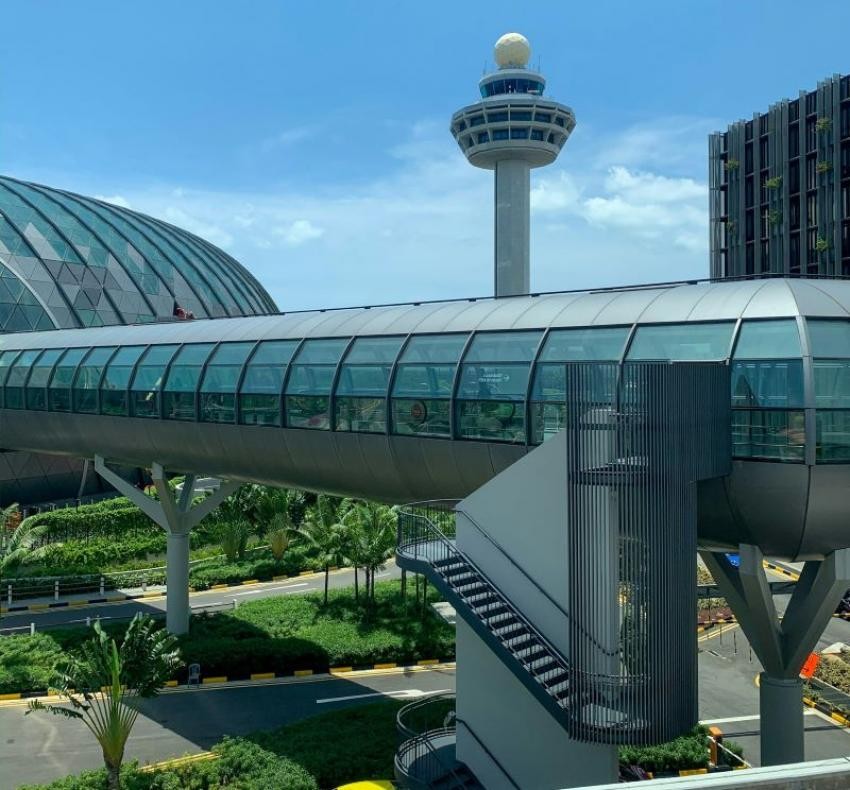 Photo: Unsplash
In 2024, Changi became the first airport to fully introduce passport-less immigration clearance, using facial and iris recognition technology.
The system allows residents to pass through immigration on both arrival and departure, while international travellers can use it when leaving the country.
The airport has also invested in future-facing solutions through Terminal X, an innovation lab focused on addressing challenges such as weather disruptions, manpower constraints and rising passenger expectations.
"For us the innovation hub is a must," says Kris Mok, the lab's communications manager, adding that the ever-shifting matrix of challenges means that "in a few years we'll have to work twice as hard".
The lab is encouraged to test unconventional ideas, including drone systems designed to manage lightning risks—an important consideration in one of the world’s most lightning-prone regions.
A Long-Term Vision
Changi’s approach to efficiency dates back decades. In the 1970s, Singapore's founding father and first prime minister, Lee Kuan Yew envisioned the airport as a key part of Singapore’s growth, positioning it as a symbol of reliability and global connectivity. Despite the high initial cost, the decision proved successful.
Lee would eventually call Changi "the best S$1.5bn investment we ever made."
Today, that early vision continues to shape the airport’s operations. While its attractions often capture attention, the real achievement lies in how effortlessly passengers move through the space—seldom slowed down, rarely disoriented, and consistently well served.
Support Our Journalism
We cannot do without you.. your contribution supports unbiased journalism
IBNS is not driven by any ism- not wokeism, not racism, not skewed secularism, not hyper right-wing or left liberal ideals, nor by any hardline religious beliefs or hyper nationalism. We want to serve you good old objective news, as they are. We do not judge or preach. We let people decide for themselves. We only try to present factual and well-sourced news.