This isn't just France vs Spain—It's a clash of two civilizations through football
When France and Spain walk onto the pitch for the first World Cup semifinal at Dallas Stadium, they would carry far more than tactics, formations or medal ambitions. They carry centuries of history, distinct cultural identities and competing ideas of nationhood that would circumvent the classic rivalry between Kylian Mbappé and Lamine Yamal.
Football, perhaps more than any other sport, absorbs the character of the societies that play it. Spain's game has long mirrored a culture that prizes artistry, patience and regional expression. France's football, meanwhile, reflects a republic built on diversity, resilience and an ability to transform difference into collective strength.
The semifinal, therefore, is not simply a contest for a place in the final. It is a meeting of two civilizations that have each found their own language through football.
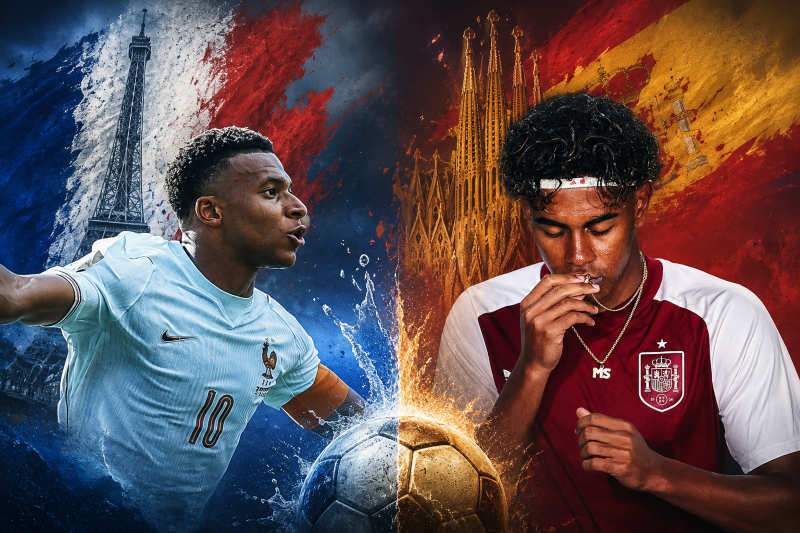
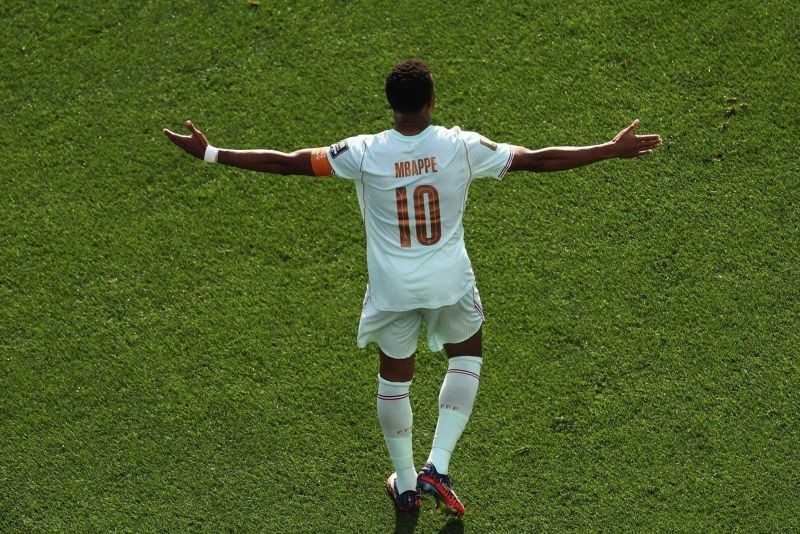 French football superstar Kylian Mbappé.
For Spain, football is an art
Spain's relationship with football resembles its relationship with architecture, painting and cuisine—carefully crafted, deeply technical and aesthetically conscious.
Just as a flamenco performance builds slowly before exploding with emotion, Spain's football often unfolds through patient possession, intricate passing and gradual control of space.
The influence of artists like Pablo Picasso, Salvador Dalí and Antoni Gaudí is not literal, but the country's appreciation for creativity and expression finds echoes on the football pitch.
Spanish clubs, particularly Barcelona that had once featured Lionel Messi, helped popularise positional football where every movement has purpose. Victory matters, but so does how it is achieved.
In Spain, style has often been considered part of success rather than separate from it.
France means strength through diversity
France has a different story to convey.
Its modern football identity has been shaped by immigration, colonial history and one of Europe's most multicultural societies.
The French national team has repeatedly become a symbol of the country's diversity. Players with family roots stretching across Africa, the Caribbean, the Middle East and Europe have together defined France's greatest football generations.
Rather than representing one cultural tradition, French football embodies adaptation.
It blends physical power with technical excellence, tactical discipline with individual brilliance.
The result is a team comfortable winning in different ways because French football has never depended on one singular identity.
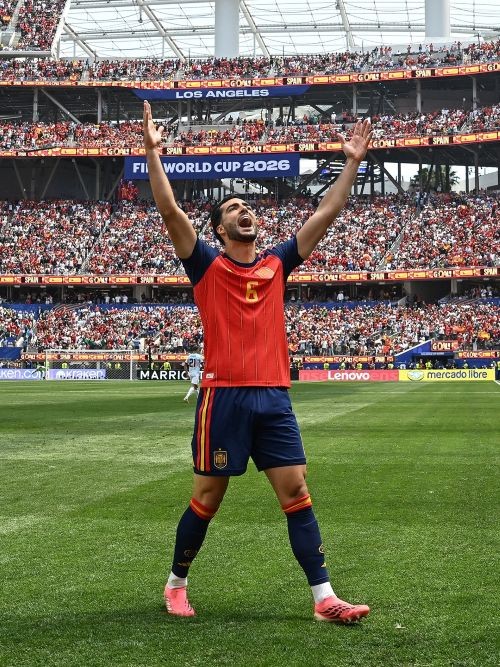 Spanish footballer Mikel Merino in the quarterfinal.
Two ideas of nationhood
The contrast extends beyond the pitch.
Spain remains a country of powerful regional identities.
Catalonia, the Basque Country, Galicia and Andalusia each possess distinct histories, languages and football traditions.
Many of Spain's greatest players have emerged from academies shaped by these regional cultures.
France, by contrast, projects a stronger centralized republican identity.
The national team often becomes one of the few institutions where questions about immigration, integration and national belonging are publicly negotiated.
When France wins, conversations often celebrate diversity.
When it loses, those same conversations can become more complex.
Football therefore occupies a different political and cultural space in France than it does in Spain.
Different football schools
Even their player development reflects national character.
Spain has invested heavily in technically gifted midfielders capable of controlling games through intelligence and precision.
Children are encouraged to solve problems with the ball.
France's academy system has produced footballers renowned for athleticism, versatility and tactical maturity.
Young players are often prepared for multiple roles, making adaptability one of French football's greatest strengths.
Neither system is superior. Each simply reflects different answers to the same question: What kind of footballer should we produce?
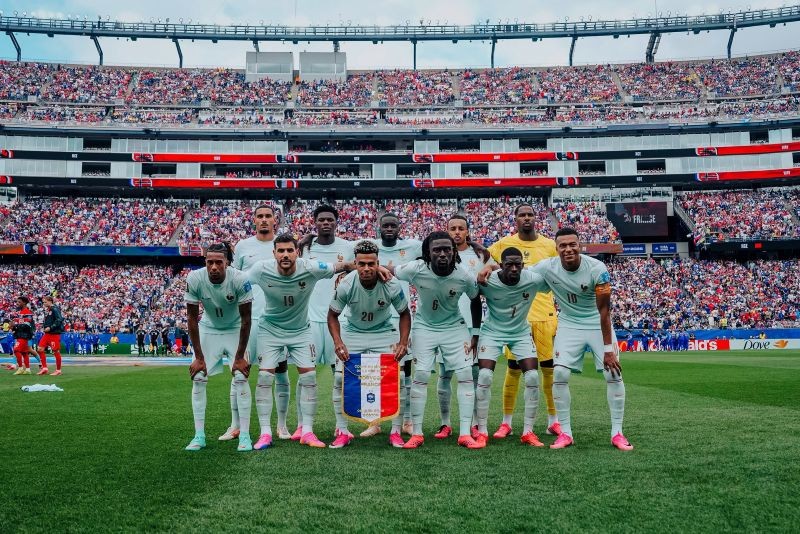 France football team.
Emotion in different forms
Supporters experience football differently too.
Spanish fans often celebrate rhythm. The appreciation of an elegant passing sequence can rival the excitement of a goal.
French supporters, meanwhile, frequently admire resilience, efficiency and decisive moments.
One culture applauds sustained control, the other often celebrates decisive impact.
Shared histories, shared influences
Despite their differences, France and Spain have shaped each other.
Players regularly cross the Pyrenees.
French stars have flourished in La Liga.
Spanish coaches have influenced Ligue 1.
Their domestic leagues exchange ideas every season, making this rivalry less a collision than a continuous conversation.
The semifinal is therefore not East versus West or old versus new.
It is two neighbours whose football philosophies have evolved together while preserving distinct identities.
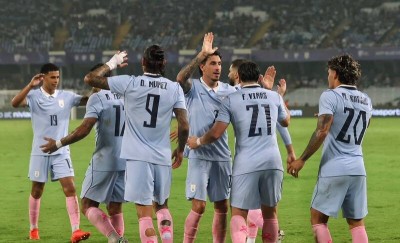
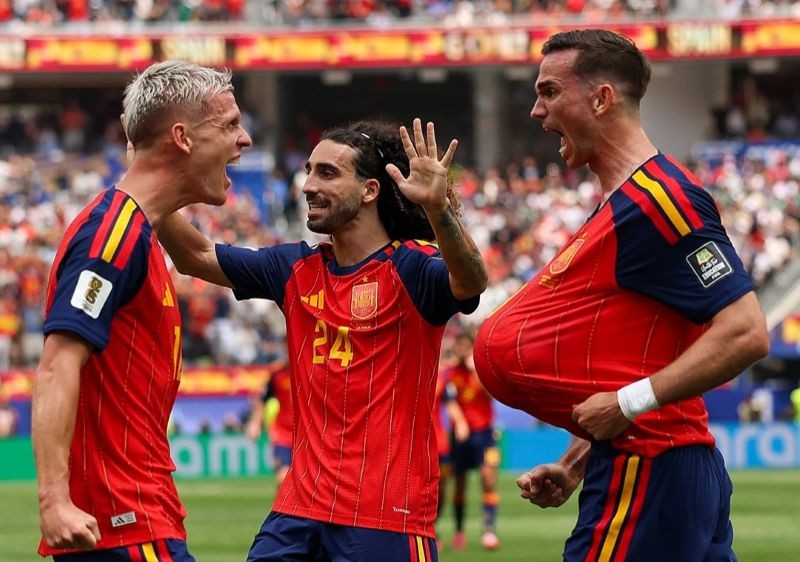 Spanish footballers celebrate in one of the World Cup matches.
The broader significance
International football often reduces nations to flags and anthems.
Yet France and Spain remind us that teams are also reflections of history, migration, education and culture.
Every pass, every tackle and every tactical decision emerges from decades of coaching traditions and generations of social change.
The scoreboard will decide who reaches the World Cup final.
But regardless of the result, the semifinal offers something richer than a sporting contest.
It is a reminder that football remains one of the few global stages where national culture is expressed not through speeches or diplomacy, but through the movement of a ball across grass.
(Photo: Kylian Mbappé & FIFA World Cup X handles)
Support Our Journalism
We cannot do without you.. your contribution supports unbiased journalism
IBNS is not driven by any ism- not wokeism, not racism, not skewed secularism, not hyper right-wing or left liberal ideals, nor by any hardline religious beliefs or hyper nationalism. We want to serve you good old objective news, as they are. We do not judge or preach. We let people decide for themselves. We only try to present factual and well-sourced news.
Support objective journalism for a small contribution.