 OTT
OTT
The wait is over! Netflix finally streams the grand finale of One Hundred Years of Solitude
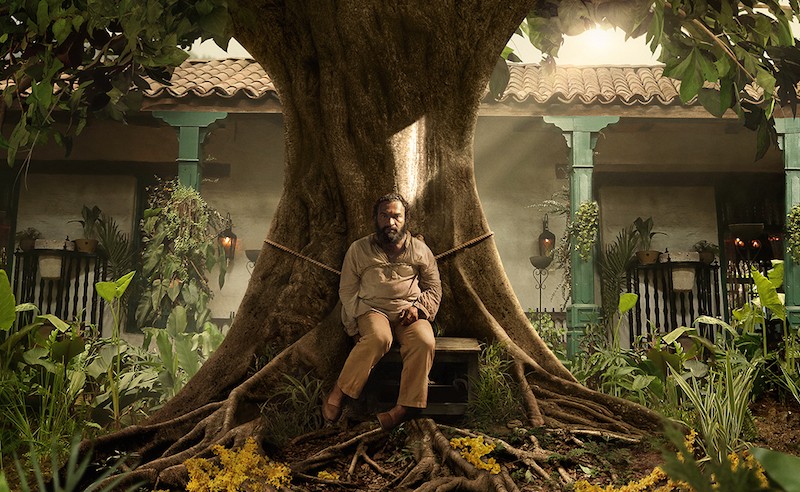
The second and final part of One Hundred Years of Solitude, Netflix's adaptation of Gabriel García Márquez's celebrated novel of the same name, began streaming worldwide on Wednesday.
The concluding instalment, comprising eight episodes, premiered on the OTT platform on August 5, bringing to an end the epic saga of the Buendía family and the mythical town of Macondo.
The end of the Buendía saga
The final chapter chronicles the downfall of Macondo and concludes the multigenerational story of the Buendía family, whose lives are shaped by love, war, destiny and an inescapable family curse.
The story revolves around the fictional town of Macondo, founded by José Arcadio Buendía and his wife Úrsula Iguarán. Spanning a century, the narrative follows the fortunes and tragedies of their descendants while blending history, fantasy and magical realism.
The story
Defying their families' wishes, cousins José Arcadio Buendía and Úrsula Iguarán leave their hometown in search of a new beginning. Along with fellow travellers and adventurers, they eventually establish the idyllic town of Macondo on the banks of a river filled with prehistoric stones.
Over successive generations, the Buendía family witnesses extraordinary events marked by impossible love, political conflict, violence, madness and the looming shadow of a curse that condemns them to "one hundred years of solitude."
One of Netflix's biggest Latin American productions
Netflix adapted the literary classic into a 16-episode series spread across two parts, with the first part premiering in 2024.
The project has been described as one of the most ambitious productions in Latin American history, reflecting the streaming giant's effort to faithfully bring García Márquez's masterpiece to the screen.
About the novel
First published in 1967, One Hundred Years of Solitude is regarded as Gabriel García Márquez's finest work and one of the greatest novels in world literature.
The novel played a pivotal role in popularising the literary style known as magical realism and contributed significantly to García Márquez receiving the Nobel Prize in Literature in 1982.
Over the decades, the book has sold more than 50 million copies worldwide and has been translated into over 40 languages, making it one of the most widely read works of Spanish-language literature.
Support Our Journalism
We cannot do without you.. your contribution supports unbiased journalism
IBNS is not driven by any ism- not wokeism, not racism, not skewed secularism, not hyper right-wing or left liberal ideals, nor by any hardline religious beliefs or hyper nationalism. We want to serve you good old objective news, as they are. We do not judge or preach. We let people decide for themselves. We only try to present factual and well-sourced news.
Support objective journalism for a small contribution.