26 Years After Rituparno, Anupam Kher Returns to Bengali Cinema With a Love Story That Took Three Years to Find
Kolkata/IBNS: Some returns are merely professional. This one feels personal. Twenty-six years after Bariwali—the National Award-winning film by the late Rituparno Ghosh that remains one of Bengali cinema's critically acclaimed works—Anupam Kher is returning to the industry that gave him one of his most distinguished credits as a producer.
His new Bengali production, Shuru Theke Shuru, a mature romantic drama directed by debutant Shamik Banerjee, was unveiled in Kolkata on Friday with the launch of its logo and title.
The announcement was greeted with the kind of warmth Bengali cinema reserves for those who take it seriously — and Kher, by all accounts, does.
"This is the city and this is the state where there's a possibility that you can make a film without it being a formula film," Kher said at the launch. "The idea of this film took three years for us to make it, and sometimes things just happen with time."
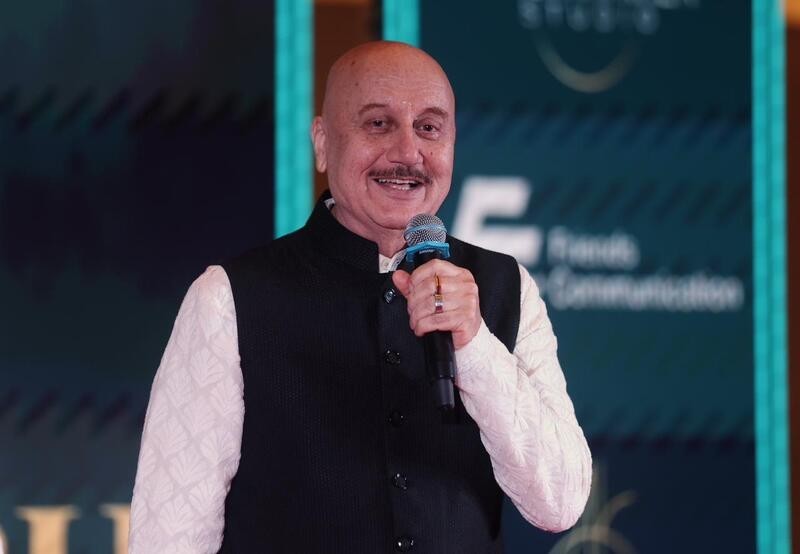 Anupam Kher speaking at the event. Photo: Avishek Mitra/IBNS
Three years of patience for a story about love. That, in itself, says something about the kind of film Shuru Theke Shuruintends to be.
Set against the tranquil backdrop of the mountains — where nature is less a postcard and more a mirror to the characters' inner lives — the film explores the emotional terrain of mature love: its complexity, its courage, its quiet devastation and stubborn hope.
The cast assembled around this premise is formidable. Rahul Bose, one of the most thoughtful actors, leads alongside Tota Roy Choudhury and Paoli Dam — three performers who have each, in their own careers, consistently chosen depth over spectacle.
"It has been two years since my last Bengali film," Bose said. "This film has a beautiful storyline and the character I'm playing is different from anything I've played before. Anupam Kher was the first one to call me, and that was it."
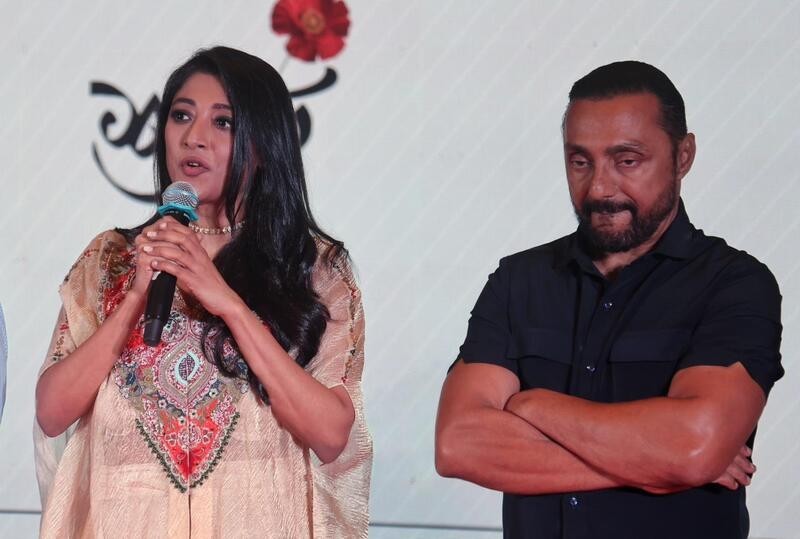 (L-R) Paoli Dal and Rahul Bose. Photo: Avishek Mitra/IBNS
Tota Roy Choudhury, characteristically measured, pointed to the foundation of it all. "The script has been written with utmost love, affection and respect. If a script is not good enough, it is hard to carry on with a film. The first step has already been taken."
Paoli Dam, who has long navigated the intersection of commercial appeal and serious craft in Bengali cinema, was candid about what drew her in. "I was waiting for a film like this for a long time — a beautiful, mature love story, which we don't usually come across in Bengali cinema. When I received the script, it was like a manifestation."
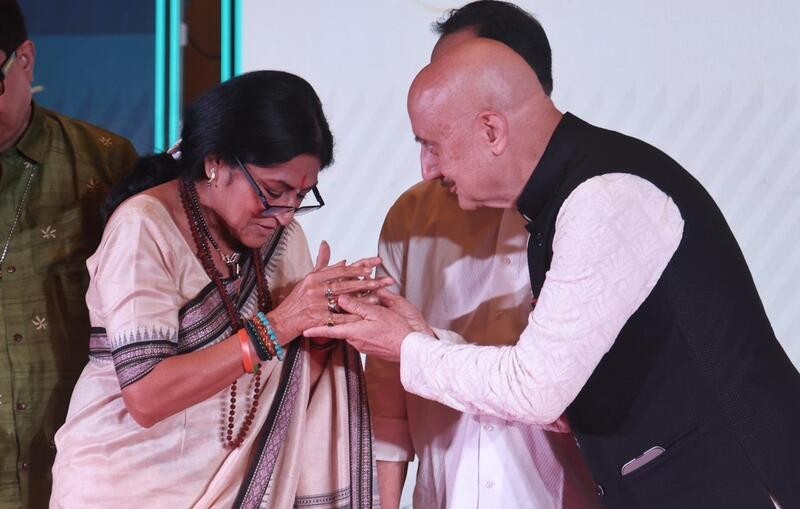 (L-R) Roopa Ganguly with Anupam Kher. Photo: Avishek Mitra/IBNS
The soundtrack comes from Jeet Gannguli, whose music has a proven ability to carry emotional weight without overwhelming it — a fitting collaborator for a film that appears to wear its heart on its sleeve without melodrama.
For director Shamik Banerjee, making his feature debut, the experience has been, by his own admission, surreal. "I got an opportunity to direct such talented and experienced people, which is a really big thing for me."
The launch event concluded with the presence of Roopa Ganguly, member of the West Bengal Legislative Assembly, lending the occasion an added note of cultural significance.
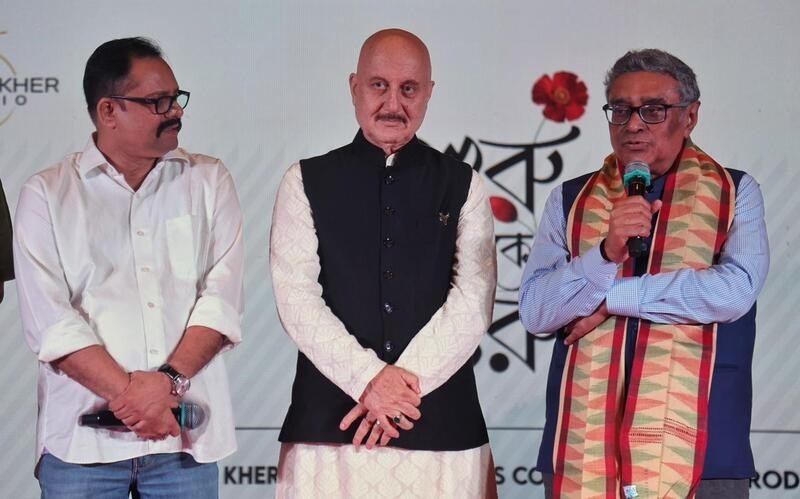 Producer Firdausul Hasan, Anupam Kher and West Bengal Finance Minister Swapan Dasgupta. Photo: Avishek Mitra/IBNS
Shuru Theke Shuru is slated for release by the end of this year. Bengali cinema, which has been finding its national footing again in recent months, will be watching closely. So will Bollywood — because when Anupam Kher chooses to return somewhere after twenty-six years, it is rarely without reason.
(Reporting by Aaheli Chakraborty, Photos by Avishek Mitra/IBNS)
Support Our Journalism
We cannot do without you.. your contribution supports unbiased journalism
IBNS is not driven by any ism- not wokeism, not racism, not skewed secularism, not hyper right-wing or left liberal ideals, nor by any hardline religious beliefs or hyper nationalism. We want to serve you good old objective news, as they are. We do not judge or preach. We let people decide for themselves. We only try to present factual and well-sourced news.
Support objective journalism for a small contribution.