


Bangladesh: WFP increases response in Cox's Bazar
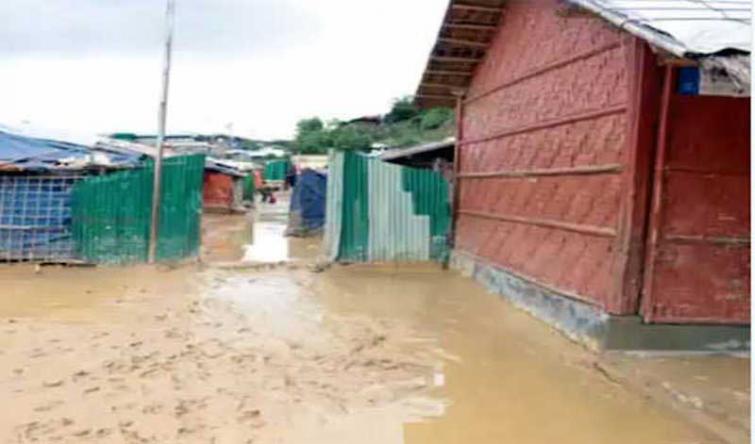
Dhaka, July 12 (UNI): Days of heavy monsoon rain and wind have pounded the refugee camps in the Cox’s Bazar area of Bangladesh since July 4, leading to loss of life, displacing 5,600 people, and damaging thousands of homes, said the UN World Food Programme (UNWFP) on Friday.
Mr Herve Verhoosel, senior spokesperson for the UNWFP, told mediapersons that those in the most vulnerable living situations have been relocated to safer, newly developed land in the camps.
Additional rainfall is forecast for the weekend. The destruction is caused by the most significant weather event in over a year, and it was triggered by monsoon weather systems in the Bay of Bengal. Over 45,000 individuals have been affected by weather-related incidents since the end of April.
In July, WFP has assisted 11,000 refugees affected by monsoon rainfall, providing rapid food assistance to sustain affected families.
WFP’s food assistance includes 3,100 refugees who received cooked meals. WFP's assistance includes a one-week ration of high energy biscuits, followed by a two-week ration of dry food (rice, lentil and oil) or cooked meals.
Moving around the camps on foot or in vehicles remains a challenge due to mud, water, and traffic congestion. However, WFP has prepositioned emergency food supplies around the camps and is able to deliver assistance where it is needed most. WFP has enough extra food in stock to feed the entire camp population of over 900,000 people, for two weeks if needed.
WFP is racing to stabilise slopes that have slipped, and has teams out fixing the slopes and drainage systems that have been damaged. Engineering and disaster risk reduction works are ongoing with around 3,700 Rohingya refugees deployed each day to assist - 3,000 for disaster risk reduction activities and around 700 for engineering. However, there is always potential for more landslides if the heavy rains continue, and WFP emergency teams are positioned in the camps and are on standby to quickly respond if something major or life threatening happens, including overnight.
Considering the damage wrought by these heavy rains, it is easy to imagine the devastation that thousands of Rohingya refugees may have faced if teams had not been on the ground completing preparedness projects before the monsoon season arrived.
Over the past year, WFP’s engineers and partners have been conducting disaster risk reduction activities for cyclone and monsoon preparedness and have steadily improved camp conditions and humanitarian access. Disaster risk reduction work is ongoing in 545 sites -60 percent- of the planned 750 sites, which consists of bridge repair, slope stabilization, drainage clearance, access road rehabilitation, reinforcing bridges in the camps, and reforestation.
This year 20 Agencies and NGOs will complete reforestation activities across more than 200 hectares of the camps. WFP is responsible for around 40 per cent of the reforestation with technical inputs from FAO.
Almost two years after the 2017 influx of Rohingya refuges, the situation remains critical. Vulnerability to food insecurity remains high and would rapidly deteriorate if humanitarian assistance were to cease or decrease.
Eighty per cent of refugees are entirely dependent on WFP food assistance. Half of those refugees receive rations via food distributions, and the other half through e-vouchers.
It costs WFP US$24 million every month to feed almost 900,000 refugees and without continued support from the international community the situation for these refugees would become increasingly dire.”
Support Our Journalism
We cannot do without you.. your contribution supports unbiased journalism
IBNS is not driven by any ism- not wokeism, not racism, not skewed secularism, not hyper right-wing or left liberal ideals, nor by any hardline religious beliefs or hyper nationalism. We want to serve you good old objective news, as they are. We do not judge or preach. We let people decide for themselves. We only try to present factual and well-sourced news.
Support objective journalism for a small contribution.


